
How to Practice Noting Meditation for Sleep: A Gentle, Practical Guide
If your mind races as your head hits the pillow, you’re not alone — and you don’t need to push harder to force sleep. *Noting meditation* is a simple practice of gently naming whatever arises — thoughts, sensations, or feelings — and allowing them to pass. This guide explains how to practice noting meditation for sleep, offering short bedside routines, adaptations for busy minds, and troubleshooting so you can use this tool on restless nights.
This material is for people with mild-to-moderate sleep difficulty, those with busy or ruminative minds, and anyone who prefers a non-pharmacological approach. You’ll find a quick practice, a fuller 10-minute routine, scripts for middle-of-the-night awakenings, and a printable worksheet to track progress.
What noting meditation is — and why it helps sleep
At its heart, noting (sometimes called labeling) invites a shift from doing to noticing — a small change in how you relate to experience that can ease arousal and unravel rumination. Below we’ll look at the simple mechanics and the nervous-system-friendly effects that make noting a practical bedtime tool.
The simple mechanics of noting
Why it works: Noting creates a gentle distance between you and the stream of experience. By softly naming what arises — for example, “thinking,” “itching,” or “worry” — you increase meta-awareness, the mind’s capacity to notice itself. This reduces automatic reactivity and the swirl of elaboration that often keeps sleep at bay.
How to do it: Keep labels brief, neutral, and in a soft tone. One-word notes are usually enough. Say them silently, without judgment or commentary. The point isn’t to stop thoughts but to recognize their presence and let attention return to a safe anchor like breath or body contact.
Tone and attitude: Your inner voice should be calm and curious — not harsh or corrective. Think of noting as kindly pointing and letting go, rather than pushing or suppressing.

How subtle labeling soothes the nervous system
Recognizing an experience by name changes the brain’s response. Instead of being swept into a story, recognition places experience in a broader context — you notice a thought rather than become the thought. This shift reduces sympathetic arousal and activates neural networks associated with observation and regulation.
For sleep specifically: the cascade is simple — noting interrupts rumination, lowers cognitive load, and moves attention toward present-moment data (breath, body). That downshift supports the natural onset of sleep by creating a quieter inner environment.
Keep the expectation modest: noting is not a quick fix for chronic insomnia, but it is a reliable way to reduce the habitual mental chatter that keeps many of us awake.
Pre-practice considerations: set a gentle sleep-friendly container
How you begin matters. A simple, safe container helps the practice land and supports sleep rather than stimulating you. Below are practical choices — posture, environment, and realistic expectations for the first nights.
Choosing posture: lying down vs seated practice
Why choose carefully: Posture affects arousal and safety. A seated position can help you stay alert during a longer practice; lying down invites natural relaxation and may lead directly into sleep.
Practical guidance: In bed, you can practice lying down with a comfortable spine and supportive pillows. If you’re prone to numbness or pain, sit in a chair with feet on the floor and hands resting comfortably. If you fall asleep during a lying practice, that’s fine — the practice served its purpose.
Safety note: If you need to be alert (for example, shift workers or parents up at night), choose a seated, supported posture to prevent unintentional sleep at unsafe times.
Creating a calm sleep environment
Why the environment matters: Noting is subtle — the fewer external distractions, the easier it is to notice internal signals. Small changes signal to your nervous system that it’s time to wind down.
How to prepare: Dim lights, set a comfortable temperature (cooler for most people), and remove screens or use a two-minute tech ritual — place devices face down, set a gentle do-not-disturb, and breathe slowly for a minute before you begin. Soft, neutral bedding and a quiet room help the practice fold naturally into sleep.
Expectations for early nights: The first few attempts may feel awkward. You might label a lot or feel mechanical — that’s normal. Over days the practice usually smooths and becomes more intuitive.

Step-by-step practice: How to practice noting meditation for sleep (a short routine)
Below is a concise bedside routine designed to fit 10–20 minutes in bed. Each step includes the Why and the How, plus short example phrasing you can use immediately.
Step 1 — Settle and orient (Why: anchor body; How: arrive with breath)
Why: Your nervous system responds to simple orientation. When you consciously settle, you give the body permission to downshift and the mind a reliable anchor.
How: Take three gentle, diaphragmatic breaths — in through the nose, out through the mouth or nose as feels natural. Notice contact points: the weight of your feet (if seated) or the sensation of the mattress at your hips and shoulders (if lying). Say a soft label like “breathing” or “settling.”
Example phrasing: Silently note “breathing, feeling.” Keep the language soft and descriptive — it’s an orientation, not a performance.
Step 2 — Begin soft noting of sensations
Why: Sensation is reliable and immediate; it pulls attention away from spinning thoughts and into the present moment.
How: Move through a gentle body scan and name primary sensations with one-word labels — “heaviness,” “warmth,” “tingle,” or “pressure.” Keep each note brief; allow the sensation to soften after noting.
Example phrasing: When you notice heaviness in your legs, think or say “heaviness.” When you notice breath at the nostrils, note “breathing.” Let the label be a brief lighthouse rather than a commentary.
Step 3 — Note thoughts and stories with a light touch (how to practice noting meditation for sleep)
Why: Thoughts often create the story that keeps sleep distant. Noting thoughts as “thinking,” “planning,” or “worry” weakens their pull and reduces the tendency to follow them.
How: When a thought arises, label it simply and return to an anchor (breath or body). If the thought is a planning loop, use the label “planning.” If it’s a memory or replay, you might say “remembering.” Keep the labels gentle — no need to judge the content.
Example script: For a recurring worry about tomorrow: silently note “worry, thinking,” then return to the breath. If the mind persists, note “thinking” a few more times without argument, allowing curiosity rather than frustration to guide you.

Step 4 — Note emotions and urges without following them
Why: Emotions and urges (to check your phone, get up, or analyze a problem) can raise arousal. Noting reduces fusion — you’re less likely to act on the impulse when you recognize it as an experience.
How: Use simple affect labels like “anxiety,” “sadness,” “tired,” or “restless.” If an urge to get up arises, note “urge” then allow attention to return to the body. Let each label be brief and compassionate.
Example phrasing: If you feel worry and a tight chest, you might note “anxiety,” then follow with “breathing” to re-establish the anchor.
Step 5 — Close the practice or drift into sleep
Why: The aim is not to end abruptly but to widen awareness and let the body guide the transition to sleep.
How: Gradually reduce the frequency of labels. Let them appear only when helpful. Widen your attention to include the whole body and environment. If sleep comes, allow the practice to dissolve — there’s no need to formally conclude.
Example cue: When you notice the notes naturally slowing, think “resting,” breathe a few easy breaths, and let awareness soften into the night.
Short examples and scripts you can use in bed
Ready-made scripts remove decision-making at bedtime. Use the micro-practice when minutes matter, the fuller routine when you have more time, and the middle-of-the-night script when worry returns. Below is the primary keyword woven naturally into a set of bedside scripts.
3-minute micro-practice for immediate calm
This is for nights when time is limited or when you want a quick reset. Begin lying down or seated and follow three simple steps: settle, note three sensations, and rest.
Script: Breathe in and out three times, silently note “breathing.” Move your attention to one area (e.g., belly) and note “rising,” then to the chest and note “softness,” finally to the feet and note “grounded.” End with “resting” and allow attention to widen.
Why it helps: The brevity keeps the practice accessible and reliable — a quick interruption to rumination that often creates immediate relief.
10-minute full bedtime noting routine — how to practice noting meditation for sleep
This stepwise routine is designed to be followed in bed and fits comfortably into a 10-minute window.
Script outline: 1–2 minutes settling and breath noting; 3–4 minutes gentle body-scan with sensory labels (heaviness, warmth, tingling); 3 minutes noting thoughts and emotions as they arise with labels like “thinking,” “worry,” “sadness,” or “tired”; final minute widening awareness and allowing labels to soften into rest.
Timing cues: Use the breath to mark transitions — for example, after five breaths move from body-scan to thoughts. Keep labels short and neutral and return to body contact if you find yourself caught in a story.
Middle-of-the-night script for returning to sleep
When you wake and the mind begins to spin, use a short, non-urgent script that avoids feeding the story.
Script: Lie still, breathe slowly three times, and gently note “thinking” or “worry.” If sensations are strong, note “tightness” or “restlessness.” Keep your internal tone soft and refrain from engaging the content. After a few labels, return to “breathing” as your anchor.
Why it works: Short, unemotional labels interrupt cognitive loops without escalating anxiety. They provide a simple bridge back to sleep.
Troubleshooting, adaptations, and when to seek other help
Practices sometimes run into predictable obstacles. Here are gentle adaptations, reminders about attitude, and clear guidance on when a clinician’s support is appropriate.
If your mind feels too busy: pace, focus on sensation
Technique: Slow your rhythm. If rapid noting just feeds the busyness, shift to slower body-focused notes — longer pauses between labels and attention to breath or contact points. You can also try counting breaths (1–4) as a temporary scaffold and then return to single-word notes.
Practical tweak: Use sensory anchors like the rise and fall of your belly, the contact of your sheets, or a subtle warmth in your hands. Sensation is often less argumentative than thought, and it can quickly reduce the sense of overwhelm.
If noting feels mechanical or suppressing
Reframe the attitude: Noting isn’t about control — it’s about curiosity. If your labels feel robotic, soften them with compassionate language: try “feeling tired” instead of just “tired,” or “thinking” followed by a gentle internal sigh. Allow a moment of brief interest after each note.
Compassionate phrasing: Remind yourself quietly, “It’s okay that this is here.” That small acceptance often dissolves the mechanical quality and restores the humane tone the practice needs.
Red flags: when to talk to a clinician
Noting meditation is a helpful self-regulation tool, but it isn’t a substitute for medical care when problems are severe or persistent. Consult a clinician if you experience chronic insomnia (difficulty initiating or maintaining sleep most nights for months) with daytime impairment, loud snoring or gasping (possible sleep apnea), or severe anxiety or depression.
If you notice that sleep difficulties are worsening despite regular practice, or if sleep loss is impacting work, mood, or safety, seek professional evaluation. For some people, combining behavioral strategies with clinical support is the most effective and compassionate path.
Practical integration: building a gentle nightly habit
Small, sustainable steps help noting become part of your evening in a way that supports rest rather than creating pressure. Below are gentle options for pairing the practice and tracking progress.
Pairing noting with breathwork or restorative yoga
Why pair: Complementary practices can prepare the body and mind, making noting feel easier and more natural. Breathwork calms physiology; restorative yoga relaxes muscles and releases physical tension.
How to combine: Start with 3–5 minutes of slow, diaphragmatic breathing or a brief restorative pose (legs-up-the-wall or supported child’s pose). Then move into a 5–10 minute noting practice. The breath or gentle yoga serves as an anchor and reduces initial restlessness.
Benefit: These mild pre-practices lower the activation that sometimes makes mental noting feel thin or ineffectual.
Tracking progress compassionately (worksheet idea)
Why track: A short, gentle log helps you notice patterns and celebrate incremental change without turning practice into another task.
How to use the included worksheet: Each night note the practice length (3 or 10 minutes), one observation (e.g., “less rumination,” “slept sooner”), and a simple sleep quality rating. Keep entries brief and kind — the worksheet is a reflection tool, not a performance chart.
Suggested rhythm: Check your log weekly to see gentle trends. If you notice steady difficulty despite consistent practice, consider the troubleshooting notes above or consult a clinician.
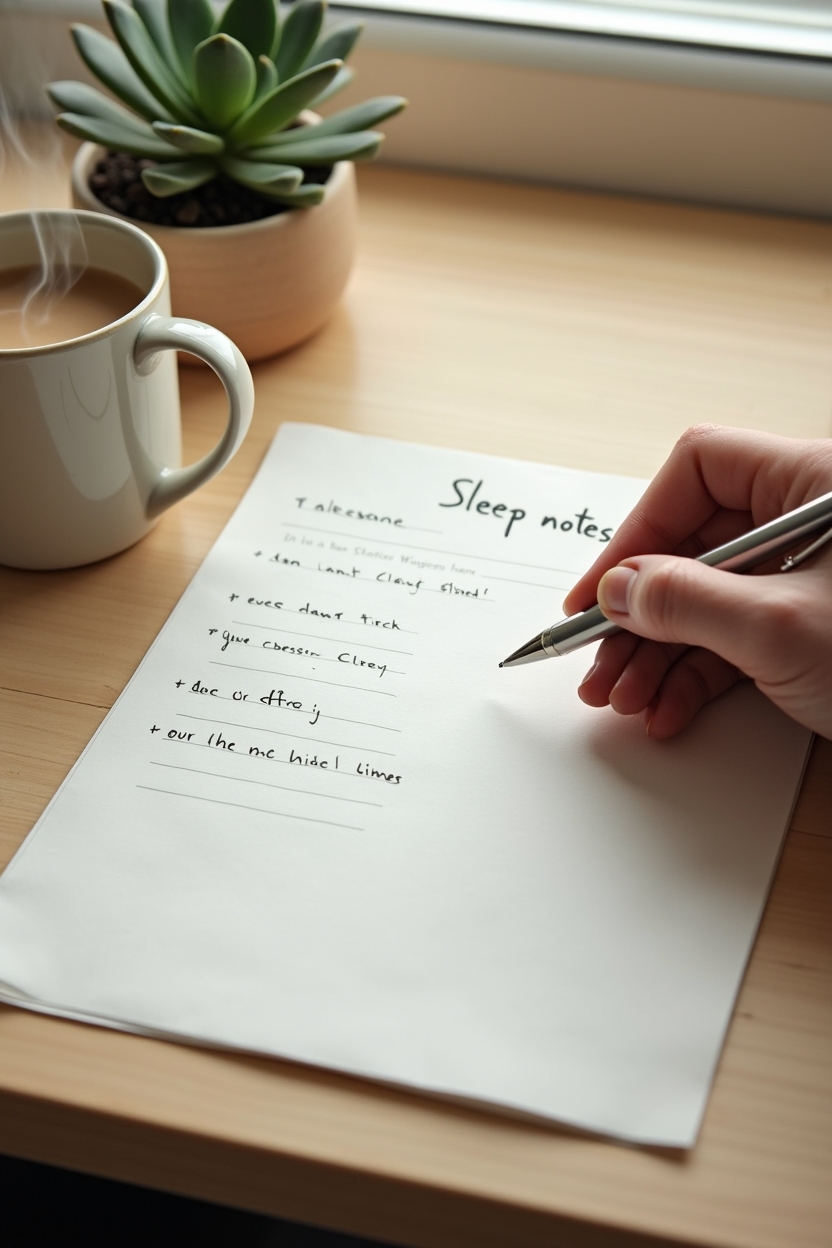
Printable Bedtime Noting Meditation Worksheet
A two-page, printable tool: page one contains the 10-minute script and the 3-minute micro-practice; page two is a short nightly log to record practice, sleep quality, and a single compassionate note. Use it to track gentle progress without pressure.
Download the worksheet
Final Thoughts
Noting meditation isn’t about silencing the mind — it’s about meeting what’s there with steady attention and a kind label so you’re less likely to be swept up by story. Over time, this small habit can reduce rumination and create a softer path into sleep.
Experiment gradually and with patience. If you’d like support making the practice a nightly friend, try the printable worksheet and see what shifts over a few weeks — how to practice noting meditation for sleep can become a simple, reliable way to invite rest.