How to Improve Sleep with Sciatic Nerve Stretches: A Practical Guide
Struggling to fall asleep because of an aching leg or low back can be quietly exhausting — it’s a familiar disruption for many people with sciatica. This guide on how to improve sleep with sciatic nerve stretches offers gentle, bedside-friendly options designed to reduce tension, encourage circulation, and calm the nervous system so you can drift toward deeper rest.
We’ll begin with a calm, plain-language anatomy primer, then explain why and when these stretches help. You’ll find safety and preparation tips, a short progressive evening sequence, troubleshooting advice, and ideas for building a sustainable bedtime ritual. Expect small, practical steps — not instant cures — and plenty of simple modifications so you can practice safely and consistently.
How sciatica interferes with rest (a gentle anatomy primer)
A little context helps you notice meaningful change. Below is an approachable explanation of the nerve’s path and the common reasons symptoms feel worse at night — written to reassure rather than alarm.
What the sciatic nerve actually does
**sciatic nerve** is the body’s largest nerve — it runs from the lower spine through the buttock and down the back of each leg, carrying sensory and motor signals. When the tissues around it are inflamed, tight, or compressed, you can experience pain, tingling, numbness, or a deep ache that follows this pathway.
Because the nerve links spine, pelvis, and legs, tension in nearby muscles (like the gluteal muscles or piriformis) or a flare from a disc issue can create similar sensations. Understanding that the pain follows a track helps you choose targeted, safe stretches rather than guessing at where the problem begins.
Why symptoms often worsen at night
Nighttime feels different for pain for several reasons. Without daytime distractions, your nervous system has more bandwidth to notice discomfort. Some sleep positions — like lying on a stomach or with the hip rotated — can subtly increase pressure on the nerve.
Additionally, biological rhythms influence inflammation and pain sensitivity: some people find stiffness and soreness peak in the evening. That combination of less distraction, certain postures, and heightened sensitivity is why an evening routine of gentle movement and calming breath can make a real difference.

How sciatic nerve stretches can improve sleep
Here’s how small, regular stretches can reduce the physical and nervous-system drivers of disturbed sleep — and when they’re most likely to help. This section speaks directly to how to improve sleep with sciatic nerve stretches so you can connect intention to practice.
Why gentle stretching helps before bed
Gentle stretching reduces guarding — the protective tightness muscles adopt around pain — and promotes circulation, which can ease local inflammation. The slow, mindful movements also send calming signals to the nervous system, supporting a shift from sympathetic activation (alertness) to parasympathetic rest.
There’s also an empowerment effect: when you have a manageable bedtime routine, you feel more in control of symptoms. That reduction in anxiety around sleep is itself restorative — stretches aren’t just physical tools, they’re cues that prepare body and mind for rest.
When stretches are likely to help — and when to see a pro
Stretches and gentle nerve glides often help when pain is intermittent, caused by muscle tightness, or linked to posture. If your symptoms are stable, testing a small nightly routine for 1–2 weeks can reveal benefits in sleep latency and comfort.
Stop and seek medical care if you notice progressive weakness, loss of bowel or bladder control, severe numbness, or a sudden worsening of symptoms. Those are red flags that need prompt assessment by a clinician such as a physiotherapist, osteopath, or physician.
Safety, preparation, and mindset before you begin
A calm frame of mind and small physical preparations make the practice accessible and safe. These steps help you move with intention rather than force.
Simple warm-ups and breath to reduce guarding
Begin with two to three micro-movements to invite movement without strain. Gentle pelvic tilts, slow knee circles while lying on your back, or marching one foot at a time for 30–60 seconds each can warm tissues and reduce protective tightening.
Pair movement with a slow breath pattern — for example, 4-count inhale, 6-count exhale — to encourage parasympathetic activation. The breath cue is the anchor: it helps you notice whether tension is easing and keeps effort minimal.
- Pelvic tilt: lie on your back with knees bent and feet on the floor. Gently flatten the lower back toward the mat and release. Repeat 6–8 times.
- Supported march: lying on your back, lift one foot a few inches, then lower. Alternate slowly for 6–10 repetitions.
- Breath cue: inhale for 4 counts, exhale for 6 counts, repeated for 1–2 minutes while resting.
Props and setup for comfort
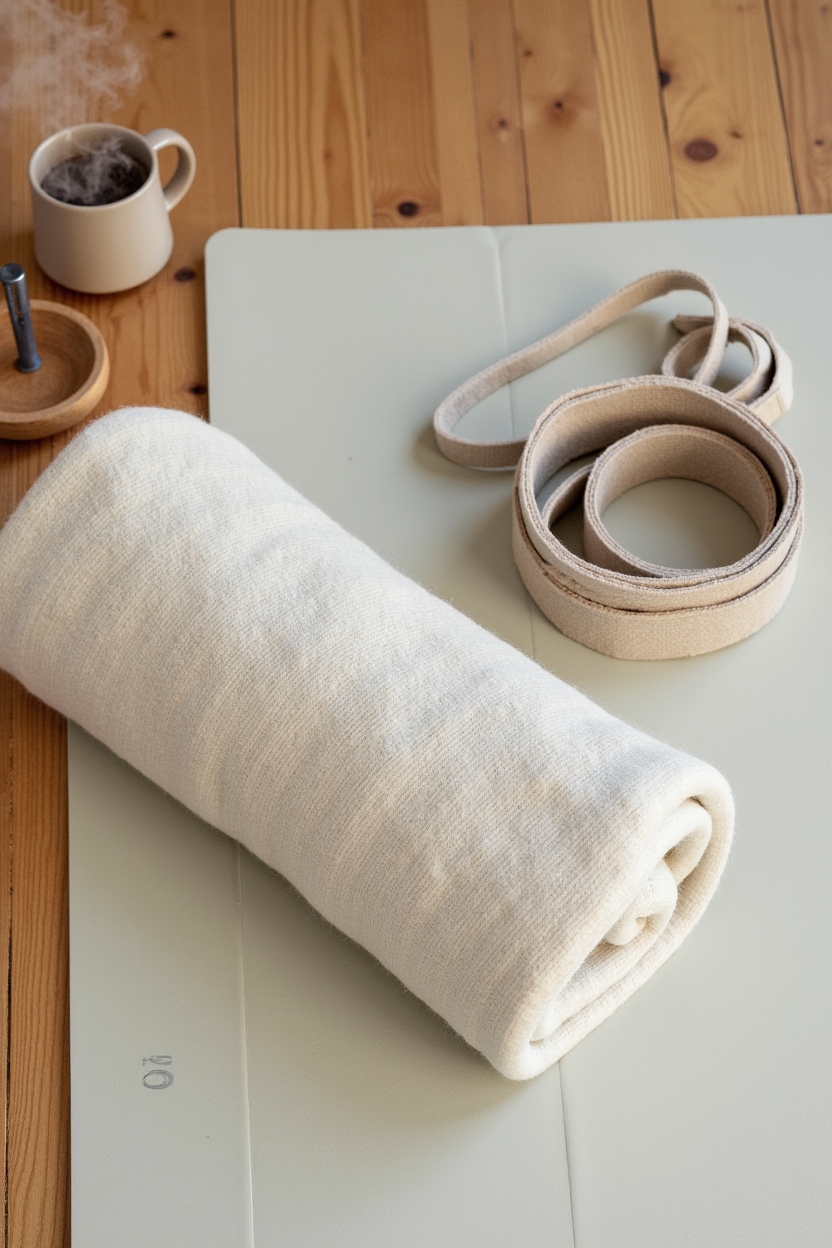
Use what reduces effort: a firm pillow under the head, a bolster or rolled towel under the knees in supine postures, or a yoga strap to gently control a leg without pulling. A chair provides a seated option for many stretches if getting to the floor feels like too much.
Create a low-effort environment: dim lights, a soft blanket, and a timer set so you don’t watch the clock. Minimal fuss supports consistent practice — you want the routine to feel like a gentle act of care.
- Bolster or rolled towel for knee support
- Yoga strap or belt for assisted leg work
- Chair with a solid seat for seated alternatives
When to avoid stretches and seek care
Avoid stretching if a movement produces sharp, shooting pain, or if symptoms change suddenly. If you have recent surgery, a fracture, or pregnancy-related complications, check with your clinician before trying new stretches.
Seek professional evaluation for progressive weakness, sudden numbness, or loss of bladder/bowel control. Otherwise, err on the side of gentleness: less intense, more frequent sessions are often better than aggressive, sporadic stretching.
An easy bedtime sequence: evening sciatic nerve stretches for better sleep
Below is a short, progressive sequence to do 20–45 minutes before bed. Each pose includes why it helps, stepwise how-to cues, and common modifications so you can personalize safely.
Knee-to-chest with sciatic release
Why: Drawing the knee to the chest reduces lumbar compression and eases low-back tension that can irritate the nerve. It’s a gentle way to introduce mobility without deep rotation.
How: Lie on your back with knees bent. Hug one knee toward your chest, keeping the opposite foot on the floor. Breathe slowly for 30–60 seconds, then switch sides. For both knees, hug both into the chest for 30 seconds.
Modification: Use a strap behind the thigh if reaching is difficult, or perform one-leg variations while keeping the other leg extended comfortably.
- Lie on your back with knees bent and feet hip-width.
- Exhale and draw one knee into your chest; hold 30–60 seconds.
- Repeat on the other side, then hug both knees for a final 30 seconds.
Seated figure-four: how to improve sleep with sciatic nerve stretches
Why: The seated figure-four targets the gluteus and piriformis — common culprits in sciatic compression — while keeping the spine upright so you control the intensity.
How: Sit near the edge of a chair. Cross the ankle of the affected side over the opposite knee. Keep your spine tall and hinge slightly forward from the hips until you feel a gentle stretch. Hold 30–60 seconds, breathing slowly. Return upright and repeat once or twice.
Modification: If sitting is uncomfortable, perform a reclining version with the ankle resting on the opposite thigh while lying on your back and use hands or a strap to control pressure.
- Sit tall at the chair edge and cross the affected ankle over the opposite knee.
- Keep the spine long and hinge forward from the hips until you feel a gentle stretch.
- Hold 30–60 seconds, then release and repeat once more.
Reclined pigeon: how to improve sleep with sciatic nerve stretches
Why: Reclined pigeon is a supported way to access deeper gluteal release while the pelvis is stable, which is especially useful before sleep when you want low effort.
How: Lie on your back with knees bent. Place the ankle of the affected side on the opposite thigh. Thread your hands behind the supporting leg and gently draw the thigh toward your chest until you feel a release in the glute. Hold 30–60 seconds, then switch sides.
Modification: Place a pillow under the head or use a strap around the thigh to avoid overreaching. Keep the breath slow and even to prevent guarding.
- Lie on your back with both knees bent.
- Place the ankle of the affected side across the opposite thigh.
- Thread your hands behind the supporting leg and draw toward your chest; hold 30–60 seconds.
Hamstring slide on the wall (gentle nerve glide)
Why: Tight hamstrings can pull on the pelvis and add tension along the back of the leg. A wall-supported slide provides a controlled neural glide without aggressive stretching.
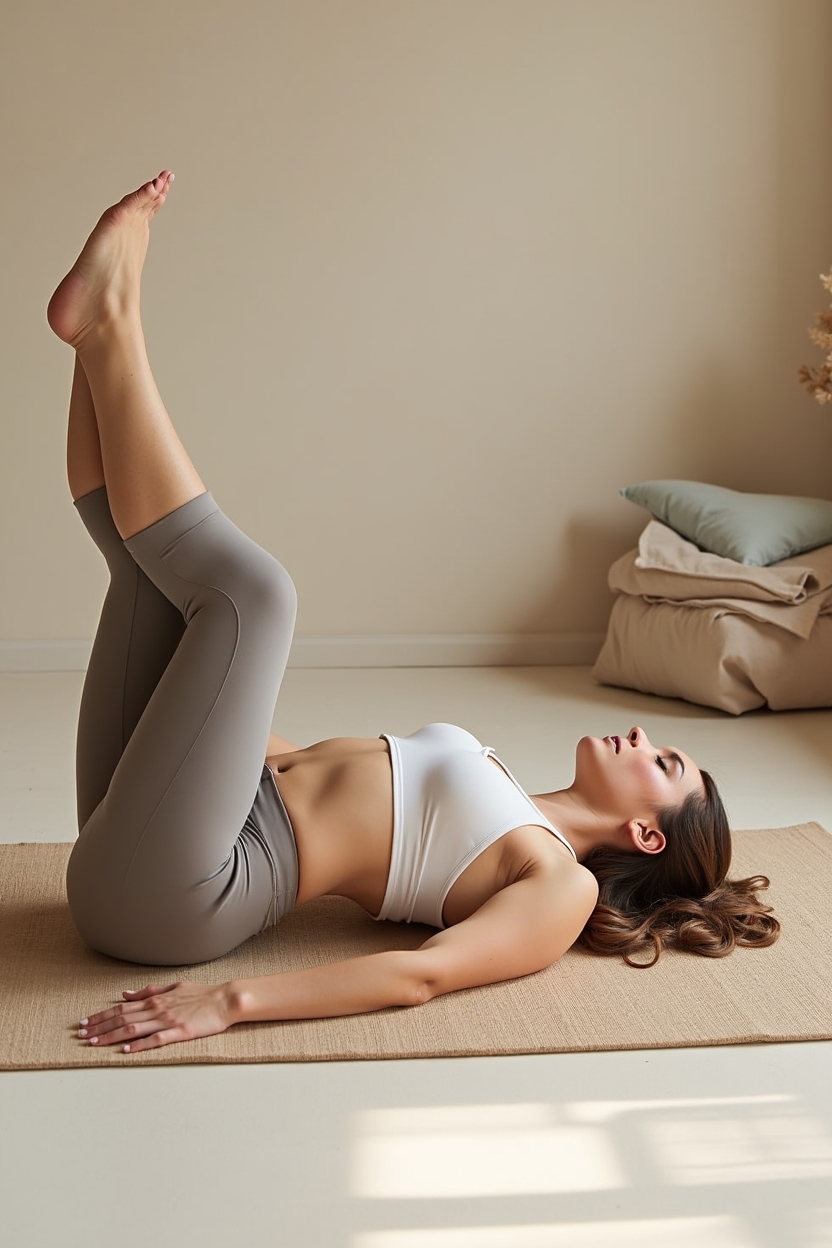
How: Lie with your hips near a wall and one leg extended up the wall; the other leg rests bent on the floor. Slowly bend and straighten the knee of the elevated leg a few inches to create a gentle sliding sensation. Keep movements small and comfortable; repeat 6–10 slow repetitions.
Modification: If the stretch is too intense, bring the leg lower on the wall or perform smaller ranges of motion. Focus on smooth breath to keep the nervous system calm.
- Lie with your hips close to a wall and one leg extended up the wall.
- Bend and straighten the elevated knee a few inches slowly for 6–10 reps.
- Keep the opposite leg relaxed and breathe evenly throughout.
Short guided progression to settle into sleep
Why: A brief, focused breath and body-scan helps consolidate the physical work and cue the brain that it’s time to sleep. The ritual effect supports consistency.
How: After your stretches, lie comfortably and practice 1–2 minutes of paced breathing (inhale 4, exhale 6). Then perform a gentle body-scan from toes to head, noticing areas of release and offering soft breath to any remaining tightness. End by repeating a simple phrase like “I allow rest” on three slow breaths.
Modification: If you prefer, sit reclined or do the breathwork in bed as your final cue before lights out.
- 1–2 minutes paced breathing: inhale 4, exhale 6.
- Gentle body-scan from toes to head, noticing release.
- Repeat a soft sleep cue phrase for three breaths and settle into bed.
Troubleshooting and modifications
If something doesn’t feel right, small adjustments often help. These practical responses guide you through common setbacks so you can continue with confidence.
If pain increases after a stretch
A little post-stretch soreness can be normal; sharp or worsening pain is not. If pain increases, stop the stretch immediately and apply gentle care: rest, a short walk to normalize movement, and ice if the area feels inflamed.
Contrast this with normal delayed soreness which is mild and improves in a day or two. If severe pain persists, or if numbness or weakness grows, contact a clinician for assessment rather than pushing through.
Alternatives when a pose feels too intense
When a posture is too much, there are softer options: isometric glute contractions, very small nerve glides, and breath-centered relaxation can reduce symptoms without deep tissue work. Gentle isometric holds — contracting the glute for 5–10 seconds without moving the joint — can calm nervous system sensitivity.
You may also try the hamstring wall slide at a lower angle, or perform seated figure-four with added support under the hips. These choices respect your current threshold and keep the routine sustainable.
- Isometric glute contractions (5–10s holds)
- Very small neural glides with minimal range
- Seated or supine, supported versions of poses
Adjusting frequency: how often is enough?
For many, nightly 10–15 minute micro-sessions are ideal to support sleep. If symptoms are more persistent, longer practices 3–4 times per week combined with nightly 5–10 minute maintenance can be effective.
Listen to response: if one session increases pain for more than 24 hours, reduce intensity or frequency. Track patterns — small, consistent work typically outperforms intense, infrequent efforts.
Putting it together: building a sustainable bedtime routine
Consistency matters more than perfection. Below are realistic strategies and a tiny routine you can repeat nightly to support sleep while monitoring progress. If you are practicing how to improve sleep with sciatic nerve stretches, tracking outcomes will help you refine what works.
Sample 10–15 minute nightly routine
This mini-practice combines two effective stretches, breath, and a sleep cue. It’s designed to be simple to remember so you’re more likely to do it regularly.
Start with a brief warm-up, perform reclined pigeon on the sensitive side, follow with a seated figure-four for balance, then finish with the 1–2 minute paced breathing and body-scan. The sequence takes about 10–15 minutes and is gentle enough for most evenings.
- 0:00–1:30 — Pelvic tilts and paced breath to warm up.
- 1:30–4:00 — Reclined pigeon on the affected side (30–60s).
- 4:00–6:30 — Seated figure-four, 30–60s each side.
- 6:30–9:00 — Hamstring slide on wall or gentle glute isometric work.
- 9:00–11:00 — 1–2 minutes paced breathing and body-scan as the final sleep cue.

Tracking improvements and when to adapt
Keep simple metrics: sleep latency (how long to fall asleep), number of awakenings, and a 0–10 pain score each morning. After two weeks, review trends: are you falling asleep faster? Waking less? Is pain reduced or shifting?
If sleep improves but pain remains, consider shifting intensity or adding a daytime mobility practice. If pain worsens or you see new neurologic signs, consult a professional. Note that many people find measurable progress within two weeks of a gentle nightly routine.
Downloadable Bedtime Sciatic Stretch Routine
A printable worksheet helps you record daily hold times, pain scores, and sleep quality so you can notice patterns and personalize your routine. It includes the short evening flow, modification options, and space for a two-week check-in.
Get the Bedtime Worksheet
Final Thoughts
Small, consistent stretching practices can shift the pattern of tension and reactivity that often makes sleep difficult for people with sciatica. These gentle, bedtime-friendly stretches and a brief breathing ritual aren’t a promise of instant cure — they are practical tools that, when practiced with care, can support calmer nights.
Honor your limits, consult a clinician for worrying changes, and approach the routine with curiosity rather than expectation. If you’d like, use the worksheet to track progress and tweak the sequence so it becomes a reliable, soothing part of your evening.