How to Improve Sleep with Ankles Stretches: A Practical Guide
If you’ve ever lain awake with restless legs, cramped calves, or a low-level agitation that won’t settle, small targeted ankle work can help. Learning how to improve sleep with ankles stretches is less about vigorous exercise and more about calming the nervous system, improving circulation, and easing mechanical tension that can interrupt sleep.
In this guide you’ll find a short warm-up, six accessible ankle stretches with gentle variations, a ready-to-use 10-minute bedtime routine, and practical troubleshooting. These practices are simple—quiet, somatic, and easy to fold into an evening ritual that supports deeper rest.
Why ankle mobility matters for rest
Your feet and ankles are more than levers for walking—they’re rich with sensory receptors and a direct line to your nervous system. When those tissues are tight or guarded, it shapes how the whole body winds down.
This section explains the main ways ankle mobility affects sleep: nervous system input from the feet, circulation for legs and calves, and the simple comfort of being free from cramps or pins-and-needles.
The nervous system link: grounding through the feet
Your feet and ankles contain dense arrays of sensory receptors that inform the brain about balance, pressure, and position—this is proprioception. Gentle, mindful movement here offers calm, reliable sensory input that can help shift the nervous system away from alertness and toward rest-and-digest.
Think of it as a soft grounding signal. A few slow ankle circles, a toe spread, or a light floor press sends information that you are safe, supported, and settled. That simple sensory feedback helps reduce the body’s tendency to stay on edge before sleep.
Circulation and comfort: why tight calves disrupt sleep
Tight calves and restricted ankle motion can impair circulation in the lower legs. That can contribute to cramps, restless-leg sensations, and the achy heaviness that wakes you at night. Improving ankle range of motion encourages better venous return and a gentle reduction in fluid pooling.
When circulation improves, discomfort often eases and the body is freer to settle. Even small gains—less tension across the ankle joint, looser calf fibers—translate into fewer micro-arousals during the night.
Evidence and gentle science
While we avoid grand claims, clinical reasoning and small studies support the idea that light mobility work and somatic touch before bed can aid relaxation. Research on progressive muscle relaxation, slow-range joint mobilization, and somatic therapies shows consistent downstream benefits for sleep onset and perceived sleep quality.
The mechanisms are sensible: reduced sympathetic tone, improved local blood flow, and the comforting effect of paced breathing paired with movement. Use these practices as a low-risk, supportive element of your sleep toolkit.
A short warm-up: prepare the ankles and nervous system
Start small—3 to 5 minutes of gentle preparation reduces reflex guarding and makes the stretches more effective. The warm-up ties breath to simple movement so the nervous system softens before you deepen range of motion.
Breath and body scan (1–2 minutes)
Why: Settling the breath calms the nervous system and makes any following stretch feel less intense. Linking breath to attention also creates an embodied anchor you can return to during the night.
How: Sit comfortably at the edge of the bed or on a chair. Close your eyes if that feels safe. Inhale slowly for a count of four, noticing the rise through the belly and lower ribs. Exhale for a count of six, letting the exhale be longer than the inhale. Move your attention down the body in a soft scan—notice the shoulders, hips, then the calves and ankles. If you find tension anywhere, breathe into it and invite it to soften.
- Find a comfortable seated position and set a gentle timer for 1–2 minutes.
- Inhale for 4 counts, exhale for 6 counts, keeping the breath soft and audible.
- Sweep attention downward, releasing any held areas in the calves and ankles.
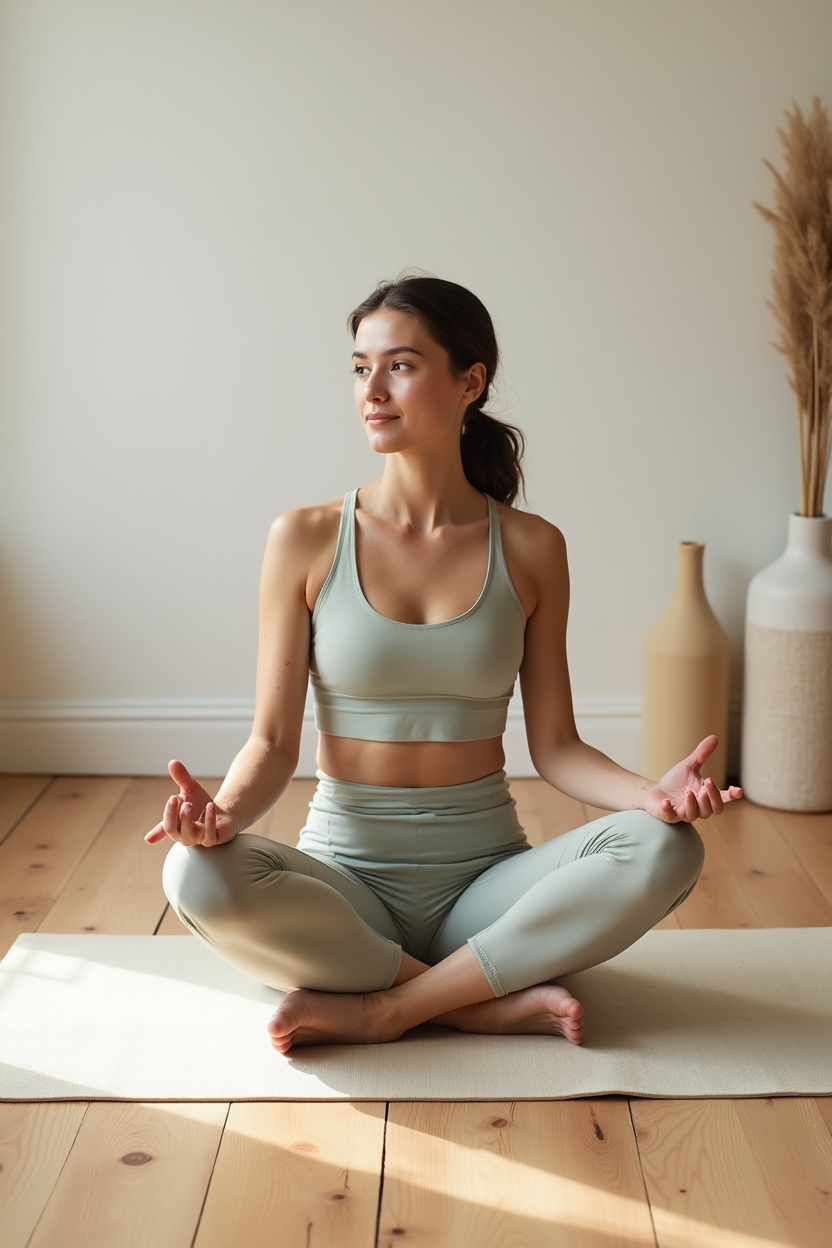
Seated ankle circles and toe wiggling
Why: Small rhythmic motions encourage range of motion without strain and provide calming proprioceptive input. Toe wiggling increases circulation and signals safety to the nervous system.
How: While seated, lift one foot slightly off the floor and make slow ankle circles—5–8 in each direction—keeping movement pain-free. Follow with gentle toe wiggling for 10–15 seconds, spreading and then relaxing the toes. Repeat on the other foot. If mobility is limited, move only within a comfortable arc and use the breath to guide each motion.
Calf activation to lengthen safely
Why: Activating the calf briefly before stretching reduces reflexive tightness and makes the subsequent lengthening feel safer and more effective.
How: Stand or sit with feet hip-width. Perform a gentle heel raise—lift the heels a few inches, pause, then lower slowly. Do 6–8 controlled reps. If seated, press the ball of the foot into the floor and lift the heel. Keep the movement deliberate and soft; this is awakening, not energizing.
Simple ankle stretches to improve sleep: how to improve sleep with ankles stretches
Here are six accessible stretches designed to ease the ankle and lower leg, each with cues, recommended timing, and easy variations for nightly practice. These are the core practices you can fold into a calming bedtime routine.
How to improve sleep with ankles stretches: seated dorsiflexion hold
Why: Dorsiflexion—bringing the toes toward the shin—targets the front of the ankle and the deeper ankle joint structures. Many people feel relief from anterior ankle tightness and improved balance after a few holds.
How: Sit with one leg extended and a slight bend in the knee. Wrap a towel or strap around the toes and gently pull the toes toward you until you feel a comfortable stretch in the front of the ankle and top of the foot. Hold 30–90 seconds with slow breathing. If sitting upright is uncomfortable, perform the same motion with the knee slightly bent or use a wall to anchor the foot.
Seated plantarflexion plus ankle circles (release and soothe)
Why: Plantarflexion—pointing the toes—relaxes the front structures and soothes the calf complex when paired with gentle circles. The combination creates balanced work for both sides of the ankle joint.
How: From a seated position, point the toes away from you for 10 seconds, then make 6 slow circles in one direction and 6 in the other. Keep the movement within comfort; imagine tracing a slow, deliberate oval. Coordinate with an extended exhale to encourage softening.
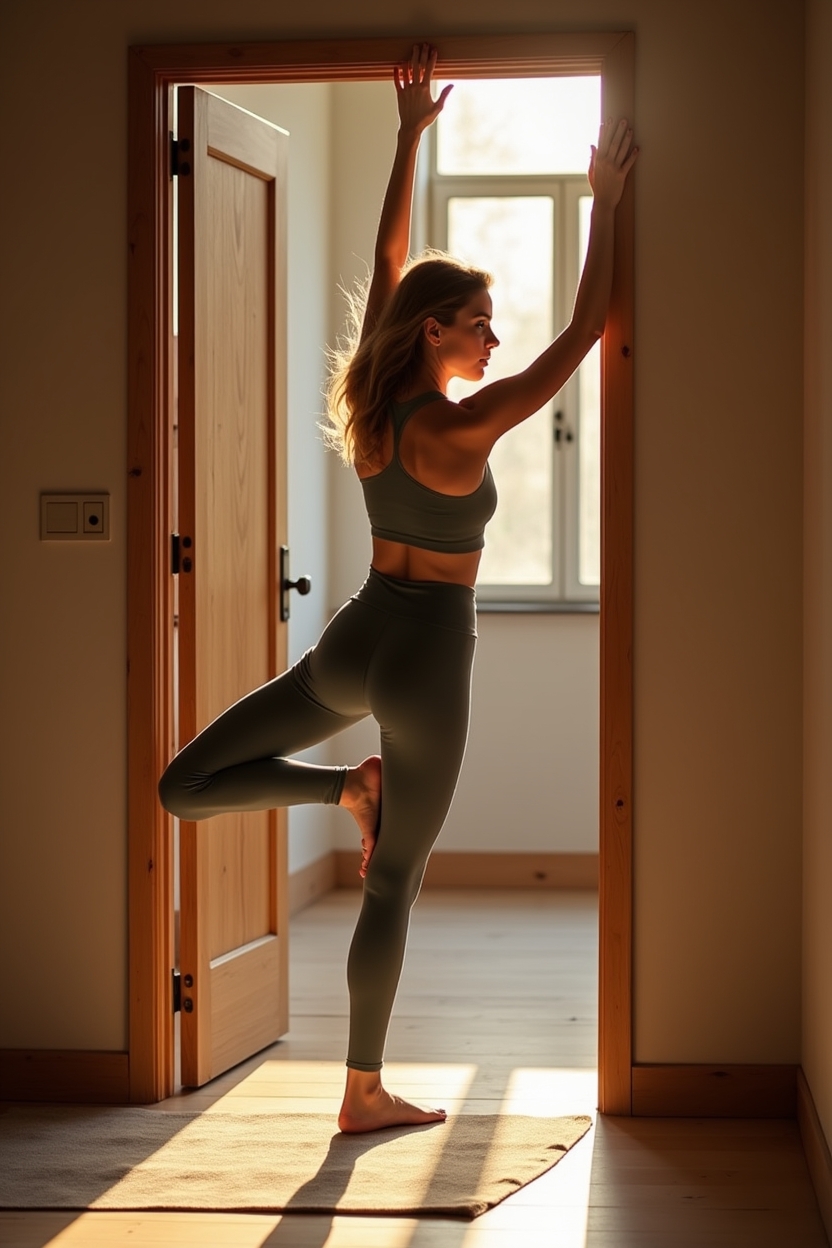
Standing calf stretch with soft breaths
Why: Tight calves often underlie restless-leg sensations and nocturnal cramps. A gentle standing calf stretch promotes both length and circulation.
How: Face a wall or use a chair for support. Step one foot back with the heel on the floor and the other foot forward, knee slightly bent. Keep the back leg straight if comfortable, press the heel down and feel a stretch along the calf. Soften the shoulders and breathe slowly for 30–60 seconds, then switch sides. For more support, bend the back knee slightly to reduce intensity.
Toe spread and floor press (grounding cue)
Why: Toe spreading and pressing into the floor is a somatic anchor that both activates intrinsic foot muscles and provides a calming, grounding sensation before sleep.
How: While seated or lying, press the toes and ball of the foot into the floor or mattress and attempt to spread the toes wide. Hold for 5–10 seconds, then relax. Repeat 6–8 times. Use this as a quick anchor when you notice the mind racing—press, breathe, release.
Ankle mobilization with a strap or towel
Why: For less mobile ankles, a strap or towel gives leverage to create small, progressive gains without strain. This is ideal if you want steady improvements that don’t provoke guarding.
How: Loop a strap or towel around the ball of the foot while seated. Keep the knee bent and gently pull the toes toward you while simultaneously pushing the knee forward (toward the wall if you are seated near one). Think small increments—5–10°—and hold for 20–40 seconds. Repeat 2–3 times per side. Increase range slowly over weeks, not days.
Self-massage: calf and peroneal sweep
Why: Touch calms the parasympathetic system and helps release localized tightness. A short self-massage moves fluid, eases adhesions, and provides comforting somatic input.
How: Use your hands or a soft massage ball. Starting at the ankle, gently sweep upward along the outside of the calf (peroneal muscles) and the central calf fibers toward the knee. Apply pressure that feels like a 3–4/10—not painful. Spend 1–2 minutes per side, combining slow exhalations with each pass. Finish with a light squeeze around the ankle bones to encourage relaxation.
Putting it together: a 10-minute bedtime ankle routine
This concise 10-minute routine combines the warm-up and three to four core stretches so you can try them immediately. Below is a clear, step-by-step flow with why and how for each mini-step.
Step-by-step 10-minute practice
Why: A short, consistent flow builds safety and signals to your nervous system that it’s time to wind down. The following steps balance awakening with lengthening and end with soothing touch.
How: Follow this sequence: begin with breath and a 1-minute body scan, then do seated ankle circles and toe wiggling (1 minute per side), follow with a seated dorsiflexion hold on each foot (45–60 seconds), perform a standing calf stretch on each side (45 seconds), finish with a 1–2 minute self-massage sweep and a closing 1-minute slow-breathing rest. Move slowly and keep intensity low—this is a bedtime ritual, not a workout.
- 1 minute: Breath and body scan (slow inhales/exhales).
- 2 minutes: Seated ankle circles and toe wiggling (1 min per foot).
- 2 minutes: Seated dorsiflexion holds (30–60s per foot).
- 2 minutes: Standing calf stretch (45–60s per side).
- 2–3 minutes: Self-massage and closing slow-breathing rest.
Shorter and longer variations
Why: Life is variable. Having a compact option helps you keep the habit, while a longer practice supports deeper release on restful nights.
How: For busy evenings, use the 2-minute mini routine: 30 seconds breath/body scan, 30 seconds of toe spreads, and 60 seconds of alternating gentle calf stretch. For a 20-minute restorative session, add longer holds (90s each), more self-massage time, and finish lying down with bolsters under the knees and a 5–7 minute body-scan and breath practice. The key is consistency and listening to your body.
Practical tips, safety, and troubleshooting
A few common questions arise when people try ankle work for sleep. Below are simple safety notes, habit tips, and breath patterns that complement the stretches.
If you have pain, pins & needles, or neuropathy
Why: Certain sensations—sharp pain, worsening numbness, sudden swelling—are warning signs that deserve professional attention. For conditions like diabetic neuropathy, chemotherapy-related neuropathy, or severe peripheral nerve issues, caution is essential.
How: Stop any movement that causes sharp or increasing pain. If you feel pins-and-needles that worsens with movement, reduce intensity and consult your healthcare provider. Favor gentle range of motion, light touch, and shorter holds. When in doubt, use the 2-minute breathing and toe-spread anchor and follow up with a clinician for personalized guidance.
Keeping the practice consistent: cues and habit design
Why: Small rituals stick when they’re tied to existing habits. The goal is gentle consistency rather than perfection.
How: Anchor the ankle routine to a nightly trigger—after you brush your teeth, change into pajamas, or dim the lights. Keep a small visual cue (a folded towel or strap) by the bed to remind you. Start with the 2-minute mini routine on busy nights so the habit remains unbroken.

Combining with breathwork and progressive relaxation
Why: Breathwork and progressive muscle relaxation amplify the calming effects of ankle mobility, helping you fall asleep faster and sleep more soundly.
How: Pair every stretch with a slow exhale—inhale for 4, exhale for 6 or 7. For progressive relaxation, tense the foot and calf gently for 5 seconds, then release with a long exhale; move progressively up the body if you like. This pairing turns each ankle movement into a full nervous-system down-regulation practice.
Next steps and resources
If you find these practices helpful, you can deepen and personalize them. Below are suggestions for further learning and a simple printable you can keep beside the bed.
Suggested further reading and videos
Why: A few trusted resources can expand your understanding of somatic practice, gentle mobility, and sleep-supportive breathwork. Seek materials that emphasize slow movement and safety.
How: Look for short guided routines focusing on ankle mobility, progressive muscle relaxation scripts, and gentle restorative sequences. Videos that model slow, mindful technique are especially helpful when learning new mechanics. Use them sparingly—these are supplements, not substitutes for regular bedside practice.
Printable cue sheet and 10-minute routine (worksheet)
Why: A one-page worksheet makes the practice easy to follow without screens and supports habit formation.
How: Use the downloadable worksheet to keep a simple checklist by the bed: breath scan, ankle circles, dorsiflexion holds, calf stretch, self-massage, and closing breath. The sheet includes timing options and safety cues so you can choose the 2-, 10-, or 20-minute version as needed.
Download the 1‑page bedtime ankle routine
Save or print a simple, printable worksheet with the 10-minute routine, 2- and 20-minute options, timing cues, and safety reminders—designed to tuck into your bedside ritual.
Download the bedtime ankle routine
Final Thoughts
Small nightly rituals add up. Practicing how to improve sleep with ankles stretches is a gentle, reliable way to reduce physical discomfort, soothe the nervous system, and create a somatic cue for rest. Try the short routine for a few weeks, adjust to what feels right, and notice how a calmer lower body can help the whole system fall more easily into sleep.
You don’t need to do everything every night—pick the pieces that feel nourishing and let them become a steady, soothing habit.