How to Improve Sleep with Psoas Stretches: A Gentle, Practical Guide
Imagine lying in bed with a persistent low-level tension around the front of your hips — a subtle hold that makes deep, slow breathing feel a little harder and keeps you toggled toward alertness. The psoas is a deep hip flexor that links posture, breathing, and the nervous system, so when it’s tight it can quietly influence your nights.
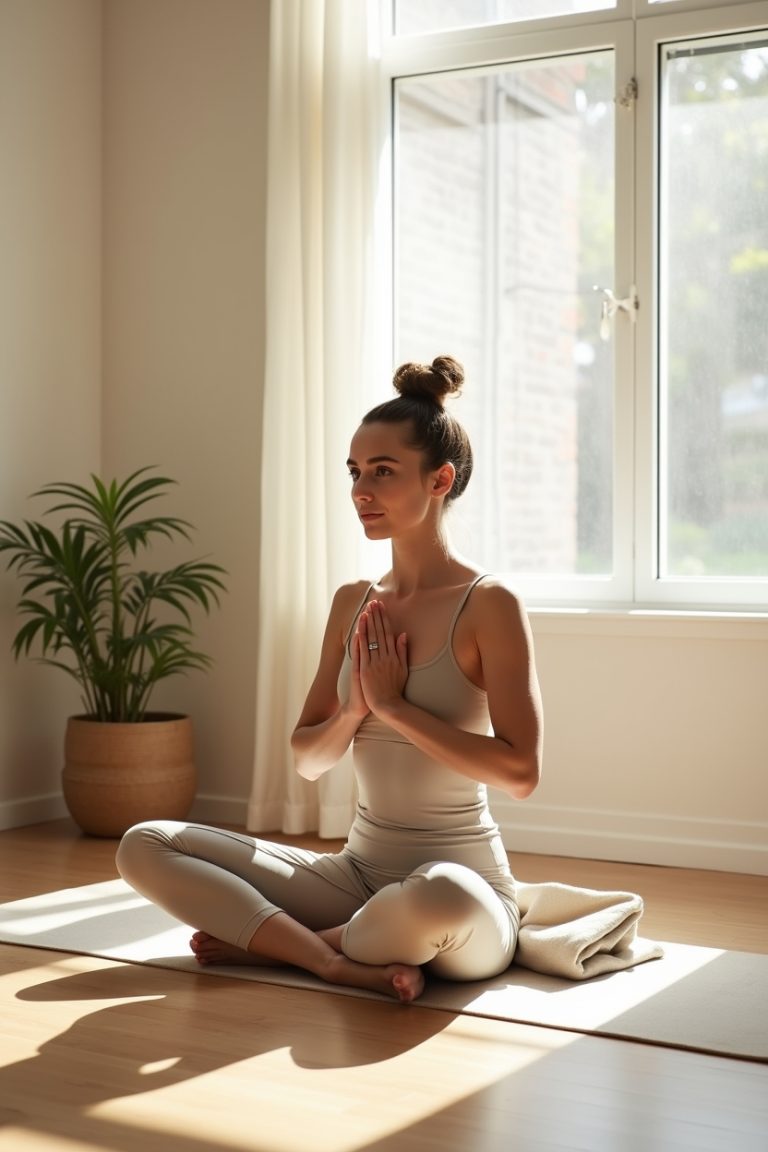
This guide explains how to improve sleep with psoas stretches through an accessible, step-based routine. You’ll find a short warm-up, five safe stretches with gentle variations, bedtime sequences for different time windows, and clear safety tips so you can begin tonight with confidence.
A gentle primer: what the psoas is and why it matters for rest
A little anatomy helps you practice with intention. This short primer describes where the psoas sits, what it does, and how everyday stress patterns can keep it braced — sometimes in ways that reach into your sleep.
Psoas 101 — location, function, and common patterns of tension
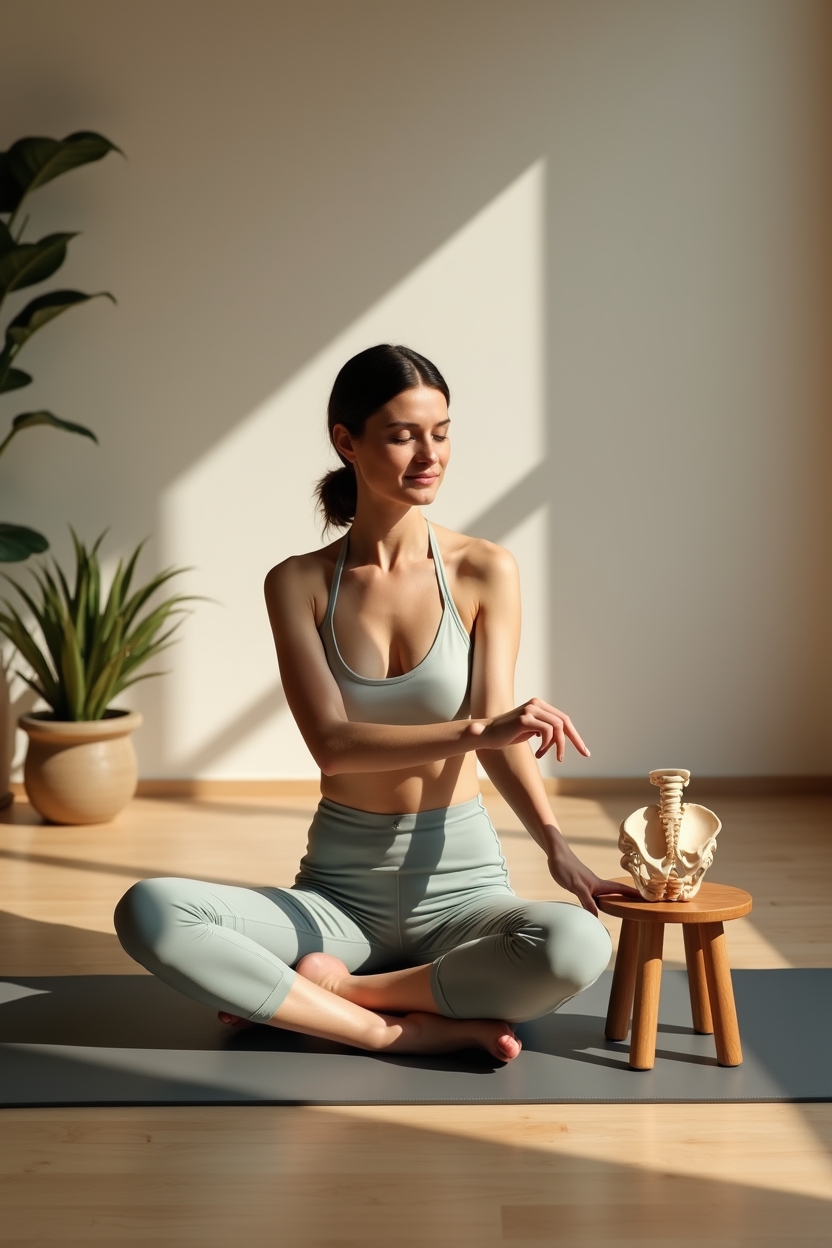
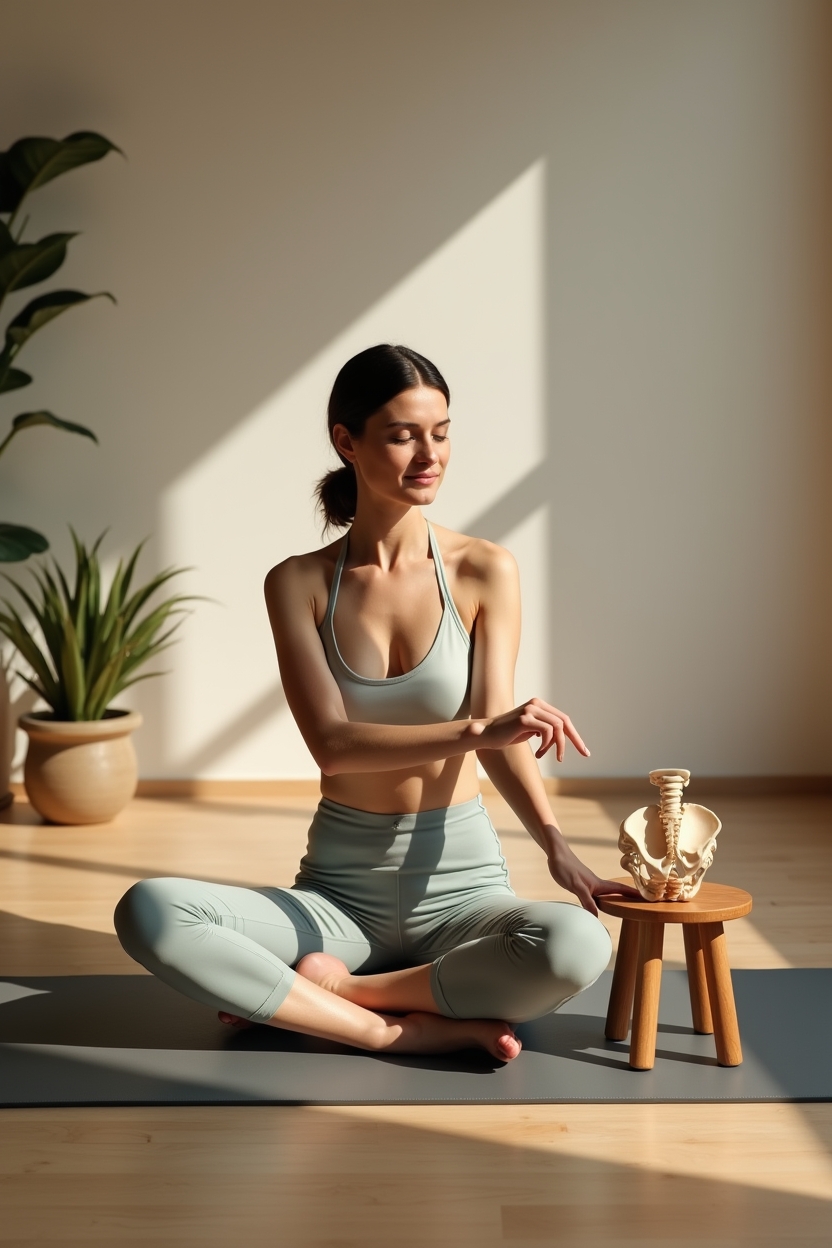
The psoas (sometimes called the iliopsoas when paired with the iliacus) is a deep muscle that runs from the lumbar spine down to the front of the femur. It helps lift your thigh toward your torso and stabilizes the spine when you stand, walk, or carry weight. Because it connects spine to leg, it’s both postural and functional.
Many people develop habitual tension in the psoas from prolonged sitting, repeated forward-leaning postures, or chronic sympathetic activation — the body’s fight/flight setting. When you sit for hours, the psoas shortens. When you’re in stress mode, it can stay mildly contracted as part of a readiness pattern. Over time this shortness shows up as subtle lumbar compression, limited hip extension, and a feeling of being “braced” rather than relaxed.
How psoas tension can disrupt sleep — breath, alignment, and nervous system links
A tight psoas can make diaphragmatic breathing less efficient because the front body is held in mild flexion; the diaphragm and psoas sit in the same neighborhood and influence the space your belly and lower ribs travel through. When breath is shallow, heart rate stays a bit higher and the nervous system leans toward alertness — not ideal for drifting into restorative sleep.
Physically, psoas tension can also produce hip discomfort or a sense of pelvic misalignment that wakes you when you change positions. Emotionally and neurologically, the psoas is sometimes described as a keeper of survival tone. So learning how to improve sleep with psoas stretches is not just about loosening a muscle — it’s about inviting more nervous-system ease and better breath mechanics before bed.
How psoas stretches support better sleep (how to improve sleep with psoas stretches)
Stretching the psoas gently can influence sleep through improved breathing, pelvic alignment, and a softer sympathetic tone. Here we explain the benefits and set realistic expectations about timing and frequency.
When to practice for best sleep effects
Why: Evening practice can directly influence the nervous system close to bedtime, while morning work can build longer-term flexibility and reset daily posture. If your primary goal is sleep, even short sessions before bed nudge your system toward relaxation.
How: Aim for a brief evening practice 20–60 minutes before you plan to sleep so your body has time to settle. If evenings aren’t possible, a morning or midday stretch practice still moves the needle over weeks. Consistency matters more than duration: frequent, gentle practice accumulates into measurable changes in comfort and ease.
What ‘gentle’ means: intensity, props, and safety cues
Why: The psoas is deep and sensitive; aggressive forcing into a stretch can increase guarding rather than release. Gentle work invites the nervous system to cooperate, which is essential when your aim is sleep.
How: Use props — bolsters, folded blankets, or blocks — to support the body so you’re never straining. Follow a breath-first approach: if a stretch causes breath-holding or a spike in heart rate, soften or back off. Look for a mild, even sensation of length rather than sharp or radiating pain, and prefer longer holds at low intensity over short, intense lengthening.
Warm-up micro-sequence before psoas-focused stretches
A 5–7 minute warm-up prepares the hips, low back, and breath, so your psoas stretches are safer and more effective. These three short steps carry a clear Why and How.
Step 1 — diaphragmatic breathing (2–3 minutes)
Why: Slow diaphragmatic breathing calms the nervous system and creates gentle movement through the lower ribs and belly, which indirectly mobilizes the psoas neighborhood.
How: Sit or lie comfortably. Place one hand on your belly and one on your chest. Breathe slowly so the belly rises before the chest — a 4–6 second inhale, a 4–6 second exhale is a good starting rhythm. Keep the inhale soft rather than forceful. Continue for 2–3 minutes, noticing a subtle unease soften.
- Find a comfortable seat or lie on your back with knees bent.
- Place one hand on belly, one on chest to feel movement.
- Inhale 4–6 seconds, exhale 4–6 seconds, focusing on belly expansion.
- Repeat for 2–3 minutes, keeping breath even and soft.
Step 2 — gentle pelvic tilts and knees-to-chest (1–2 minutes)
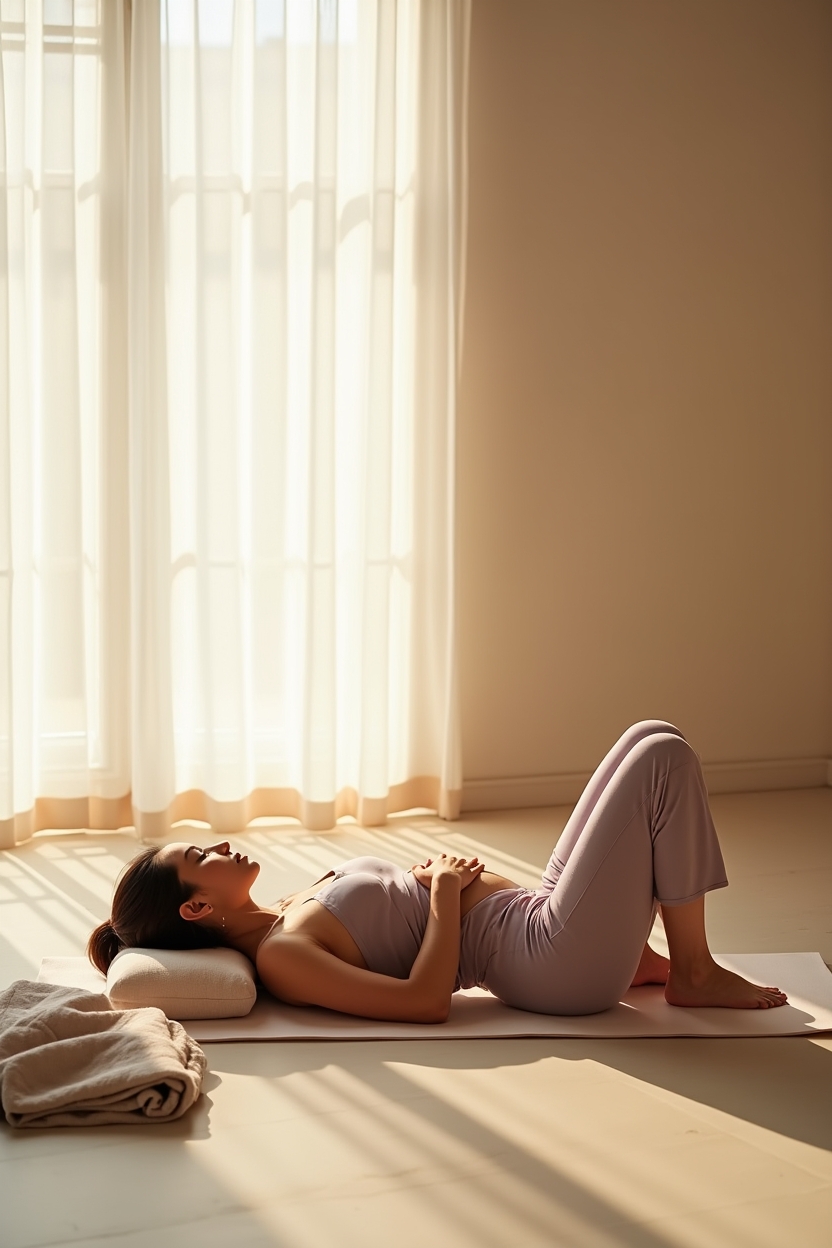
Why: These movements awaken the lower core and soften lumbar holding patterns, reducing the risk of low-back compression during deeper hip work.
How: Lying on your back with knees bent, perform 6–8 small pelvic tilts: exhale to tuck the tailbone slightly and flatten the low back; inhale to neutral. Follow with alternating knees-to-chest hugs: draw one knee toward your chest for 3–4 breaths, then switch. Keep movements small and breath-linked.
- Lie on your back with knees bent and feet hip-width.
- Exhale to tilt the pelvis and flatten the low back, inhale to release — repeat 6–8 times.
- Draw one knee to chest for 3–4 breaths, return, then switch sides.
- Move slowly and let the breath lead the motion.
Step 3 — kneeling hip circles or cat/cow variations (1–2 minutes)
Why: Gentle hip circles and spinal flexion/extension create space around the psoas attachments and warm the joints without overstretching.
How: From hands-and-knees, make small hip circles in each direction or flow through 6–8 rounds of cat/cow with an emphasis on soft long breath. If kneeling is uncomfortable, do seated pelvic circles instead. Keep the range comfortable and avoid forcing any movement.
- Come to hands-and-knees or sit comfortably.
- Make small hip circles 5–8 times each direction, or flow cat/cow 6–8 rounds.
- Coordinate movement with breath — inhale to create space, exhale to release.
- Modify to sitting if kneeling is uncomfortable.
Core psoas stretches to try tonight (safe, stepwise variations)
Below are five gentle, accessible stretches that invite psoas length without aggressive force. Each entry includes what you’ll feel, step-by-step setup, breath cues, props, timing, and an easy modification.
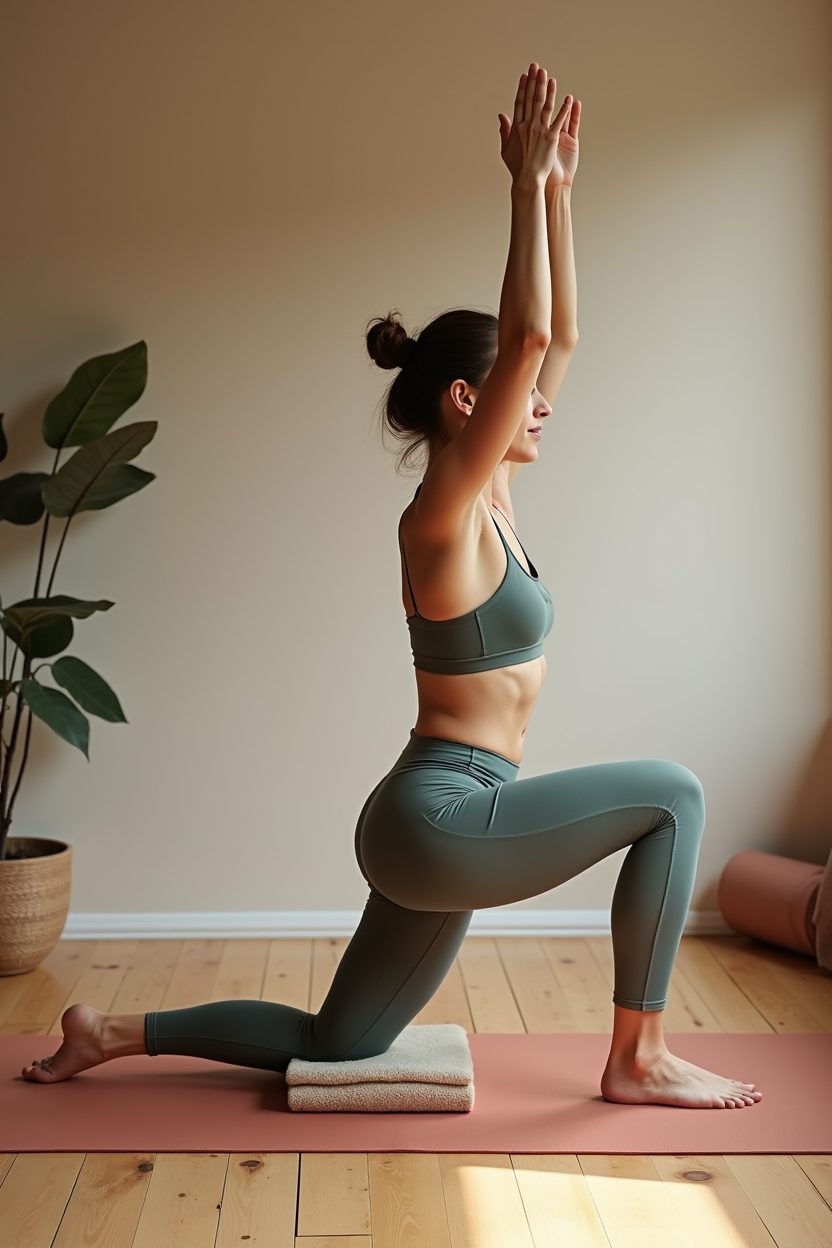
Supported low lunge (Anjaneyasana) — accessible psoas lengthening
How-to: From a kneeling lunge, bring one foot forward so the front knee stacks over the ankle and the back knee rests on a cushion. Tuck the pelvis slightly and, on an inhale, create a small lift through the chest; on the exhale, soften into the front hip crease. Use a block under the hands or a bolster beside the front thigh for support.
What you’ll feel: A gentle length along the front of the hip and into the belly. Keep breath steady — aim for 4–6 relaxed breaths per side. Modification: If kneeling is uncomfortable, practice a standing lunge with the back foot on a low step or support.
- Kneel and bring one foot forward to form a 90-degree front knee.
- Place a cushion under the back knee and optionally a block under hands.
- Slightly tuck the pelvis, inhale to find length, exhale to soften into the stretch.
- Hold 6–10 breaths, then switch sides.
Reclined knee hug with gentle opposite leg drop — internal psoas awareness
How-to: Lie on your back and hug one knee to your chest. Keep the opposite leg long and soft on the floor; if that feels intense, bend the opposite knee with foot on the mat. From the hug, gently lower the extended leg a few inches toward the floor while keeping the pelvis neutral.
What you’ll feel: This supine position lets you sense differences between sides and invites the psoas to release with minimal load on the spine. Breathe slowly; if any lumbar discomfort appears, reduce the range. This pose is a calm, nervous-system-friendly way to begin exploring internal psoas ease.
- Lie on your back and hug one knee toward the chest.
- Keep the other leg long or bent with foot on the mat for support.
- Gently lower the extended leg a few inches while keeping pelvis neutral.
- Hold 6–8 breaths and note sensations, then switch sides.
Supported bridge with micro anterior tilt — subtle psoas engagement
How-to: Lie on your back with knees bent and feet hip-width. Press into the feet to lift the hips and slide a block under the sacrum for a supported bridge. From support, explore a small anterior pelvic tilt — a tiny lift of the front hips toward the ceiling — coordinated with exhale to soften the front line.
What you’ll feel: This posture lengthens the front of the hips while offering spinal support. Keep movement minimal and breath-led. If the low back feels compressed, lower the block or skip the tilt and simply enjoy the supported hold.
- Lie supine with knees bent and feet on the floor.
- Lift hips and slide a block under the sacrum for support.
- On exhale, explore a subtle anterior pelvic tilt; soften on inhale.
- Hold for 8–12 breaths, focusing on even, calm breathing.
Lying figure-four with gentle hip hinge — lateral and front-line balance
How-to: Lying on your back, cross one ankle over the opposite thigh into a figure-four. Draw the uncrossed knee slightly toward the chest while allowing a tiny forward/back micro-hinge at the hip. This small movement helps you locate where the psoas responds without forcing length.
What you’ll feel: A balance between lateral outer-hip release and a subtle front-line opening. Use a strap or hands behind the thigh if reaching is limited. Keep holds short and attentive, and return to neutral between sides.
- Lie on your back and place ankle over opposite thigh (figure-four).
- Draw the uncrossed knee toward the chest and explore a small hip hinge.
- Support with a strap behind the thigh if needed.
- Hold 6–8 breaths, then release and repeat on the other side.
Supported reclined butterfly with breath focus — calming finish
How-to: Place a bolster or rolled blanket under your spine lengthwise, supporting from sacrum to shoulders if possible. Bring soles together and allow knees to fall open. Rest the hands on the belly and practice slow diaphragmatic breathing.
What you’ll feel: Gentle opening across the front hips and inner thighs with soft gravity-assisted length in the psoas. This restorative posture is an excellent way to close a bedtime practice because the supported spine and breath focus encourage vagal tone and ease.
- Place a bolster lengthwise under the spine and lie back with knees bent.
- Bring soles together and let knees open comfortably.
- Rest hands on the belly and breathe slowly for 8–12 breaths.
- Stay for 5–10 minutes for a calming end to the sequence.
Integrating how to improve sleep with psoas stretches into a bedtime routine
These compact sequences combine the previous work into realistic 5-, 10–15-, and 20-minute options so you can pick what fits your evening energy and schedule.
5-minute micro-routine for very tight schedules
Why: When time is minimal, a focused contraction on breath and one targeted stretch is enough to shift your nervous system toward rest. How: Begin with one minute of diaphragmatic breathing, then choose one side for a supported low lunge (or the supine knee hug) and hold 6–8 breaths. Finish with two slow belly breaths lying down. This tiny ritual signals winding down.
- 1 minute diaphragmatic breathing (seated or supine).
- 2–3 minutes supported low lunge or supine knee hug on one side.
- 1 minute of slow belly breaths lying down to close.
10–15 minute unwind routine for consistent nightly practice
Why: A slightly longer routine lets you warm up, address both sides, and finish with a restorative hold. How: Follow the 2–3 minute warm-up (breath + pelvic tilts), do supported low lunge on each side for 6–8 breaths, add a brief supported bridge (6–8 breaths), and end in supported reclined butterfly for 3–5 minutes with breath focus.
- 2–3 minute warm-up: breath, pelvic tilts, small hip circles.
- Supported low lunge on each side, 6–8 breaths each.
- Supported bridge for 6–8 breaths.
- Finish with 3–5 minutes supported reclined butterfly.
Longer 20-minute practice for deeper release and bedtime transition
Why: Some evenings call for a slower, more deliberate unwinding that integrates nervous-system downregulation and longer tissue time. How: Start with 3 minutes of breath work, the full 5–7 minute warm-up sequence, then cycle through the five core stretches with mindful 8–12 breath holds, closing with 8–12 minutes in supported reclined butterfly or Savasana with a focus on gentle diaphragmatic breathing. This length supports both physical release and a calming transition to sleep.
- 3 minutes diaphragmatic breathing.
- 5–7 minute warm-up sequence.
- Cycle through 4–5 core stretches with 8–12 breath holds each.
- Close with 8–12 minutes supported rest focusing on slow breath.
Safety, common challenges, and when to adapt or seek help
Psoas work is gentle for most people, but certain sensations require attention. This section helps you differentiate normal release from warning signs and offers practical adaptations.
Troubleshooting common sensations — discomfort vs. harmful pain
Tip: Mild pulling, a warm ease, or a sense of lengthening are typical. Sharp, shooting, or radiating pain into the leg is a red flag. If a sensation spikes during a stretch, reduce the range, add support, or stop. Use breath to modulate intensity — exhale and soften when the stretch feels brightening, inhale and back off when the nervous system tenses.
Small adjustments — like bending the front knee slightly in a lunge or placing an extra cushion under the back knee — often make the difference between productive release and strain.
Modifications for mobility limitations, sciatica, or recent injuries
Tip: If you have limited mobility, choose supine versions of the stretches and keep holds brief. For sciatica or radiating symptoms, avoid deep forward hip hinges and prioritize supported positions. Use straps, higher bolsters, and shorter lever arms; for example, keep the back knee elevated on a folded blanket in lunges or perform bridge with feet closer to the hips to reduce lumbar shearing.
When recovering from recent injuries, err on the side of stabilization and gentle breath work. Small, frequent sessions are better than occasional deep attempts, and a qualified physio can suggest which variations match your condition.
Signs to stop and seek professional care
Tip: Stop and consult a healthcare provider if you experience sharp nerve pain, numbness, progressive weakness in the leg, or persistent worsening of low-back symptoms. If you have recent trauma, significant spinal history, or are pregnant, check with your clinician before beginning new stretch routines.
A skilled physical therapist or yoga therapist can help you adapt poses safely and build a plan that supports both hip health and sleep goals.
Next steps: building a sustainable psoas-to-sleep practice
Sustainability is about gentle consistency. These practical habits help you notice progress and combine psoas work with other evening rituals that support sleep.
Keeping a simple sleep + practice log
Tip: A short nightly log helps you detect patterns. Note timing of practice, duration, which poses you used, and a simple sleep rating (e.g., 1–5) for that night. Over two to four weeks you’ll see whether evening psoas work correlates with quicker sleep onset or fewer wake-ups.
Keep entries brief — one line per night — so the habit is easy. This gentle tracking also lets you experiment with timing and sequence without overthinking results.
Complementary practices: breath, meditation, and evening rituals
Tip: Pairing psoas stretches with calming breathwork and a short meditation amplifies benefits. After your stretch sequence, spend 3–5 minutes in diaphragmatic breathing or a guided body-scan to deepen relaxation. Other gentle rituals — dimming lights, reducing screens, journaling a brief gratitude note — signal your system that night is for rest.
Remember: psoas release for better sleep often works best when integrated into an overall bedtime routine. The muscle responds to repeated, low-intensity invitations to soften, especially when the rest of your environment supports winding down.
Printable Bedtime Psoas Routine & Sleep Tracker
A gentle two-page worksheet with 5/10/20-minute routines, setup reminders, and a nightly log to track timing, duration, and perceived sleep quality. Designed to help you build a consistent psoas-to-sleep habit.
Download the Worksheet
Final Thoughts
Gentle, consistent attention to the psoas can create quiet shifts in breath, pelvic comfort, and nervous-system tone — all of which support better sleep. This isn’t about instant fixes but about small invitations to soften the front body and invite rest.
Try one of the short routines tonight and notice how your breath and ease change. Be patient with the process, keep the practice gentle, and let the small nightly steps add up.