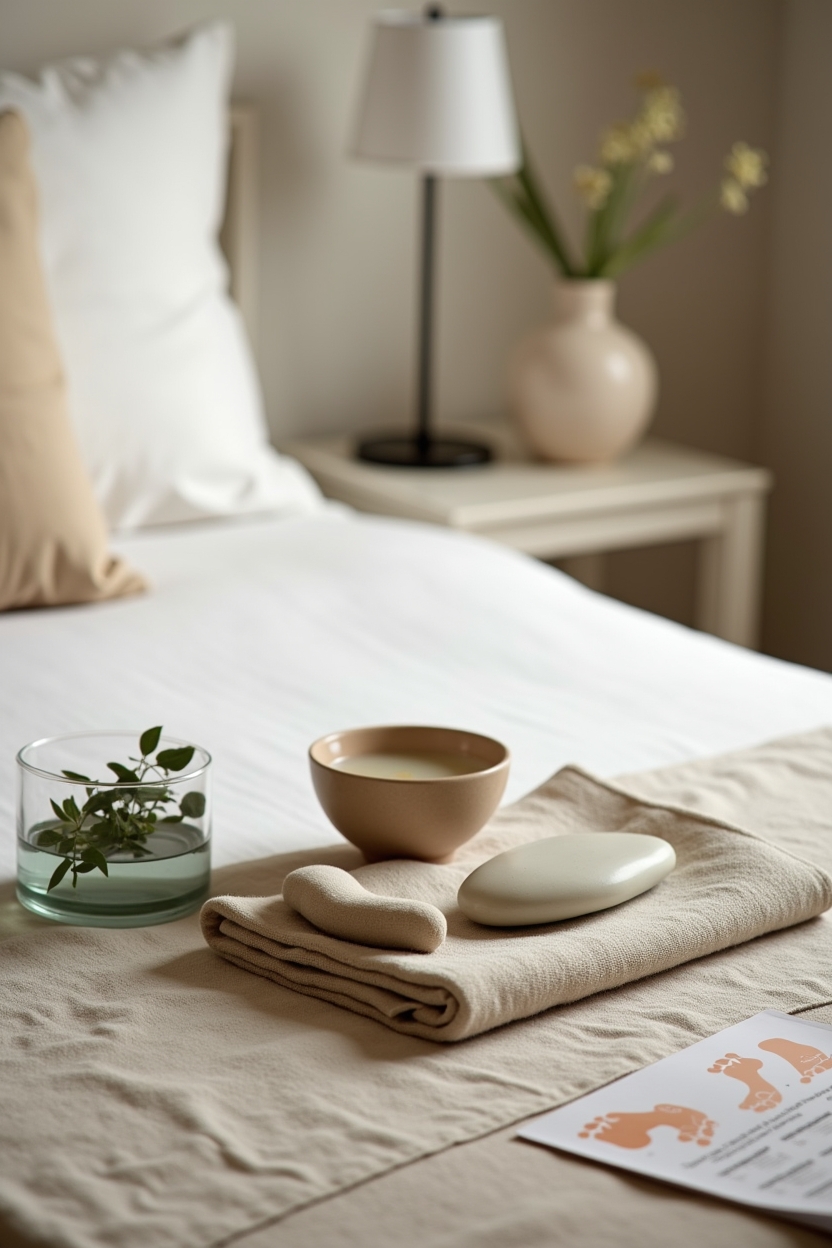
Best Poses for Feet and Sleep: A Gentle Yoga Guide
Imagine finishing your day with a small ritual that attends to the often-overlooked foundation of your body — your feet. Because feet influence circulation, nerve tension, and energetic grounding, a few gentle moves can ease the cascade of sensations that keep you turning the sheets at night.
These are the best poses for feet and sleep you can fold into an evening practice — a Pinterest-ready visual sequence and practical cues to help your feet feel soothed, your nervous system quieted, and your body invited toward rest.
Why the Feet Matter for Rest
Your feet are more than supports — they are a busy intersection of blood vessels, nerves, and reflex points that connect to the rest of the body. Paying gentle attention to them before bed can change how your whole system settles.
Circulation, nerves, and the bedtime cascade
At night, your body is trying to downshift from active movement to restorative processes. Good peripheral circulation helps remove metabolic waste and reduce sensations like tingling or cramping that can interrupt sleep. When blood flow to the feet is sluggish, you may notice more restlessness or wakefulness as the nervous system stays semi-alert.
Peripheral nerves in the feet carry a constant stream of sensory information. If the tissues around those nerves are tight or compressed, they can transmit discomfort up the chain, making it harder for the parasympathetic nervous system (the rest-and-digest system) to take over. Gentle stretches, soft self-massage, and mild inversions encourage venous return and soothe nerve endings — which together nudge you toward calm.
Finally, small movements at the ankles and toes stimulate proprioceptors (sensory receptors that tell your brain where you are in space). That feedback can feel stabilizing and grounding at bedtime — a subtle signal that you are safe and supported enough to let go.
Reflexology, grounding, and subtle-body benefits
Traditional systems — from reflexology to ayurvedic foot care — map points on the foot to organs, energy channels, or meridians. Whether or not you work from a strictly traditional framework, the practical upshot is similar: attending to the feet often produces whole-body relaxation. Rubbing the sole, stretching the plantar fascia, or gently mobilizing toes can lower muscle tone and soften breath.
There’s also an energetic sense of grounding that can be especially helpful before sleep. Your feet are literally the contact points with the earth — bringing mindful attention to them, and to the sensations of support and weight, can shift mental chatter into embodied awareness. This isn’t just poetic language — it’s a reliable way to invite the nervous system into a calmer state.
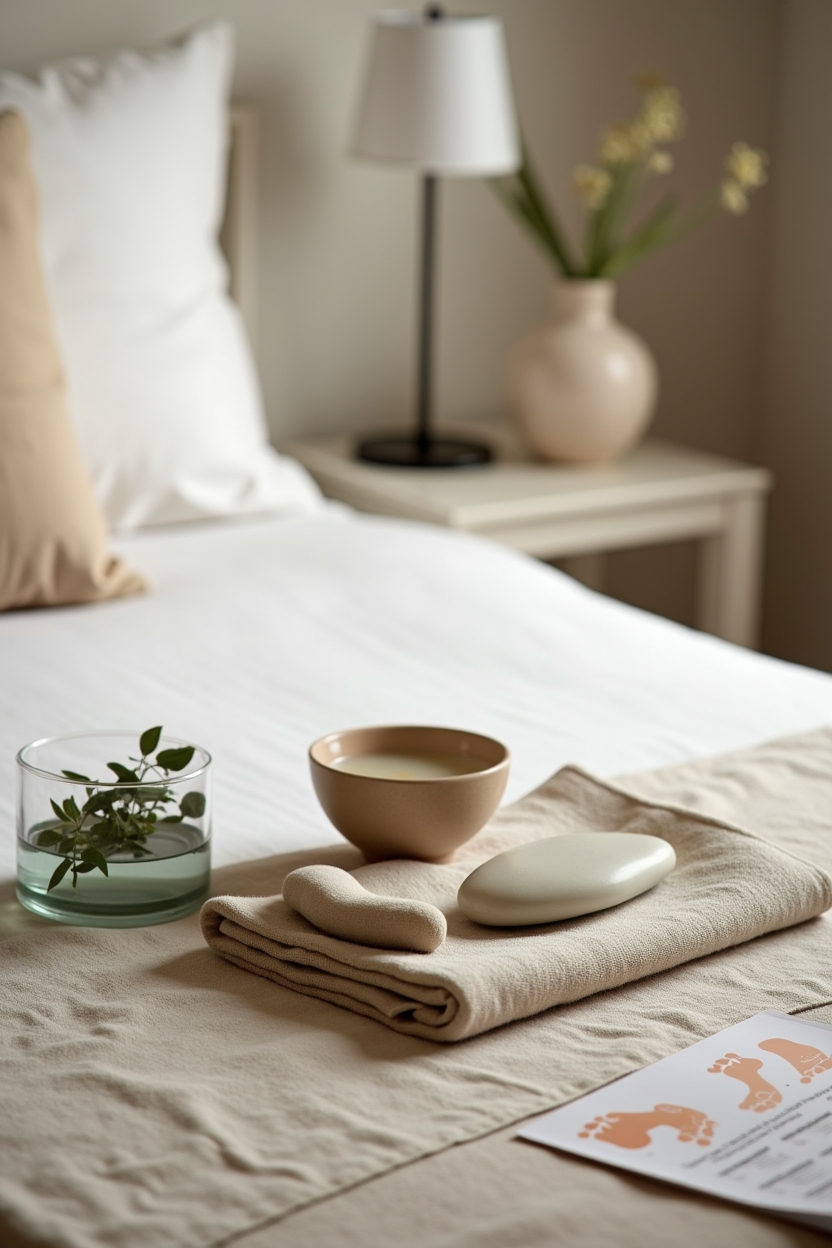
How to Use These Poses for a Restful Night — best poses for feet and sleep
A few practical notes will help these postures be both effective and gentle. You can try the full sequence, or pick one pose and do it nightly — both approaches work.
When to practice and how long
Aim to practice 20–60 minutes before your intended bedtime. This window lets your body receive the calming signals and begin lowering core temperature and arousal before you turn off the lights. If your evening is tight, a focused 5–10 minute sequence on the feet still provides benefit.
For each posture, hold gently rather than forcing depth. Typical holds range from 30 seconds to 3 minutes depending on comfort and pose. When you do the full bedtime sequence, aim for a slow, unhurried pace — two to three breaths per movement, with longer holds for supported restorative positions.
Track how you feel over a week. Sleep improvements can be cumulative; small nightly practices often yield clearer changes after several days.
Props, breath cues, and safety tips
Useful props: a bolster or firm pillow to support hips, a folded blanket under knees, a strap for toe holds, and a small towel for rolling under the foot. These let you find ease without strain. Soft lighting, a light blanket, and a warm foot bath beforehand amplify the soothing effect.
Breathe gently. Use long exhalations — for example a 4–6 count inhale and a 6–8 count exhale — to engage the parasympathetic nervous system. If counting disturbs your relaxation, focus on lengthening the exhale slightly longer than the inhale.
Modify as needed: avoid deep hamstring tension if you have sciatica, reduce ankle mobilization when inflammation is present, and consult a medical professional for neuropathy or recent foot injuries. The keyword helps center you in this gentle practice: the best poses for feet and sleep are small, supportive, and adapt to your needs.
Best Poses for Feet and Sleep: A Gentle Bedtime Sequence
Below are six Pinterest-friendly poses focused on your feet and on easing the body toward rest. Each entry includes how-to steps, why it helps for sleep and foot health, simple modifications, and a short photo tip.
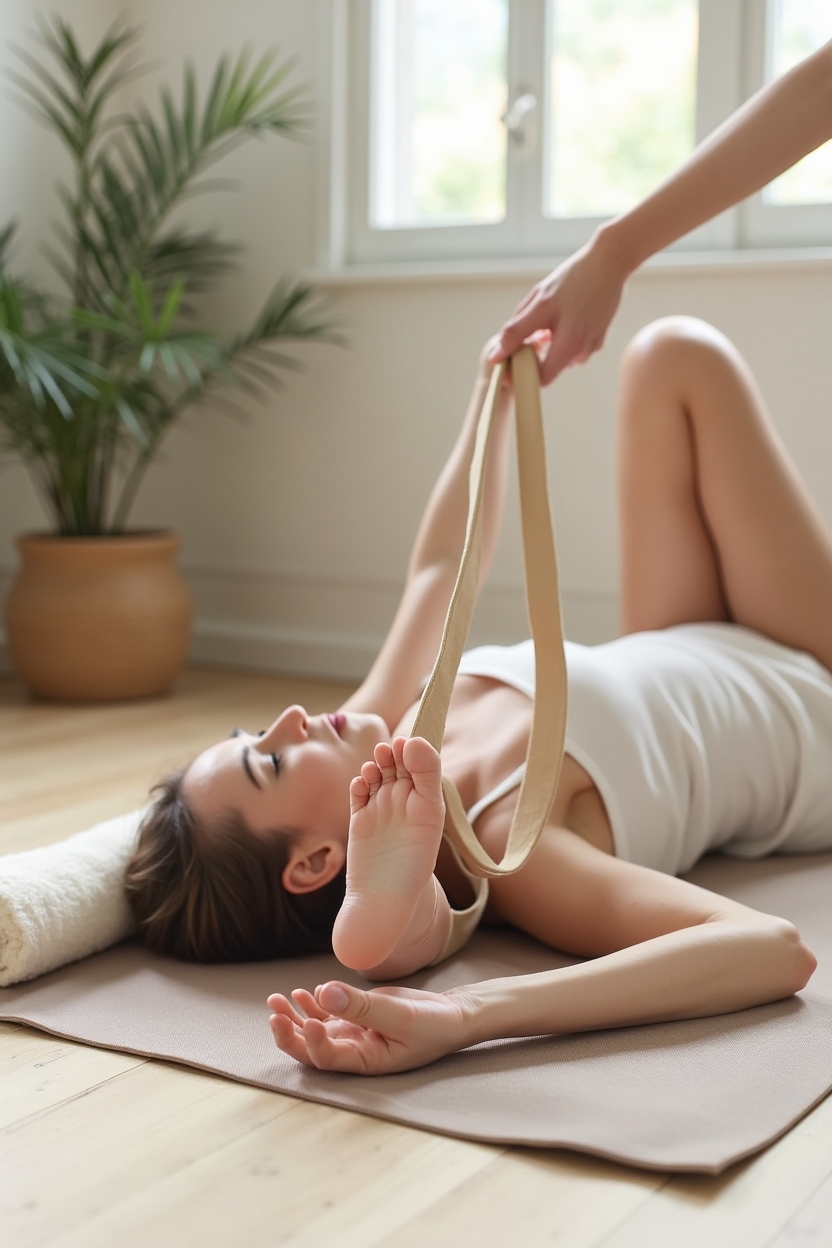
Reclined Hand-to-Big-Toe (Supta Padangusthasana) — toe release
How-to: Lie on your back with one knee bent and foot on the floor. Loop a strap around the ball of your extended foot and gently draw the leg toward the ceiling, keeping the opposite hip grounded. Allow the ankle to rotate slowly and let the toes relax or actively grip the strap for a gentle toe release.
Why it helps: This posture stretches the calf line and the plantar fascia, releasing tension that can pull on the foot arch. The focused attention on ankle rotation soothes peripheral nerves and signals the nervous system that you’re shifting into rest.
Modifications: Bend the knee if the hamstring is tight or place the foot slightly wider from the midline. Use a towel instead of a strap if needed. Keep both hips level; do not force straightening.
Pinterest tip: Overhead shot showing the strap, the extended leg, and a relaxed facial expression. Soft evening tones and a visible blanket enhance the bedtime vibe.
Calf and Sole Massage with strap — plantar relief
How-to: Sit or lie supine. Use a strap around the ball of the foot or hands to guide small, slow strokes along the sole and up the calf. Press with the thumbs into the heel mound and arch, then use the strap to glide from plantar fascia toward the calf in a long motion.
Why it helps: Direct massage increases local circulation, reduces adhesions in the plantar fascia, and soothes sensory nerves that can cause nighttime foot pain. The rhythmic motion is also calming — like a lullaby for the tissues.
Modifications: Use your hands for a gentler approach, or ask a partner for light, upward strokes toward the ankle. If you have acute plantar inflammation, reduce pressure and shorten duration.
Pinterest tip: Close-up of the foot on a textured blanket, warm natural light highlighting the hand or strap motion.
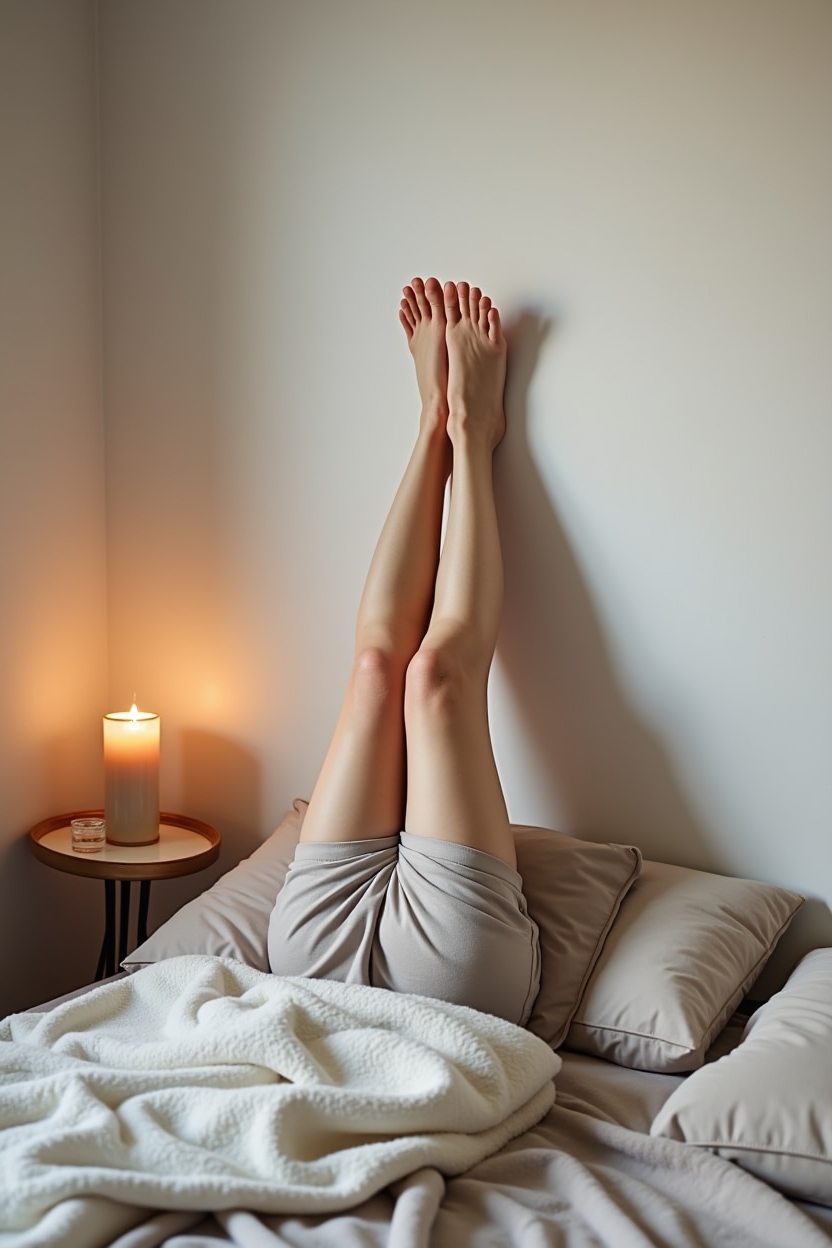
Supported Legs-Up-the-Wall (Viparita Karani) — gentle inversion for feet
How-to: Sit with one hip close to the wall and swing your legs up so they rest vertically against the wall. Place a bolster or folded blanket under your hips for support. Soften the ankles and allow gentle ankle circles or flexes within the restful posture.
Why it helps: Legs-up-the-wall encourages venous return and reduces swelling in the feet and lower legs. The mild inversion lowers heart rate and supports parasympathetic activation, making it a classic restorative posture for sleep.
Modifications: Move your hips further from the wall for a less vertical angle; bend the knees to reduce ankle tension. Place a rolled towel under the small of the back for added comfort.
Pinterest tip: Side-angle showing the full body lying with legs vertical, soft lighting, and a visible bolster to communicate ease.
Seated Foot Stretch and Toe Splay — mobility and grounding
How-to: Sit on a folded blanket with a straight spine. Bring the soles together or keep feet hip-width apart. Actively splay the toes, pressing through the metatarsal heads. Use your fingers to guide each toe, or place a small band across the toes and spread against it. Add ankle circles for mobility.
Why it helps: Toe splay increases proprioception and releases habitual gripping that raises tension through the feet and calves. Waking up the small muscles at the toes improves balance and creates a grounded feeling that supports relaxation.
Modifications: If sitting is uncomfortable, do toe splay with one foot on the floor while seated in a chair. Use your hands to gently open the toes rather than forcing them.
Pinterest tip: Top-down view of the toes splayed on a soft rug with a simple caption overlay describing the pose.
Reclined Knees-to-Chest with ankle rolls — integrated release
How-to: Lie back and hug both knees into your chest, wrapping hands around shins. Let the feet float and trace slow ankle circles or figure-eights, coordinating each movement with an exhale.
Why it helps: This gentle integration soothes the lower back while releasing tension that travels through the calves to the feet. The combined hug-and-roll pattern is reassuring for the nervous system — an embodied cue that it’s safe to unwind.
Modifications: Hold a single knee to the chest if the lower back prefers less rounding. Keep ankle movements small and supported by the hands.
Pinterest tip: Cozy bedside frame with dim lamp and a soft blanket; focus on the peacefulness of the pose rather than dramatic extension.
Foot-to-Heart (Supta Baddha Konasana + foot hold) — grounding close
How-to: Lie on your back in a reclined bound angle (soles together, knees wide) with a bolster under the spine if you like. Bring one foot toward the chest and hold it with both hands, making small micro-movements in the ankle and toes while keeping breath slow and soft.
Why it helps: This intimate hold creates a focused, calming feedback loop between touch, breath, and the heart center. The practice signals safety to the nervous system and can quiet active thinking before sleep, while offering gentle mobilization of the foot.
Modifications: Use a strap around the foot if reaching is difficult; place a bolster under each knee for added support. Alternate sides slowly and mindfully.
Pinterest tip: Soft blanket and warm tones, hands cradling the foot; crop so viewers see the hands-foot connection and relaxed face.
Modifications and Variations for Common Needs — best poses for feet and sleep
Different conditions ask for different approaches. Below are brief, practical adaptations for common concerns — plantar fasciitis, neuropathy, pregnancy, and limited mobility.
Plantar fasciitis-friendly tweaks
Do: emphasize gentle rolling and short holds rather than aggressive stretches. Warm the foot with a short soak or a few minutes of light massage before deeper work. Use a tennis ball or a soft roller under the arch for cautious release.
Don’t: force length in a way that sharpens heel pain or increases morning soreness. Avoid deep, passive plantar stretches that irritate the fascia.
Progress slowly: begin with 1–2 minutes of rolling and increase as tolerated, always pairing the work with relaxed breathing and short rest periods between attempts.
Options for neuropathy or reduced sensation
When sensation is reduced, prioritize circulation and gentle engagement over aggressive stretching. Short foot pumps, supported ankle circles, and compression (light socks) can be calming without risking overstretching.
Cue safety: check skin temperature and appearance, avoid overly intense pressure, and practice with a partner or practitioner if balance or proprioception is severely limited. These practices support yoga for better sleep and foot pain by enhancing blood flow while minimizing risk.
When in doubt, choose supported poses (legs-up-the-wall with bolster, reclined holds) rather than standing balance moves that could increase fall risk.
Pregnancy and mobility-conscious variations
In pregnancy, prioritize comfort and circulation. Legs-up-the-wall can be adapted by elevating the hips on a bolster and keeping knees bent. Avoid deep supine twists or positions that compress the abdomen after the first trimester.
Use props liberally: a bolstered recline, an extra blanket under the ankles, and chair-based toe splay are all excellent. Gentle foot massage and short mobility work are usually safe and comforting.
Listen generously to your body: breath and comfort are the main guides here. If lightheadedness occurs, come to a side-lying recovery and rest.
Two Pinterest-Friendly Mini-Routines to Try
Here are two simple sequences you can pin and return to night after night: a brisk 10-minute soothe and a more complete 20-minute routine. Each includes timing, breath focus, and a suggested pin caption.
Mini: 10-minute Foot Soothe
Order and timing: Start with 1 minute of seated toe splay and ankle circles each side, 2 minutes of calf and sole massage (one minute per foot), 3 minutes of single-leg Reclined Hand-to-Big-Toe (1.5 minutes per side), finish with 2 minutes supported Legs-Up-the-Wall.
Breath focus: lengthen the exhale by a count of two compared to the inhale — gentle and unforced. Move with the breath, pausing to notice sensations between transitions.
Pin caption suggestion: “Best poses for feet and sleep — 10-minute bedtime foot soothe to help you relax before lights out.”
- 1 minute — Seated toe splay and ankle circles (both sides)
- 2 minutes — Calf and sole massage (1 minute per foot)
- 3 minutes — Reclined Hand-to-Big-Toe (1.5 minutes per leg)
- 2 minutes — Supported Legs-Up-the-Wall to finish
Full: 20-minute Bedtime Feet and Calm Sequence
Order and timing: Begin with 3 minutes of warm foot awareness and toe splay, 4 minutes calf/sole gentle massage, 4 minutes Reclined Hand-to-Big-Toe (2 minutes per side), 4 minutes Reclined Knees-to-Chest with ankle rolls, and finish with 5 minutes Foot-to-Heart in supported recline.
Photo frames: choose one hero image (Legs-Up-the-Wall or Foot-to-Heart), plus 2–3 detail shots (close-up of foot massage, top-down toe splay). Tweet the pin caption with a calming line and breath cue to increase engagement.
Pin caption suggestion: “20-minute nightly routine — the best poses for feet and sleep to soothe aches, reduce swelling, and invite deep rest.”
- 3 minutes — Warm foot awareness + toe splay
- 4 minutes — Calf and sole massage
- 4 minutes — Reclined Hand-to-Big-Toe (2 min per side)
- 4 minutes — Reclined Knees-to-Chest with ankle rolls
- 5 minutes — Foot-to-Heart in supported recline to finish
Resources, Further Reading, and Photo/Layout Tips
A short list of approachable references and practical pinning advice to help your practice and your photography.
References and trusted reads
For anatomy: approachable books on foot structure and basic biomechanics are helpful for understanding why small movements matter. Look for resources that explain plantar fascia mechanics and ankle proprioception in plain language.
For therapeutic context: brief guides to reflexology and ayurvedic foot care help bridge modern and traditional approaches. For sleep: simple, evidence-based books on sleep hygiene and the role of relaxation add helpful context for building nightly rituals.
Short videos on gentle foot mobility from qualified yoga therapists can also be good companions to these poses — choose teachers who emphasize safety and breath as primary supports.
Pinterest composition tips for each pose
Lighting: aim for soft, directional light — early evening or a warm lamp — to communicate rest. Avoid harsh overheads. Colors: warm neutrals, soft pastels, and natural textures (wood, wool, linen) feel calming on a vertical pin.
Framing: vertical images (1080×1920) are most effective; use a clear hero shot and 2–3 detail images for multi-photo pins. Overlay text: keep it short and kind — “Best poses for feet and sleep” works as a direct, searchable headline. Include a short subtext with timing like “10-minute bedtime routine.”
Caption copy: give one calming instruction (breath cue or timing), a brief list of poses included, and a gentle invitation to save or try tonight. This balances usability with search-friendly phrasing.
Printable Bedtime Foot Sequence Card
A single-page, vertical bedtime card with the 10-minute mini-routine, pose icons, brief modifications, and photo/composition cues for Pinterest. Designed to print or save to your phone for nightly use.
Download the bedtime card
Final Thoughts
Small, consistent practices at the feet can ripple into deeper rest — they aren’t just about flexibility or pain relief, they’re invitations to slow down. Try one pose for a week, notice how your sleep shifts, and give yourself permission to adapt the sequence each night.
If you enjoyed these ideas, pin a routine that calls to you and share what you notice. Rest is a practice — gentle, repeatable, and deeply kind.