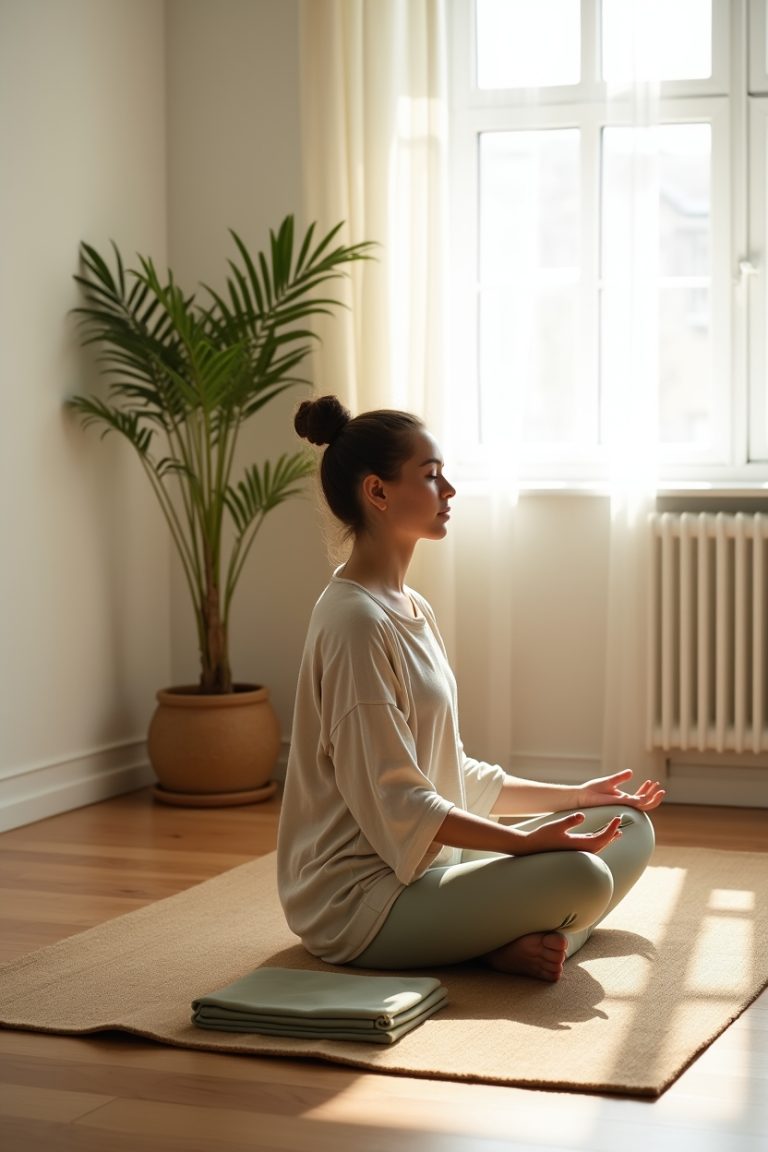
Hatha Yoga for Sleep for Empaths: A Gentle, Grounding Guide
If you’re an empath, falling asleep can feel like trying to close a door against a gust of impressions — other people’s feelings, unresolved conversations, and an overstimulated nervous system all drift into your nights. Hatha yoga for sleep for empaths offers a slow, reassuring path back to your body — practices that soothe arousal, create clear energetic boundaries, and invite parasympathetic rest.
This article promises clear concepts, gentle practices, and a short sleep-friendly sequence you can try tonight. You’ll find why sensitivity affects rest, which hatha tools calm the nervous system, and a printable-friendly routine designed for tender, mid-journey practitioners.
Why Empaths Sleep Differently: Sensitivity, Arousal, and Rest
Understanding why your nights feel different is the first act of kindness you can offer yourself. This section orients you with a clear, embodied map — physiology and psychology — so the practices later will feel like the right medicine.
Concept: High empathy, high arousal
Empaths tend to register emotional and sensory information more vividly. That isn’t a flaw — it’s a trait that correlates with a nervous system wired for deep attunement. The downside is that attunement can look like heightened sympathetic activation (the ‘go’ response) at night, which fragments sleep.
When your system remains primed after evening interactions, you may notice frequent awakenings, an inability to drop into deeper sleep stages, or a racing inner commentary. Recognizing this pattern — that your sensitivity can keep you physiologically alert — is the first step toward choosing practices that intentionally down-regulate arousal.
Concept: Emotional residue and parasympathetic shutdown
People leave impressions — not just words. Emotional residue from conversations, media, or crowded spaces can persist in your felt sense. For empaths, processing often happens later, when the day is quiet, which is why dreams can be vivid and mornings groggy.
What you want most in those hours is parasympathetic activation — the body’s ‘rest-and-digest’ mode. Practices that slow breath, invite grounding, and reduce sensory input help the parasympathetic nervous system come online so body and mind can move toward restorative sleep.

Tip: Signs that your sleep struggles are sensitivity-based
Look for patterns that point to sensitivity rather than only poor sleep hygiene: difficulty ‘switching off’ after social contact, repeatedly replaying conversations, chronically vivid dreams, and a tendency to absorb others’ moods. You might sleep fine after solitary days but struggle after emotionally charged ones.
These markers help you decide whether to focus on energetic containment and emotional clearing alongside standard sleep practices. If these signs ring true, the gentle, supportive tools below are tailored to help.
- Difficulty settling after social interactions
- Frequent awakenings tied to emotional thoughts
- Vivid, impression-filled dreams
- Feeling drained rather than rested after sleep
Hatha Yoga Basics for Empathic Sleep Support — hatha yoga for sleep for empaths
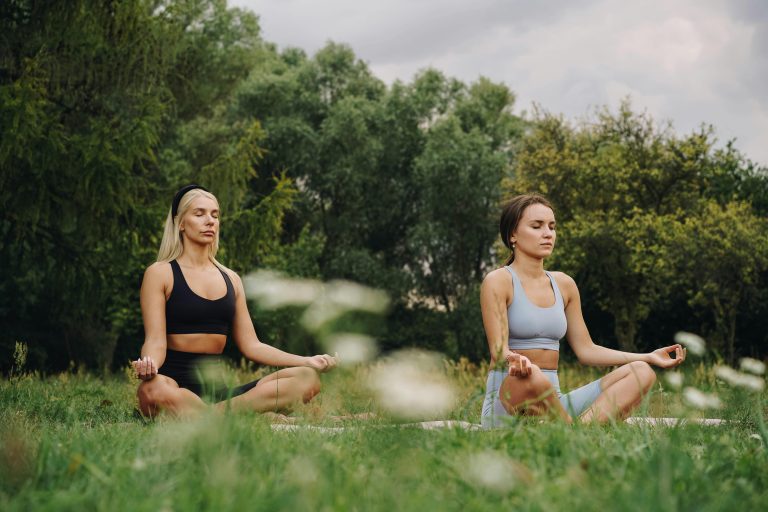
Hatha yoga emphasizes alignment, breath, and held poses. For empaths, its slower tempo and attention to the nervous system make it an ideal evening practice. Here we define the adaptations that make a hatha practice sleep-friendly for highly sensitive people.
Concept: The gentle tempo and why it calms an overactive nervous system
Hatha’s deliberate pace — slow transitions, mindful holds, and paused awareness — signals safety to the nervous system. Movement that is slow and intentional reduces sympathetic spikes and encourages vagal tone, the physiological correlate of calm.
Because empaths can be easily overstimulated by vigorous classes or complex sequences, a tempo that values steadiness over sweat creates a contained, restful practice. It’s not about doing less because you’re fragile — it’s about choosing practices that actually move you toward sleep.
Concept: Breath as the bridge — Ujjayi, extended exhales, and long inhales
Breath is a direct lever you can use to shift nervous system state. In hatha, breath coordinates movement and awareness; for sleep, specific ratios and textures of breath support parasympathetic engagement. **Ujjayi** — a gentle, ocean-sounding breath — softens the nervous system when used sparingly and with comfort.
Extended exhales, breath ratios (longer exhale than inhale), and calm, even breaths create safety. Always prioritize ease: if a technique feels effortful or creates lightheadedness, scale back to simple diaphragmatic breathing.

Tip: Modifications and boundaries for empaths
Set gentle limits in your practice. Use props, keep lights low, and choose nearby times to others’ energy. If someone’s energy feels heavy after a session, practice a short ritual to close your energetic field rather than pushing through more poses.
Boundaries are practical: choose shorter classes, avoid heated rooms close to bedtime, and keep your practice contained to help you leave impressions on the mat — not in your nervous system.
- Use bolsters and blocks to reduce effort
- Lower sensory input: dim lights, quiet space
- Keep sessions 20–30 minutes in the evening
- Use a short closure ritual to ‘seal’ your practice
Core Practices: Poses, Breathwork, and Restorative Holds
This is the heart of your evening toolkit. Below are the hatha elements that most reliably nudge the sensitive nervous system toward rest: calming asanas, breath practices, long supported holds, and the therapeutic choice of stillness.
Pose: Gentle forward folds and why they soothe the nervous system
Forward folds encourage inward attention and a softening through the abdomen, stimulating the vagus nerve and promoting calm. For empaths, a forward fold is less about depth and more about the invitation to release and attend inward.
Safe alignment matters: keep a micro-bend in the knees if the hamstrings feel tight, lengthen the spine before folding to avoid compressive collapse, and use a bolster or block under the forehead in deeper versions so the skull can rest and the jaw can soften.
Pose: Supported restorative poses — legs up, reclined bound angle, and child’s pose
Supported poses allow the body to relax into gravity rather than work against it. Legs-Up-the-Wall (Viparita Karani variant) eases lower-body circulation and calms the mind; a Reclined Bound Angle (Supta Baddha Konasana) with blocks under the knees opens the hips gently while offering containment.
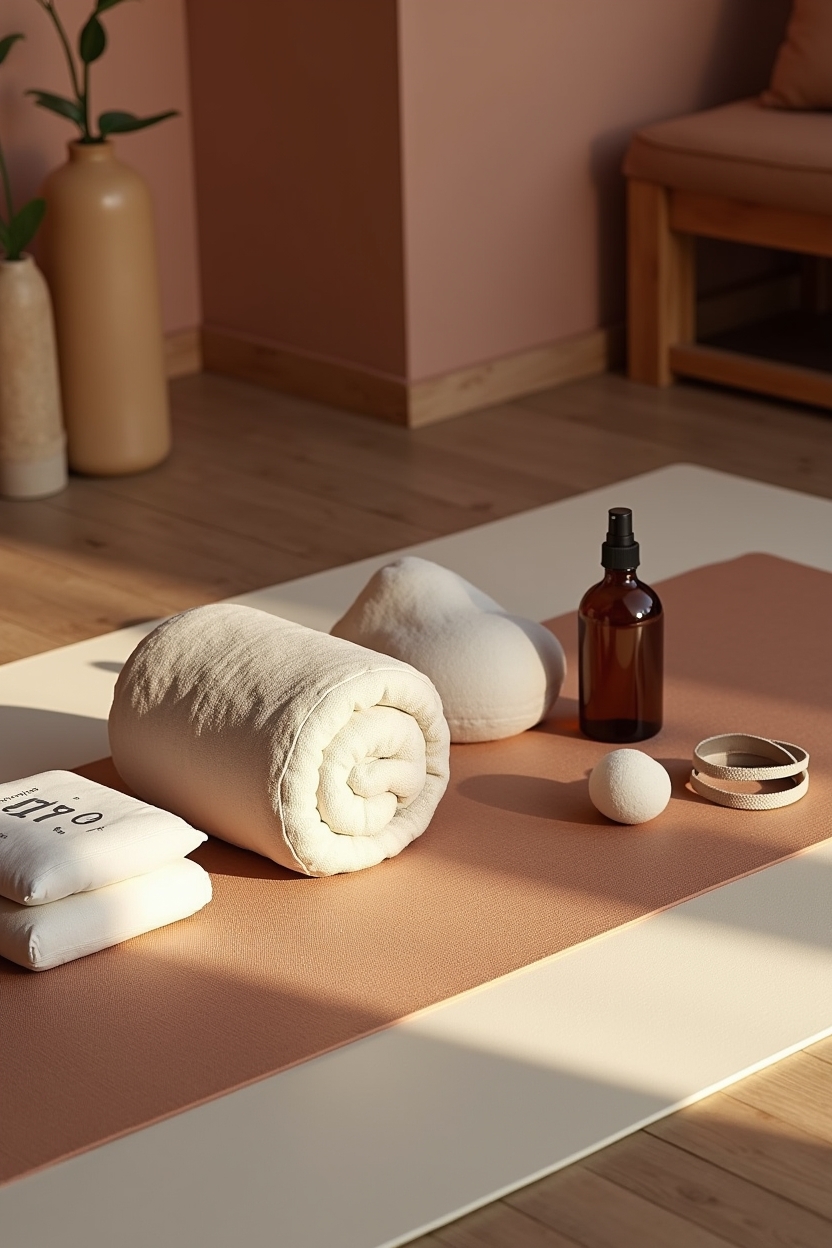
Props — bolsters, blankets, blocks — are your allies. Long holds (5–15 minutes) quietly increase parasympathetic tone without demanding focus, which is exactly what many empaths need before sleep.
Breath: 4-6-8-like patterns, long exhales, and gentle Ujjayi
Use slow breath ratios to cue the nervous system that it is safe to rest. A 4-6-8–style pattern (inhale 4, hold 1 or natural, exhale 6–8) lengthens the exhale in a comfortable way. Avoid breath-holding or forceful breathwork close to bedtime; comfort and steadiness are essential.
If you use **Ujjayi**, keep it soft and brief — a quiet, ocean-like friction at the back of the throat that helps concentration without stimulation. Contraindications: if you have respiratory conditions or feel lightheaded, keep the breath gentle and consult a clinician as needed.
Concept: The role of stillness and non-doing in hatha for sleep
Stillness is not empty time — it’s therapeutic. When you slow movement and rest in supported positions, you give the nervous system permission to shift from doing to being. For empaths, this non-doing is a powerful antidote to constant receptivity.
Practices such as a guided body scan or a few minutes of silent attention in a restorative pose can create the interior space where sleep begins. For some sensitive people, a brief guided practice like yoga nidra can be especially effective — yoga nidra for sensitive people emphasizes soft guidance, short cues, and containment so the process feels held rather than exposed.
A Simple Hatha Evening Sequence for Empaths — hatha yoga for sleep for empaths
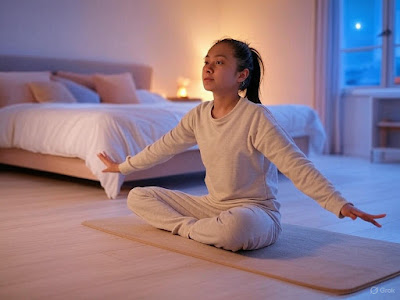
This short sequence is printable-friendly and designed to be gentle, contained, and effective. Move slowly between each step and prioritize ease. Times are suggestions; listen and shorten or lengthen as needed.
Step 1 — Ground and arrive: 3–5 minutes
How: Sit comfortably and begin with 3–5 minutes of belly breathing. Add gentle neck and shoulder rolls, moving with the breath to release upper-torso tension.
Why: Grounding breath reduces agitation and helps you create a container for the practice. The brief movement of the neck and shoulders discharges accumulated holding patterns so they don’t follow you into restorative poses.
Step 2 — Move slowly: 8–10 minutes
How: Practice slow cat-cow with long inhales and slightly longer exhales, gentle seated twists, and supported forward folds (hands on blocks or a bolster).
Why: Slow movement releases physical tension without overstimulating the nervous system. The emphasis is on mindful transition — each movement is an invitation to sense, not to accomplish.
Step 3 — Restorative holds: 10–15 minutes
How: Move into legs-up-the-wall or supported bridge with a bolster under the sacrum, then reclined bound angle with blocks under the knees. Use a soft count for breath — inhale 4, exhale 6 — and allow the body to settle.
Why: Sustained supported holds activate the parasympathetic nervous system and provide emotional settling. The long, passive contact with props communicates safety and allows deeper physiological down-regulation than active stretching alone.
Step 4 — Closure and transition to bed: 3–5 minutes
How: Finish with a short seated gratitude practice or a soft guided body scan while lying down, then transition slowly to your sleep posture without abrupt movement.
Why: A gentle closure minimizes reactivity and helps you carry the state of rest off the mat and into bed. The body appreciates a slow bridge between practice and sleep — it reduces the chance that you’ll reactivate your system by rushing.
- 3–5 minutes seated breath and neck release
- 8–10 minutes slow movement and supported forward folds
- 10–15 minutes restorative holds with props
- 3–5 minutes soft body scan and transition to bed
Bedroom Rituals, Sleep Hygiene, and When to Seek More Support
The mat practice is one piece of a larger night-time ecology. Small, consistent rituals and adjustments to your environment and boundaries amplify the work of hatha. Below are practical, empath-centered supports and signs when to seek professional help.
Tip: Sensory adjustments — light, sound, and scent
Reduce blue light in the hour before bed and consider dim, warm lighting for evening practices. Use gentle soundscapes — soft white noise or calming ambient tracks — to mask intrusive external noises.
Scent can be helpful in moderation: a small amount of lavender or chamomile may signal relaxation. Keep any sensory changes subtle; empaths often respond better to understated stimuli rather than intense aromatherapy or loud sound.
- Dim screens and lights 60 minutes before bed
- Try low-volume white noise or soft ambient sounds
- Use subtle relaxing scents (lavender, chamomile) sparingly
- Keep the bedroom cool and uncluttered
Tip: Emotional clearing — short journaling or ‘dump’ practice
A five-minute journaling ‘dump’ can offload other people’s feelings and unresolved thoughts. Write without judgment — list impressions, names, or brief lines that hold your attention, then close the page.
Doing this ritual before your hatha practice or restorative holds helps limit the nighttime looping that often follows empaths into sleep. It’s practical emotional hygiene: a small container for what otherwise might swell after dark.

Tip: Boundaries and timing — protecting evening energy
Curate evening interactions. If you’re sensitive to others’ moods, limit emotionally heavy conversations in the two hours before bed. Communicate gently about your need for quiet evenings when necessary.
Timing matters: aim to finish active social engagement and work at least 60–90 minutes before bed. That buffer gives you a window to shift into the parasympathetic-friendly practices described earlier.
Concept: When yoga isn’t enough — indicators for professional help
If poor sleep persists despite consistent practice and sensible sleep hygiene, seek further support. Warning signs include chronic insomnia lasting months, daytime impairment, severe anxiety or depression symptoms, or signs of a sleep disorder like sleep apnea.
A therapist can help with emotional processing patterns that keep you activated, while a sleep specialist can rule out physiological contributors. Yoga supports wellbeing deeply, but it is one tool among many — knowing when to add professional resources is an important part of self-care.
Get the 15-minute printable sequence + guided audio
Subscribe for a printable 15-minute ‘hatha for sleep for empaths’ sequence and a gentle guided audio to support your evening practice. Soft, low-pressure support sent to your inbox — one simple tool to try this week.
Send me the sequence
Final Thoughts
Adapting hatha yoga to meet the nervous system needs of empaths is an act of steady, compassionate practice — small, consistent choices compound into deeper rest. These tools are not a quick fix but a way to build safety in your evenings so sleep becomes a return rather than an escape.
Try the sequence for a week and notice subtle shifts: less reactivity, gentler dreams, and a clearer separation between your day and your night. If you find a particular breath or pose that softens you, make it yours — consistency matters more than perfection.