Hatha Yoga for Body Awareness for Spiritual Beginners: A Gentle Deep Dive
Imagine arriving to a practice that asks less of you than you fear — one that simply helps you notice. Hatha yoga for body awareness for spiritual beginners offers exactly that: a gentle, accessible pathway to embodied presence for people new to spiritual practices who want somatic grounding rather than lofty theory.
This article maps why body awareness matters for spiritual growth, how traditional hatha tools (asana, breath, subtle energetic cues) support sensing, and simple daily practices you can fold into ordinary life. Read on for a clear toolkit and a short, repeatable sequence you can try today.
What ‘body awareness’ means in a Hatha yoga for body awareness for spiritual beginners context
Body awareness is the ability to feel what is happening inside your tissues, joints, and breath — to translate sensation into information you can work with. In the language of hatha yoga, we use physical practices not to escape the body but to deepen relationship with it, turning movement into a kind of meditation.
Concept: somatic attention — how sensation informs practice
Somatic attention refers to the habit of noticing bodily signals: tension in the shoulders, a hollow in the belly, the way your feet press into the floor. Two useful terms to keep in mind are interoception (your sense of internal bodily states) and proprioception (your sense of where your body parts are in space). Developing these senses is a core aim of hatha practice.
When you cultivate somatic attention you stop treating sensation as background noise. Instead you use it as feedback. That changes practice from trying to achieve a shape to learning from the body — noticing where tightness holds memory, where balance is tentative, and where breathing is shallow. Over time, those small signals become the map for more honest, grounded spiritual work.
Concept: breath, prana, and the felt body
First mention: **prana** (vital life energy) and **pranayama** (breath practices) are often described in poetic terms, but they have a practical role: breath alters tone in the nervous system and creates a felt sense of subtle movement inward. In beginner-friendly hatha, breath awareness is a bridge between external posture and inner sensation.
When you coordinate slow, attentive breath with movement, you amplify interoception. A soft inhale can expand the ribcage and invite spaciousness; a calm exhale can relax unnecessary grip. That felt change — however small — is the groundwork for spiritual opening that feels safe and embodied rather than dissociative.

Concept: safety, nervous system regulation, and spiritual opening
Embodied spiritual practice isn’t just about reaching altered states — it’s about creating conditions where those states can be integrated. Nervous system regulation is the baseline. If you are chronically tense or on edge, subtle experiences are likely to be unsettling rather than nourishing.
Hatha practices that emphasize gentle alignment, breath pacing, and supported rest prioritize safety. They help the parasympathetic system engage so that curiosity and spaciousness can arise without overwhelming the system. In short: safety in the body makes safe spiritual opening possible.
Core Hatha principles that support body awareness
Traditional hatha frameworks offer practical, repeatable principles that train attention. These principles are less about perfect form and more about sensory education — learning to read the body’s language and respond with clarity.
Principle: alignment as sensory education
Alignment cues — like rooting through the feet or lengthening the spine — are not corrections to achieve an aesthetic. They are invitations to notice joint relationships, muscular tone, and balance strategies. When you follow an alignment cue slowly, you become aware of where you habitually collapse, overwork, or brace.
Treat alignment as information. Use it to ask gentle questions: Does my hip want more support? Is my breath easier when I soften here? These small discoveries are the building blocks of deeper body awareness.
Principle: movement with attention — slow, intentional sequencing
Slowness is a practice. Moving deliberately — with attention to micro-adjustments — reveals habitual holding patterns that fast flows often hide. In hatha, transitions matter as much as poses: a slow step back, a mindful shift of weight, a deliberate roll-up teach you where momentum masks sensation.
When you slow down, you also increase the window for interoceptive noticing. That makes it possible to change patterns not by forcing them but by softly re-patterning the nervous system over time.
Principle: breath-led practice for integrated awareness
Coordinating breath and movement helps unify attention. When breath becomes the metronome for motion, attention more easily inhabits the present moment and the felt body. This is the rationale behind many classic hatha sequences and why breath cues are central to body-awareness work.
If you are exploring beginner hatha practices for mindfulness, prioritize simple breath-led patterns: inhale to lengthen, exhale to soften, pause to notice. Over time this integration of breath, movement, and attention becomes a portable practice you can carry into daily life.
Foundational practices: simple techniques to build body awareness
Here are compact, repeatable techniques you can use daily. Each practice is short, adaptable, and designed to amplify sensation without overwhelming your system.
Technique: three-part breath check (how)
Why: To quickly calibrate the breath and re-establish a map of sensation through the torso.
How: Pause for a few breaths and use the three-part check to notice where breathing moves first and most: the belly (diaphragmatic movement), the ribcage (lateral expansion), and the upper chest (clavicular lifting). Keep cues short and gentle: “belly—ribs—chest” and allow each part three slow breaths before moving to the next.
- Set a timer or use three cycles of breath for each region.
- Place one hand on the belly, one on the lower ribs to feel movement.
- Silently label where you feel the most motion and where you feel holding.
- Lengthen the inhale and soften the exhale; prioritize ease over depth.
Technique: micro-movement scans (how)
Why: To rebuild proprioceptive clarity through small, controlled ranges of motion.
How: Use slow joint-led movements to scan space. Think of mobilizing the neck, wrists, ankles, and hips in tiny arcs — not to stretch hard, but to notice the quality of movement and where stiffness or guarding appears. Pause at sensations and breathe into them rather than pushing through.
These micro-movements teach you how mobility and breath shift tone, which is especially valuable for beginners developing body literacy.
- Neck circles: five slow circles each direction, noticing pressure or ease.
- Ankle circles: lift one foot and trace gentle circles, feel the weight transfer.
- Hip circles: hands on hips, slow figure-eights, sense where movement begins.
Technique: supported stillness (how)
Why: To explore how the body settles when given support — and to notice shifts in muscle tone that arise with safety.
How: Choose a supportive setup such as reclining on bolsters or seated with cushions under the hips. Keep the hands and face relaxed. Set an intention to observe: what softens after a minute? What remains taut? Keep rests brief at first — 3–8 minutes — and use the breath to anchor observation.
Supported stillness reframes rest as a tool for sensing rather than a reward after effort.
- Savasana variation: bolster under knees, arms by sides, soft gaze or closed eyes for 3–8 minutes.
- Seated support: sit on a folded blanket or chair with a bolster behind the lower back for 2–5 minutes.
- Use a gentle body scan at the end: feet to head, note three sensations without judgment.

Tip: journaling prompts to translate felt-sense into insight
Reflection helps anchor somatic discoveries in everyday choices. After a short practice, a sentence or two of writing clarifies patterns and intentions.
Use gentle, curiosity-based prompts — not judgmental checklists — to turn sensation into insight and then into small steps you can act on.
- What shifted in my body during practice?
- Where did I notice tension unwinding?
- One small action I can take today to support this change is…
- How did my mood or thinking change after 5 minutes of noticing?
A short daily Hatha sequence for body awareness
This 10–20 minute sequence is offered as intention-led guidance rather than strict choreography. The aim is to internalize the why as much as the how — so you practice with curiosity, not perfection.
Step 1 — Grounding arrival (why + how)
Why: Grounding creates a stable baseline and a sense of safety; it roots attention in the present body rather than scattered thought.
How: Begin seated or standing. Spend 2–3 minutes with an easy breath and three gentle cues: feel the sit bones rooted, notice the soles of the feet, and soften the jaw. Count two full breaths in each area: pelvis, feet, and softening the face. Keep the language invitational — “if it feels okay, notice…” — to preserve choice and reduce pressure.
This arrival practice primes the nervous system to be curious rather than reactive, making subsequent movement more informative.
Step 2 — Wakeful mobility (why + how)
Why: Wakeful mobility awakens interoception and reveals where the body needs space or support.
How: Move slowly through 5–7 minutes of cat/cow variations, gentle neck circles, and hip circles. Sync each small movement to a breath: inhale to open or lengthen, exhale to soften or round. Focus on sensations at movement endpoints rather than striving for range.
The goal is not more flexibility but more information: where does tension ease? Where does breath flow freely? Those answers guide the rest of the sequence.
Step 3 — Steady asana holds (why + how)
Why: Holding a pose for 2–4 breaths trains sustained attention and reveals subtle changes in tone and breath.
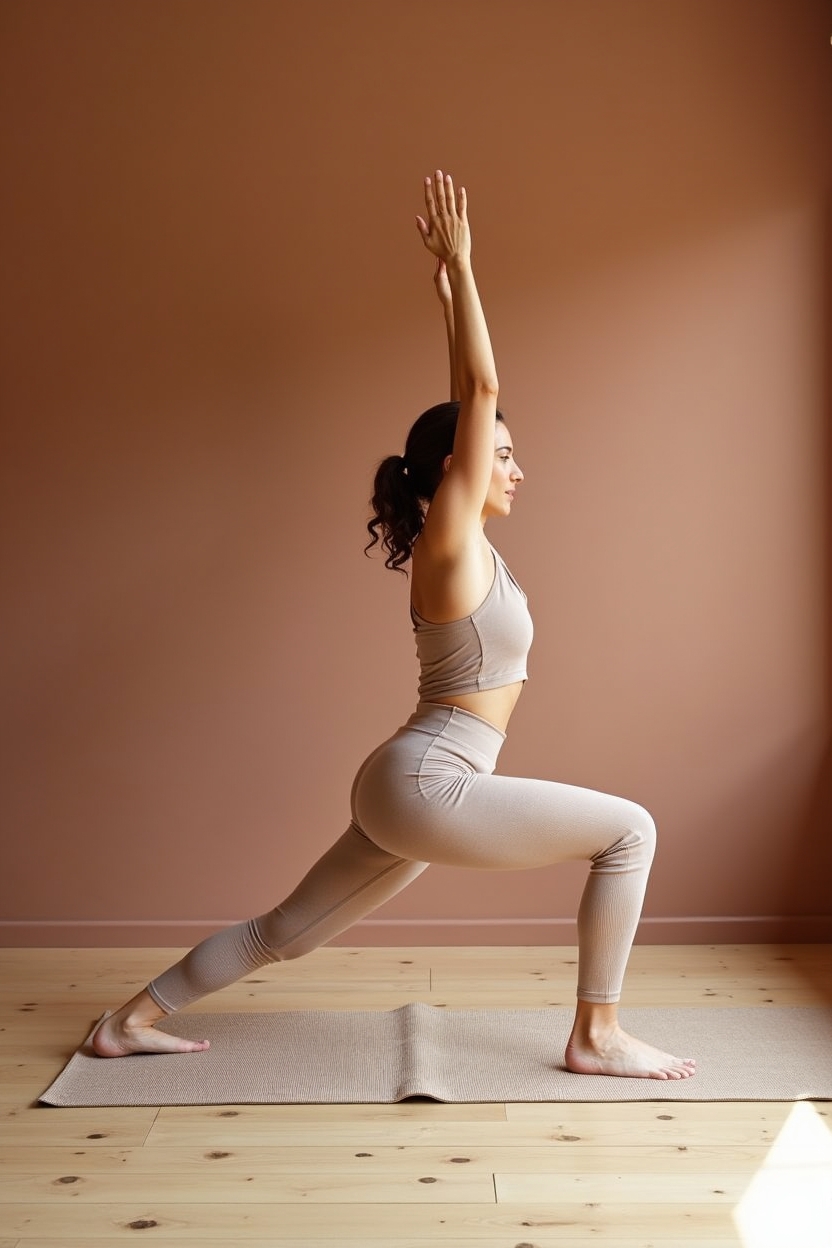
How: Choose 2–3 gentle standing or seated poses you can hold comfortably: mountain to notice balance, a supported warrior variation for groundedness, or a seated forward fold for length and surrender. Hold each for 4–8 breaths, using the breath as your anchor. Check in mid-hold: is the jaw soft? Are the shoulders carrying excess effort? Micro-adjust rather than forcing form.
These steady holds are practice in presence — noticing the ebb and flow of sensation without immediate reaction.
Step 4 — Restful integration (why + how)
Why: Integration allows the nervous system to register and store the changes you’ve made during practice.
How: Finish with 3–8 minutes of supported rest — a bolstered savasana or seated support. Do a brief 30–60 second inward scan, naming one word that captures the felt shift (for example: “lighter,” “rooted,” “calmer”). Optionally, write one sentence in a journal to translate the experience into intention.
This consolidation step turns a short session into sustainable change by giving your system time to incorporate the shifts.
Adapting hatha yoga for body awareness for spiritual beginners across contexts
Adaptability is a hallmark of accessible hatha practice. Whether you carry physical restrictions, energy fluctuations, or trauma history, small modifications allow you to practice with dignity and efficacy.
Adaptation: trauma-sensitive and safety-first language
Use language that invites rather than instructs. Replace absolute cues with invitations: “If it feels okay, try…” rather than “Do this.” Offer options and emphasize choice at every step. A trauma-sensitive approach also prioritizes bodily autonomy — allowing people to lower intensity, open eyes, or opt out of a cue without explanation.
These shifts are subtle but profound: they change the practice from a requirement to a supportive space where the nervous system can choose safety, and thereby make gentle spiritual openings possible.
Adaptation: seated and chair-based modifications (how)
Why: Accessibility widens the path. Not everyone can or should practice on the floor, and seated variations preserve the same sensory goals.
How: Use a sturdy chair to practice breath checks, micro-movements, and supported holds. Root through both feet, feel the sit bones on the chair, and use armrests or a wall for balance. Gentle seated twists, ankle circles, and shoulder rolls can be done with breath coordination. For supported stillness, sit back into the chair with a cushion behind the low back and soften the gaze.
- Seated cat/cow: hands on knees, inhale to arch the chest, exhale to round.
- Chair-supported standing: hold the back of a chair while shifting weight slowly between feet.
- Seated forward fold: hinge at the hips, keep the spine long, fold only as far as comfortable.
Adaptation: short ‘reset’ practices for busy days
Why: Pocket practices keep body awareness reachable during transitions and stress spikes.
How: Two micro-practices you can do anywhere: 1) The 60-second breath anchor — three long inhalations and slow exhales while noticing three sensations in the body. 2) The 1–3 minute standing reset — root through feet, roll shoulders back, soften the belly, and take five coordinated breath-movements. Both practices restore orientation to the present moment quickly.
- 60-second breath anchor: three slow inhales with long exhales; notice three sensations after each cycle.
- Standing reset: feet hip-width, micro-knee bends with exhale, shoulders roll on inhale, finish by feeling the ground.
Next steps: integrating the practice into a life of gentle spiritual growth
Consistency is built from tiny, kind habits more than from dramatic sessions. Create gentle cues — a mat by the door, a three-breath check before coffee, or a weekly longer practice — to weave hatha into daily life.
When to seek a teacher: if you notice persistent pain, confusion about alignment, or an urge for deeper study, a skilled teacher can offer personalized adjustments and safety. Over months, body awareness becomes not just a practice but a way of living that supports broader spiritual development.
Suggested rhythms: a short daily practice (5–20 minutes), a weekly longer practice (30–60 minutes), and monthly reflection sessions where you journal what has shifted. These beginner hatha practices for mindfulness are portable — they inform how you sit at your desk, relate to others, and move through transitions with more presence.

Final Thoughts
Hatha yoga for body awareness for spiritual beginners is a patient, embodied path — not a quick fix but a series of small, trustworthy choices that train your capacity to be present. Each breath, micro-movement, and supported rest moment is a lesson in coming home to the body.
Try one practice for a week, notice what changes, and extend gentle curiosity from the mat into daily life. The practice is not about perfection — it’s about learning to be with what is, with kindness and steady attention.