Meditation Myths Debunked: What Meditation Is — and Isn’t
Curiosity about meditation often comes with confusion — and sometimes discouragement. You may have heard promises of instant calm, the image of a completely empty mind, or instructions that feel rigid and unreachable. This guide, titled meditation myths debunked, meets those expectations with gentle clarity: each common belief appears as “Myth: …” followed immediately by “Truth: …,” a short explanation of why the myth persists, and a practical reframe you can try today.
These corrections are meant to restore your confidence rather than to shame. Whether you’re a beginner or have been practicing for years, clearing up these misconceptions will let the real benefits — what meditation actually does — come into view.
Myth: Meditation means clearing your mind — meditation myths debunked
Many people picture meditation as an effort to eradicate thoughts until the mind is spotless. That image can be discouraging when your experience is the opposite: a steady parade of ideas, memories, to-dos, and judgments. Let’s reframe what’s actually happening and why that matters.
Truth: It’s about relationship with thought, not eradication
Meditation trains the quality of attention rather than deleting mental content. Instead of trying to stop thinking, the practice invites you to notice thoughts with less reactivity — to see them as passing events rather than orders that must be followed.
Neuroscience supports this practical shift. Activity in the *default mode network* (**DMN** — a brain system associated with mind-wandering and self-referential thinking) doesn’t simply switch off during meditation; what changes is how you relate to that activity. Over time, regular practice reduces reactive loops and builds space between stimulus and response.
This is also why teachers often use images — thoughts like clouds in the sky or leaves floating on a river — to help you step back. The aim isn’t a blank screen. It’s a calmer relationship with your inner life, which changes how you feel and act.
Why this myth persists
The commercial and cultural image of meditation is tidy and alluring: serene faces, empty minds, instant peace. Those visuals sell a simple narrative that’s easy to promise and easy to misunderstand.
Beginners then compare their busy minds to that ideal and feel they’re ‘doing it wrong.’ Social media clips often edit out the messy, repetitive work of practice, reinforcing the idea that true meditation equals thoughtless silence.
Practical reframe and short practices
Try techniques that model a kinder relationship with thought. Both *label-and-release* and a breath anchor show you how noticing can weaken reactivity without trying to stop thinking.
Begin with a minute or two: when a thought arises, silently label it (“planning,” “worry,” “remembering”) and let your attention return to the breath. The label is a tiny act of separation — it makes the thought less fused with you and more like information passing by.
A breath anchor is simply returning to one clear sensation — the inhale at the nostrils or the rise of the belly — whenever you notice distraction. Over weeks this trains attention and reduces the frantic sense that every thought must be chased or suppressed.
- Label-and-release: name the category of the thought, then return to your anchor.
- Breath anchor: follow one sensation for 30–60 seconds whenever you notice wandering.
- Three-count pause: inhale-2-3, exhale-2-3 to reset reactivity during stressful moments.

Myth: Sitting still for long is required
The cultural image of meditation often centers on long, immobile sits. That ideal can be useful for some, but it’s unhelpful when it excludes people with busy lives, bodies that don’t like long stillness, or simply limited time.
Truth: Practice can be brief and embodied — meditation myths debunked
Research on micro-practices shows that short, regular sessions build attention and stress resilience. Even one to ten minutes daily moves the needle on mood and focus when practiced with consistency.
Movement-based practices — mindful walking, gentle yoga, or a few qigong lengths — engage the body’s sensory system and can be more accessible than long static sits. Embodied practices also help anchor attention through sensation, which is a primary pathway for calming the nervous system.
The key metric is cumulative habit, not one long, perfect sit. Regular tiny investments in attention create structural change in brain networks and daily life.
Why this myth persists
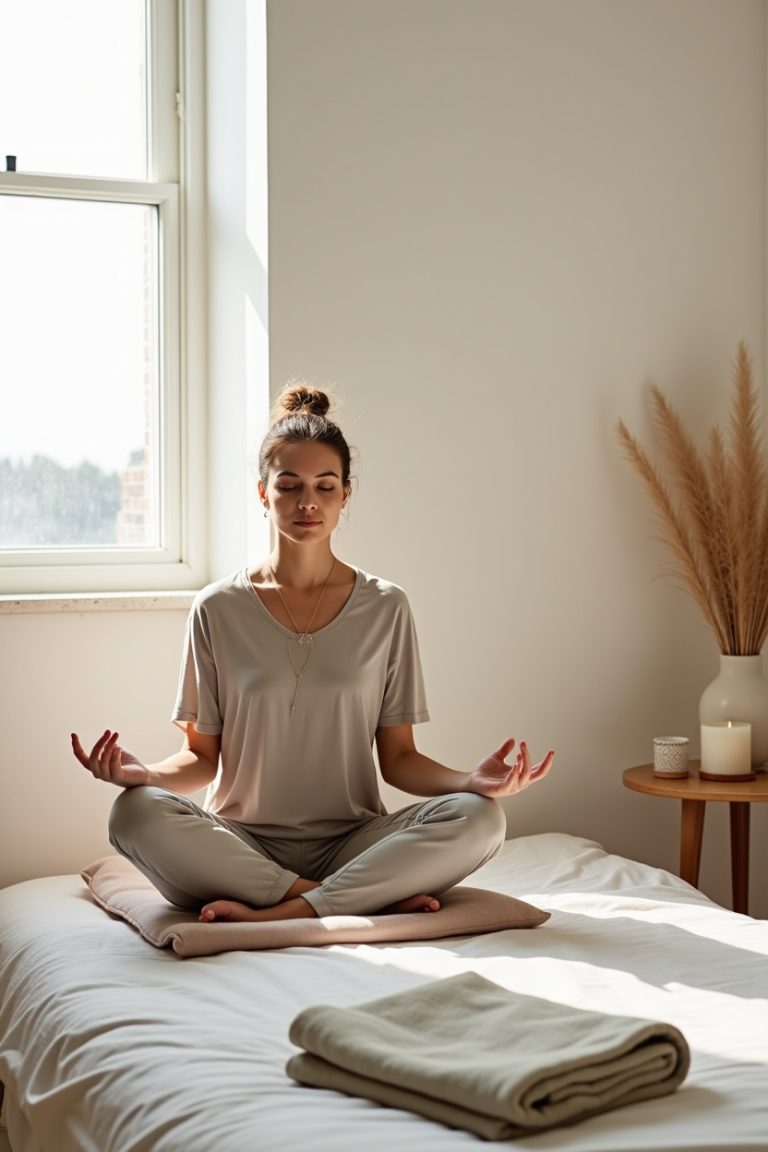
Traditional depictions of meditation (cross-legged, eyes closed for an hour) come from certain lineages where long retreats are a central practice. Social media and imagery favor the most photogenic poses, which skew expectations.
That combined with an all-or-nothing mindset — ‘if I can’t do it like that, it’s not worth doing’ — prevents many people from discovering shorter forms that actually fit their days.
How to make meditation fit your life
Start with micro-practices woven into routines. A 2-minute breath check after your morning coffee, mindful steps between meetings, or a single-minute body scan before bed are all valid and effective practices.
If your schedule varies, choose a consistent cue (after brushing teeth, before lunch) rather than a fixed clock time. The goal is to make the practice inevitable, not perfect.
Below is a simple weekly approach you can adapt to your rhythm.
- 2-minute breath checks (morning and evening).
- 5-minute mindful walking (lunch break or between tasks).
- 3-minute body scan before sleep.
- Weekly 10–15 minute longer sit when possible.
Myth: Meditation is religious or requires belief
Some people worry that meditation is inherently tied to a faith tradition or that starting a practice requires adopting a set of spiritual beliefs. That’s a reasonable concern — and the truth is more flexible.
Truth: It’s a secular skill and also a spiritual path for some
Meditation exists in both secular and religious contexts. Secular mindfulness programs are evidence-based and focus on attention, awareness, and stress regulation without religious doctrine. At the same time, many spiritual traditions use meditation as deep practice embedded in ethical and metaphysical frameworks.
This means you can choose an approach that fits your worldview. You don’t need faith to benefit: studies in clinical settings show improvements in anxiety, depression, and attention without any spiritual content.
If you’re curious about spiritual aspects later, you can explore them intentionally — but they’re not prerequisites for the basic benefits.
Why this myth persists
Cultural associations — visible teachers who are also spiritual leaders, ritual imagery, and historical roots in religious traditions — can make meditation feel inevitably religious. That picture overshadows the many secular ways the practice is taught and applied today.
Fear of cultural appropriation or of betraying personal beliefs also fuels hesitancy, which deserves respectful attention rather than dismissal.
Practical options so anyone can start
If you prefer secular entry points, begin with guided breath-awareness or body-scan practices labeled as mindfulness. Many public-health and clinical programs use neutral language and focus on skills applicable to daily life.
If you feel drawn to a tradition, seek teachers who explain their context and adapt practices respectfully. The right fit is one that honors your beliefs and feels sustainable.
- Secular guided meditations (mindfulness/breath awareness).
- Evidence-based programs offered in clinics or workplaces.
- Movement-based approaches (yoga, mindful walking) that emphasize embodiment.
- Exploration with a teacher who clarifies tradition and intention.
Myth: Meditation should instantly fix anxiety or productivity — meditation myths debunked
It’s common to hope meditation will be a quick remedy for anxiety, distraction, or low productivity. While practice helps, it isn’t a magic switch — and treating it as one sets unrealistic expectations.
Truth: It’s a supportive tool, not a magic switch
Meditation reliably supports emotion regulation, attention, and stress resilience, but effects vary in size and time course. Clinical studies often show modest-to-moderate improvements over weeks to months, depending on practice consistency and the nature of the concern.
For serious anxiety or mood disorders, meditation can be a helpful complementary tool but not a replacement for therapy or medication when those are indicated. Think of meditation as part of a toolkit — a durable skill that compounds with practice rather than an instant cure.
Why this myth persists
Anecdotes and wellness marketing spotlight dramatic stories: a single retreat, a celebrity endorsement, or a short video promising life change. Those stories are compelling but not representative of typical outcomes.
When people try meditation hoping for fast results, they may quit early and attribute failure to the method rather than to unrealistic timelines or inconsistent practice.
Where meditation fits in a broader self-care plan
Use meditation alongside sleep hygiene, movement, nutrition, social connection, and professional help when needed. If anxiety is interfering with daily functioning, reaching out to a mental-health professional is appropriate — meditation can be a complementary practice in that context.
Watch for signs that you need more support: persistent panic, thoughts of harming yourself, severe insomnia, or withdrawal from essential activities. Those are signals to consult a clinician rather than to double down on unguided practice.
- Combine practice with therapy or medical care when symptoms are significant.
- Prioritize sleep and movement as foundational supports.
- Use meditation as a skill for regulation, not as the sole treatment.
Reframe & Where to Go Next
Now that we’ve corrected common misunderstandings, let’s turn toward practical next steps. The reframes above center curiosity, consistency, and compassion — a gentle path forward is more useful than strict rules.
Simple starter path
A short, clear plan helps build momentum without overwhelm. The following week-long micro-plan balances brief daily sits, embodied practice, and reflection so you can taste the process and notice small changes.
Each day, treat the practice as data-gathering: notice what shifts in your attention, mood, and reactions rather than judging success or failure. Over time you’ll notice what meditation actually does in your life — small increases in steadiness, fewer reactive habits, and more choice in how you respond.
- Day 1–7: Daily 5-minute sit focusing on the breath (same time each day if possible).
- Day 2, 4, 6: 5–10 minute mindful walk, paying attention to sensation in the feet.
- Nightly: 2-minute body check — scan from head to toes before sleep.
- End of week: One short reflection—what changed, what felt hard, what felt easier?

If you feel stuck or overwhelmed
If practice feels heavy, shorten it. Two 60-second breaths are better than twenty unfocused minutes. Try movement-based alternatives if sitting is uncomfortable, and remember that resistance is part of the process, not a signal of failure.
Reach out for guided instruction if confusion persists; a teacher can offer simple adjustments that make practice accessible. If difficult emotions intensify during practice, consider working with a therapist experienced in mindfulness-based approaches.
- Shorten sessions to 60–120 seconds and build slowly.
- Switch to mindful movement or walking if sitting feels impossible.
- Find a teacher or guided series that resonates with your needs.
- Consult a therapist if practice surfaces intense or destabilizing material.
Try a gentle 7‑day meditation series
If you’d like a guided next step, subscribe for a free 7-day ‘Gentle Meditation’ email series. Each day models brief practices, addresses common myths, and offers small prompts you can use immediately — perfect if you want a realistic, compassionate entry into practice.
Send me the 7‑day series
Final Thoughts
Debunking myths clears space for a practice that actually serves you. Meditation isn’t a single thing — it’s a set of skills you grow with curiosity and kindness rather than a test you must pass. Keep experiments short, consistent, and compassionate.
This conversation about meditation myths debunked is ongoing. Return to your practice with gentle interest — steady attention is the real gift, and it grows with patient, nonjudgmental repetition.