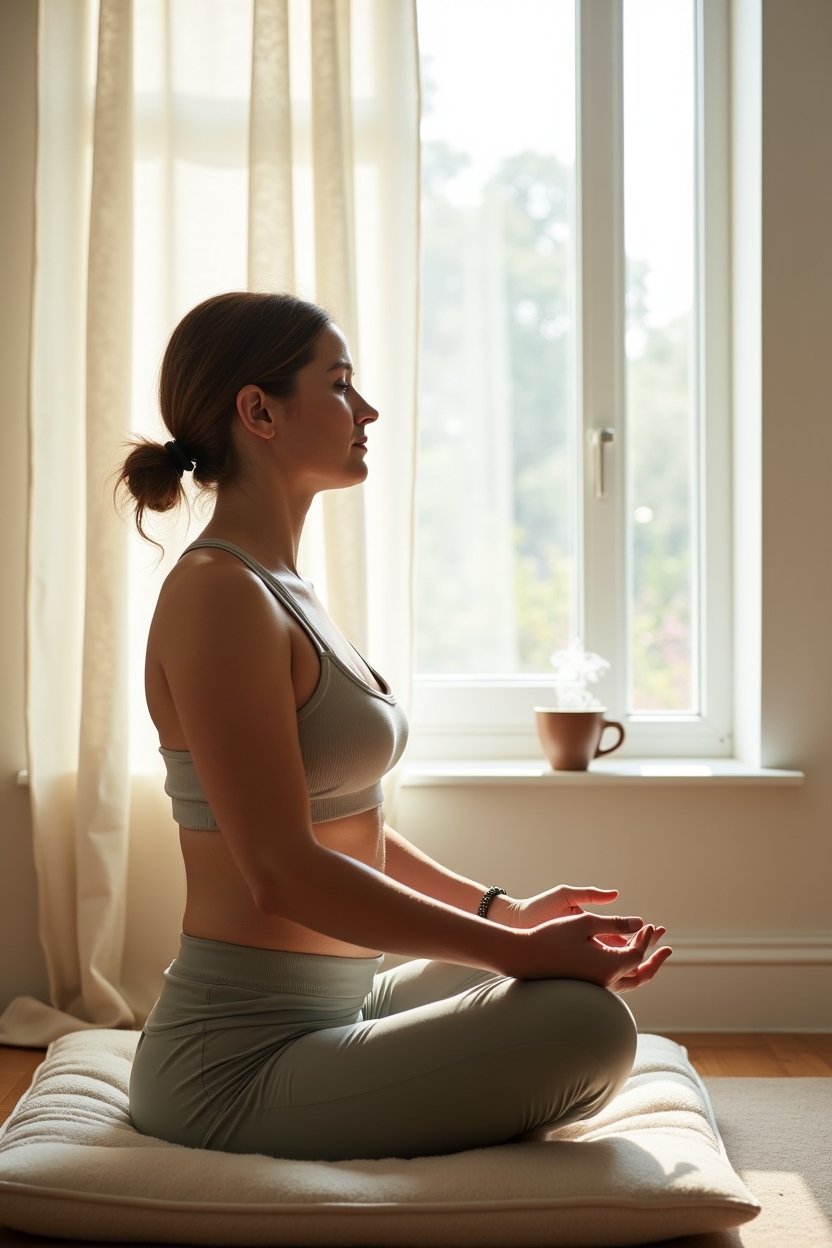
How to Improve Sleep with Core Stretches: A Practical Guide
Tightness in your belly, low back, or sides can feel like a quiet, persistent hum that follows you into bed — and it quietly nudges the nervous system into wakeful alertness. The core (deep abdominals, obliques, low back, and pelvic floor) is more than a strength zone — it’s a regulatory hub that shapes your breath, posture, and comfort as you fall asleep.
This article will teach you how to improve sleep with core stretches through gentle techniques, breath cues, and a short evening mini-sequence you can use tonight. You’ll learn safe variants for sensitivity, quick daytime resets, and a copy-ready script to guide your wind-down.
Why core mobility and relaxation matter for sleep
The connection between your core and sleep is practical and physiological — not mystical. When the muscles around your trunk are tight, they influence how you breathe, how your spine rests, and how your autonomic nervous system balances calm and alertness.
The nervous-system bridge: tension, breath, and rest
Chronic tension in the deep abdominal muscles and pelvic floor can subtly keep the sympathetic nervous system — the body’s ‘active’ mode — more available. That means deeper breath pauses, micro-awakenings, and a sense that your body hasn’t fully let go at night.
Calming the core supports a parasympathetic shift — the rest-and-digest state — by allowing the diaphragm to move freely and the breath to slow. The result isn’t just looser muscles; it’s a pathway into calmer physiology.
On a practical level, learning to release and lightly tone the core teaches your nervous system a new default: one that is more receptive to stillness and sleep. That small retraining can reduce sleep latency and the frequency of night-time arousals.
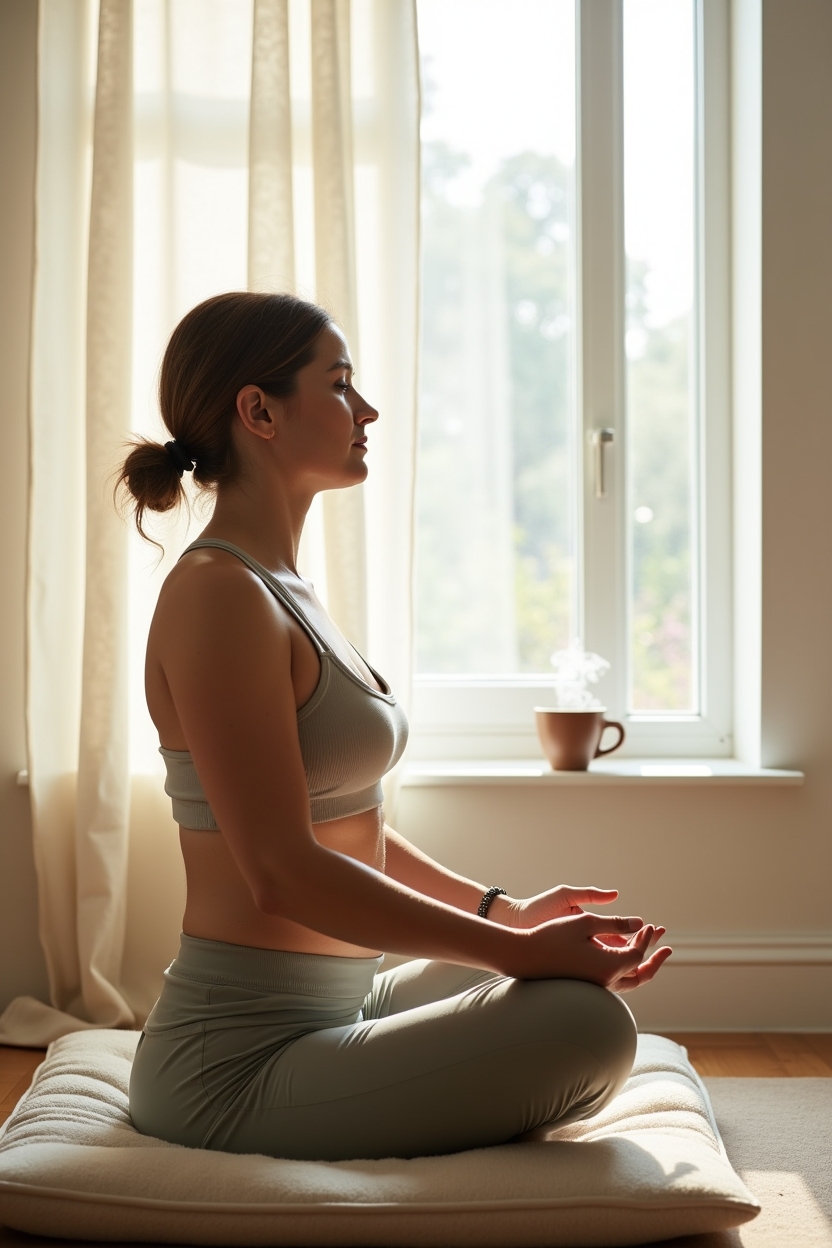
How posture and core stiffness disrupt sleep
Many night-time wakes come not from insomnia alone but from mechanical discomfort: low-back stiffness, rib flare that makes breathing shallow, or a tilted pelvis that pulls nerves and soft tissue. When these patterns are present, you may toss and turn to find a position that doesn’t hurt, which fragments sleep.
For example, an overarched low back (excessive lumbar lordosis) can compress posterior structures and make lying supine uncomfortable. Lateral tightness in the obliques can make side-lying feel constrictive, and forward pelvic tilt can change how the diaphragm drops on the inhale.
Addressing core mobility and relaxation reduces those positional stresses — they don’t fix every sleep issue, but they remove a common physical barrier to sustained rest.
When and how often to practice core stretches for better sleep — how to improve sleep with core stretches
Timing and dose matter. Gentle core work can be deeply calming in the evening, but vigorous core training too close to bedtime may be activating. Here are practical guidelines to help you choose windows that support rest.
Best windows: 20–90 minutes before bed
A 10–20 minute calming routine in the 20–90 minute window before bed gives your nervous system time to settle after movement. This is long enough to change breath patterns and tissue tone, but short enough to avoid over-stimulating your body.
Plan for slower-paced movements, mindful breath, and passive holds rather than intense strengthening. If you’re wondering how to improve sleep with core stretches in practice, aim for a gentle sequence that ends with stillness and a few minutes of supported breathing.
If you exercise vigorously in the evening, finish that session at least 90 minutes before bed and use the shorter, restorative routine as the immediate wind-down.
Quick daily habit: 5-minute resets
Two minutes of diaphragmatic breathing with soft core engagement or a quick Supine Pelvic Tilt can lower daytime baseline tension. These micro-practices are easy to do after a long meeting, while waiting for tea to steep, or before your evening shower.
Repeated over weeks, these small resets reduce the build-up of stiffness that would otherwise reach bedtime. They’re also practical: consistent but tiny investments often change sleep quality more than sporadic long sessions.
If your days are busy, set a simple cue — a lamp you switch on in the evening, or a short alarm — to remind you to do a 2–5 minute reset.
- 2 minutes diaphragmatic breathing with soft core lift
- 3 supine pelvic tilts or gentle knee hugs
- 1 minute of mindful body-scan lying down
Foundational core stretches: safe, simple, approachable poses
These poses and techniques prioritize safety, clear alignment, and breath. Each entry gives how-to cues, the main benefit, and sensible modifications for low backs, pregnancy, or heightened sensitivity.
Supine pelvic tilt (how and why)
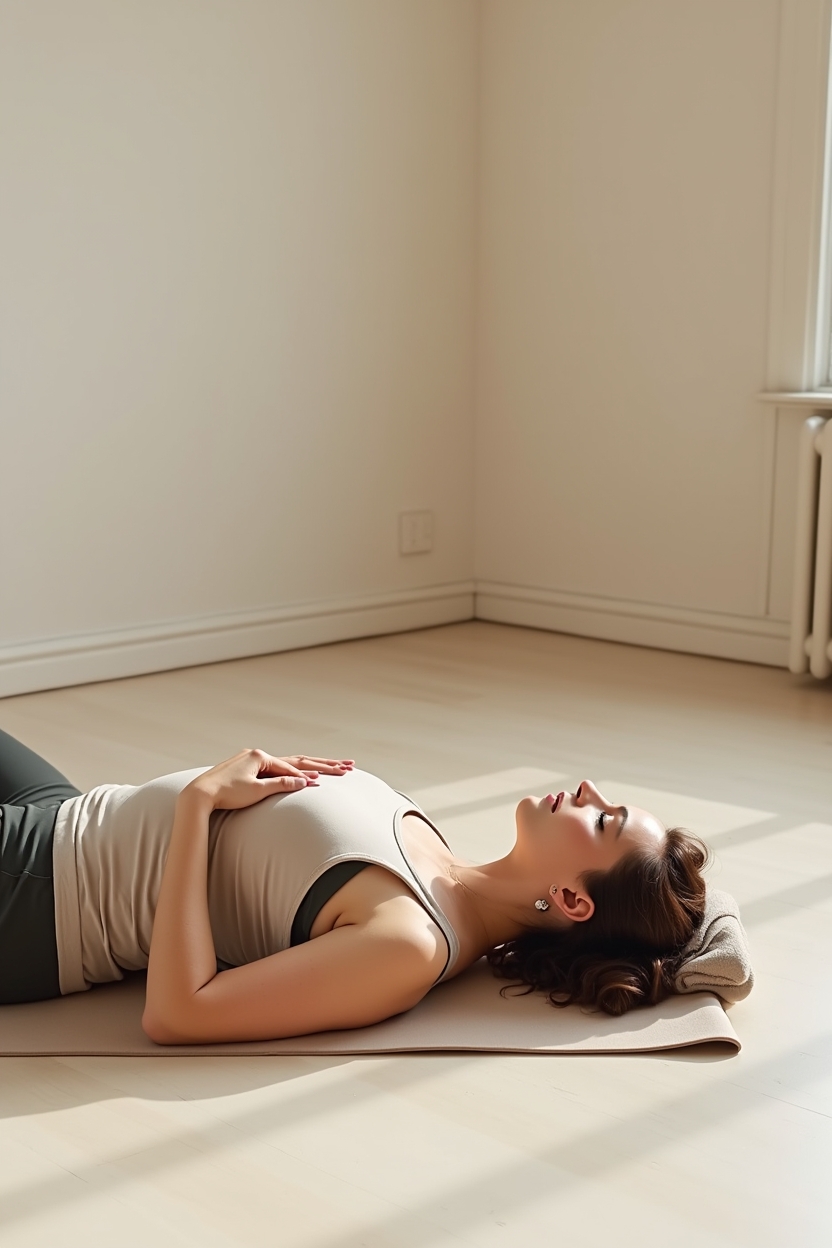
How: Lie on your back with knees bent and feet hip-width apart. Inhale to feel the abdomen expand slightly; on the exhale, imagine drawing the low belly gently toward the spine and tilt the pelvis so the small of your back flattens toward the floor. Keep the movement small — you’re finding subtle coordination, not forcefully tucking.
Benefit: This activates the deep transverse system while releasing lumbar compression, which eases low-back tension and teaches a calming core engagement useful for sleep.
Modifications: If the floor is uncomfortable, place a folded blanket under your sacrum. For advanced sensitivity, perform the same cue seated with a neutral pelvis.
- Lie on your back, knees bent, feet on the floor.
- Inhale: feel the belly soften; exhale: gently draw the low belly in and tilt the pelvis to flatten the lumbar spine.
- Hold 3 breaths, release on an inhale; repeat 6–8 times, moving with slow breath.
Thread-the-needle for oblique release
How: From a supine or side-lying position, bring one knee over the opposite thigh in a gentle figure-4. Thread your hand under the raised leg and guide the knee toward the opposite shoulder while breathing into the lateral ribs. The movement is slow and supported — use a strap or towel if your hands don’t reach.
Benefit: This opens the lateral torso and oblique line, reducing rib flare and side-tension that can make breathing shallow and disrupt sleep.
Modifications: Do the pose with both feet on the floor and a smaller range of motion if your hips or knees are sensitive. Perform the same lateral stretch seated against a wall for support.
- Lie on your back and bring your right ankle to rest on your left thigh.
- Thread your right hand between your legs and clasp behind the left thigh or shin.
- Gently draw the left thigh toward you while breathing into the right side ribs; hold for 4–6 breaths, then switch sides.
Supported sphinx and gentle backbends for breath space
How: From prone, slide your forearms under your shoulders and lift the chest with a soft length through the front body. Keep a light internal support in the low belly so the lumbar spine doesn’t over-compress. Use a bolster or folded blanket under the chest if you feel any strain.
Benefit: Supported, mild backbends create space for the diaphragm and sternum to expand, encouraging fuller, calmer inhalations that help quiet the nervous system.
Modifications: If prone is uncomfortable, do a seated chest-opening over a chair back with hands on the thigh and a soft core lift.
Knees-to-chest with cross-leg variation
How: Hug both knees into your chest and rock gently side to side, then try a cross-leg variation with one ankle over the opposite knee to target the pelvic floor and lumbar rotation. Focus on slow exhales as you fold and soft inhales to release.
Benefit: This progressive release soothes the low back and pelvic floor, which can hold tension that wakes you at night.
Modifications: Keep the movement very small if you have acute lumbar sensitivity; place a pillow under the head and another under the knees for added support.
- Lie on your back and hug both knees to your chest for 4 breaths.
- Cross the right ankle over the left knee, draw the left thigh toward you for a gentle figure-4, hold 4 breaths; switch sides.
- Return to both knees hugging for 3 breaths, rocking gently to massage the low back.
Diaphragmatic breathing with soft core engagement
How: Place one hand on your chest and one on your low belly. Breathe in so the hand on your belly rises more than the chest. On the exhale, allow a gentle, non-forceful engagement of the low belly toward the spine — this is a subtle lift, not a crunch. Coordinate inhale for 4 counts, exhale for 6–8 counts to favor calming.
Benefit: This patterned breathing directly activates the parasympathetic system and establishes a gentle dynamic support for the diaphragm and pelvic floor — a core-sleep bridge.
Modifications: If lying flat is uncomfortable, practice seated with hands in the same placement. If you have COPD or respiratory concerns, use shorter counts that feel safe and comfortable.
- Find a comfortable position, hands on chest and belly.
- Inhale for a slow count (e.g., 4) so the belly rises more than the chest.
- Exhale slowly for 6–8 counts while gently drawing the belly in; repeat for 5–10 cycles.
A gentle bedtime sequence: sample routine to try tonight
Below are two practical sequences — a paced 12-minute warm-down and a compact, copy-ready script you can read aloud or memorize. Both weave the core stretches and breath cues we’ve discussed so you can practice a calming, consistent ritual.
Step-by-step 12-minute sequence (warm-down to sleep)
Arrival (1 minute): Lie on your back, feet on the floor, and take three full diaphragmatic breaths to arrive. Use the hand-on-belly cue to encourage a soft inhale and longer exhale.
Core releases (6 minutes): 1 minute supine pelvic tilts (6–8 small repetitions), 2 minutes thread-the-needle figure-4 each side (1 minute per side), 2 minutes knees-to-chest with gentle rocking, and 1 minute supported sphinx or chest-opening if prone is comfortable.
Finish (5 minutes): Return to supine or your preferred sleep position. Practice diaphragmatic breathing with soft core engagement for 3–5 minutes, slowing the exhale each cycle. As you close the practice, allow the body to soften and feel the difference in breath and tension.
- 1 min: Arrival breathing (hand on belly).
- 1 min: Supine pelvic tilts (6–8 slow reps).
- 2 min: Thread-the-needle figure-4 (1 min per side).
- 2 min: Knees-to-chest with gentle rocking.
- 1 min: Supported sphinx or chest-open (optional).
- 5 min: Diaphragmatic breathing with soft core engagement to settle into sleep.
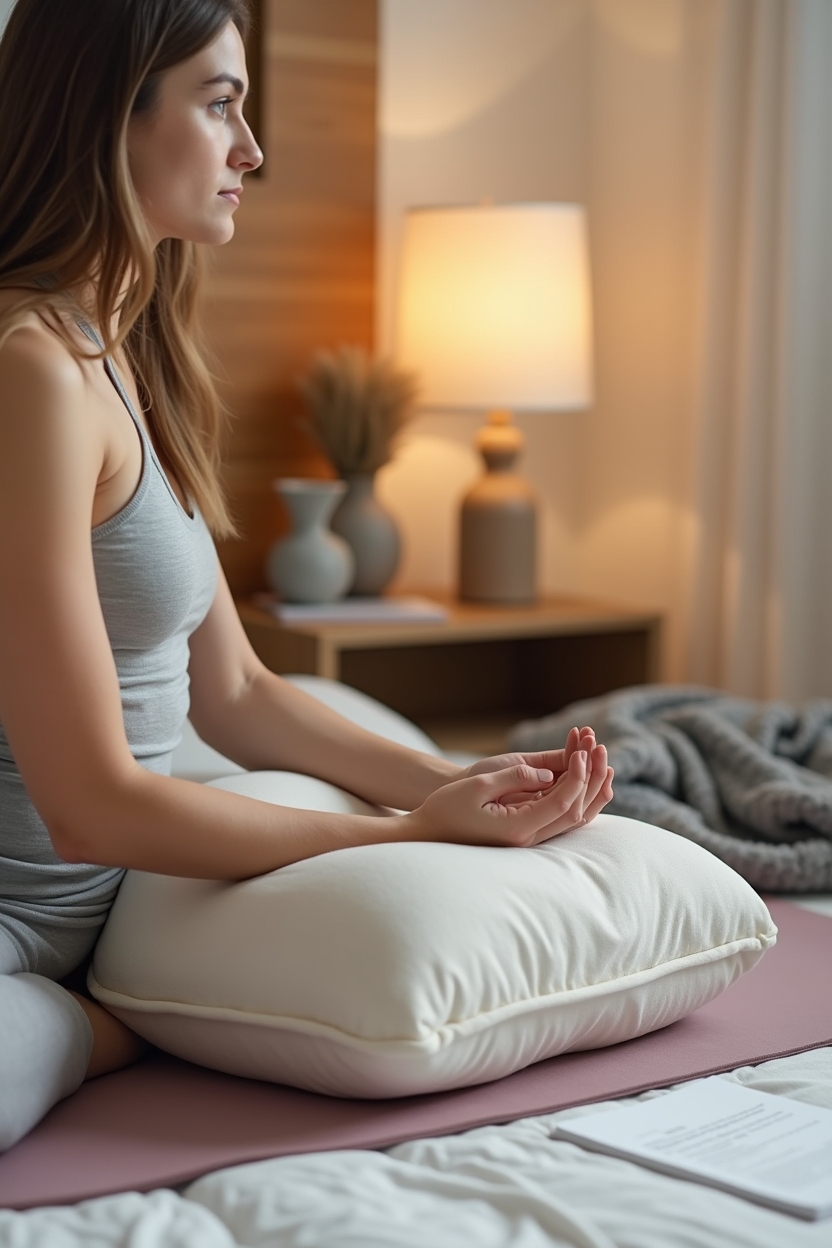
How to improve sleep with core stretches — sample sequence
Copy-ready script (about 3–6 minutes): “Lie on your back. Bring your hands to your belly and chest. Inhale… feel the belly rise. Exhale… draw the low belly in gently and tilt your pelvis to flatten the low back. Repeat two more times, moving slowly with your breath.
Now bring your right ankle to your left thigh. Thread your right hand between your legs and draw your left thigh toward you — breathe into the right side ribs for four breaths. Switch sides. Hug both knees in and rock side to side, noticing any softening in the low back.
Finish: Rest the hands on the belly, slow the exhale so it’s longer than the inhale, and allow the body to soften into the surface beneath you. When you’re ready, drift into your usual sleep position.” Use this script as a gentle prompt — shorten or lengthen phrases to match your pace and comfort.
Troubleshooting common issues and customizing practice
Not every stretch will feel right for every body. Below are common problems and careful, practical adjustments that keep the practice restorative rather than aggravating.
If stretches increase pain or agitation
Signs to stop include sharp pain, new numbness or tingling, or a sense of rising agitation rather than calm. If that happens, pause and return to a supported position with long, even exhalations. Scaling back means reducing range, time in the pose, or substituting passive holds.
Alternatives include longer exhale breathing, lying supported with knees bent and a blanket under the knees, or guided progressive muscle relaxation. If gentle modifications don’t help after several tries, consult a clinician — especially for new or worsening pain.
Remember: calming the nervous system is the priority. Movements that increase sympathetic arousal (racing heart, breath catching) are not serving sleep, even if they feel like ‘‘work’’ for the core.
- Stop if you feel sharp pain, numbness, or increasing agitation.
- Scale back: reduce range, shorten holds, add support (blankets/bolster).
- Try passive relaxation techniques or see a clinician if pain persists.
Adapting for pregnancy and pelvic floor sensitivity
Pregnancy and pelvic floor sensitivity require extra care — aim for comfort and ease rather than depth. Supine work may be uncomfortable after the first trimester; perform most practices side-lying or seated with back support.
For pelvic floor sensitivity, focus on gentle diaphragmatic breathing and very subtle core lifts rather than forceful contractions. Use props liberally: bolsters, pillows, and a wall for support can keep movements restorative.
If you have known pelvic floor dysfunction or diastasis recti, work with a qualified pelvic health therapist for tailored guidance before progressing intensity.
When core stretches are one piece of a broader sleep plan
Core work helps by removing physical barriers to rest, but it’s most effective when combined with sleep hygiene and calming mindset practices. Consistent timing, reduced screen light, and a short pre-sleep relaxation (meditation or journaling) compound the benefits.
If insomnia persists despite adjustments, consider tracking sleep patterns and discussing them with a healthcare provider. Integrating short meditations, limiting caffeine, and maintaining a cool, dark bedroom all support the parasympathetic shift you cultivate with core stretches.
Think of core stretches as a supportive ritual — they don’t replace therapy or medical care when those are needed, but they often make other sleep tools work better.
Putting it into daily life: habit tips and small experiments
Sustainable change is built from small, regular experiments. Below are practical ways to weave these stretches and breath practices into your evening and day, and a suggested way to track changes over three weeks.
Three-week experiment: track and reflect
Structure a gentle trial: practice the 12-minute warm-down or the short script nightly for three weeks. Record simple metrics: sleep latency (time to fall asleep), number of awakenings, and a one-word morning mood (rested, meh, tired).
At the end of each week, note any trends — are you falling asleep faster? Less tossing? Use this data kindly, not as strict performance; small improvements are meaningful and often cumulative.
If progress stalls, tweak the timing (earlier or slightly later), shorten the routine, or add a 2-minute pre-bed breathing pause. These small experiments help you personalize what truly supports your rest.
- Commit to nightly practice for 21 days.
- Record: sleep latency, awakenings, and morning mood each day.
- Review weekly and adjust timing or content as needed.
Micro-habits: 2-minute resets during the day
Tiny practices lower baseline core tension so your evening work is more effective. Examples include two diaphragmatic breaths at your desk, a single supine pelvic tilt after long sitting, or a mindful side-stretch while waiting for food to heat.
These moments also teach your nervous system that relaxation is accessible in daily life — a habit that gently shifts overall arousal patterns and supports night-time sleep.
Try pairing these micro-habits with existing cues: after you wash your hands, before you turn on evening lights, or when you sit down to a cup of tea.
- 2 diaphragmatic breaths with soft core engagement (sit or stand).
- 1 supine pelvic tilt when you lie down for a nap or rest.
- Side stretch with long exhales while standing and waiting.
Printable: Bedtime Core Stretch Sequence
A one-page printable with the 12-minute sequence, short cues for each pose, timing suggestions, and a three-week tracker to note sleep latency and awakenings. Designed to fit by your bedside for easy use.
Download the printable sequence
Final Thoughts
Learning how to improve sleep with core stretches is a gentle, gradual process — small nightly practices and tiny daytime resets add up. When you tend to your core with kindness and breath, you’re supporting both comfort and the nervous system’s ability to settle.
Try the sequence for a few weeks, track what changes, and allow the practice to be adaptive rather than perfect. If you’d like a simple tool to keep beside your bed, try the printable sequence and see how the subtle habit of softer core support shifts your rest.