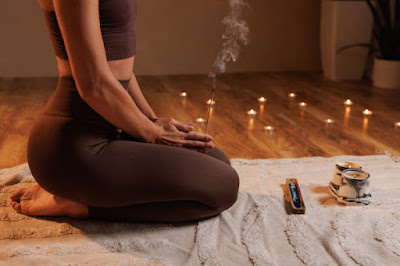
How to Practice Shadow Work Meditation for Creative Block
Creative block can feel heavy and humiliating — a wall between you and the thing you most want to make. There’s a gentle, practical pathway through that wall: how to practice shadow work meditation for creative block. Shadow work is a reflective practice that brings curious, compassionate attention to the disowned parts of yourself so they stop sabotaging your flow.
This guide walks you through clear preparation, a short repeatable meditation sequence, troubleshooting, and ways to fold discoveries back into your daily creative practice. You’ll get concrete prompts and micro-practices you can try in 10–20 minutes, plus a downloadable worksheet to track progress.
Why shadow work helps creative block
Before you begin a practice, it helps to understand what’s really happening. Creative resistance is rarely about talent — it’s often about what we’re protecting ourselves from. This section briefly grounds the psychology and contemplative logic behind using shadow work for creativity.
The creative block as a messenger — how to practice shadow work meditation for creative block
When creative energy stalls, it’s often trying to tell you something rather than chastise you. A block can be a messenger about fear of failure, fear of success, shame about a past attempt, or an inner critic protecting you from perceived risk. Treating the block as an enemy keeps you stuck; treating it as information opens a path.
In practice this means shifting from reacting to noticing — from ‘Why won’t this start?’ to ‘Where do I feel the pause, and what does it want me to know?’ Shadow work meditation helps you listen to that messenger in a contained and compassionate way, so you aren’t pushed into avoidance or perfectionism.

What ‘shadow’ means in practical terms
Bold: **shadow work** — the term ‘shadow’ refers to parts of yourself you have disowned, minimized, or labeled unacceptable. That can include emotions (anger, jealousy), impulses (risk-taking, play), or core beliefs (I’m not good enough). These aspects aren’t bad — they’re simply carrying energy and messages that need attention.
In creative life the shadow often shows up as procrastination, sudden self-criticism, or the urge to endlessly refine rather than produce. Shadow work for creativity helps you recognize these patterns as messages and translate them into workable steps — not by forcing them away, but by inviting them into voice.
Foundations: safety, curiosity, and consent
Shadow work asks you to meet uncomfortable material. That’s why a safe container is essential. These foundations help you practice without overwhelming yourself — emotional safety, physical boundaries, and simple rituals of care.
Create a safe physical and temporal space
Choose a spot where you won’t be interrupted for the length of your session — even ten minutes. Good light, a comfortable seat, and a simple signal to household members (a closed door, a note) makes it more likely you’ll follow through.
Time-bound sessions are important. Decide in advance how long you’ll stay with inquiry — for example, 10–20 minutes — and set a gentle timer. Knowing there’s an endpoint makes it easier to open to difficult feelings without feeling trapped.
- Find a quiet seat and remove obvious distractions (phone on do-not-disturb).
- Set a clear time limit (10–20 minutes) and a soft timer.
- Have grounding items nearby: a glass of water, a blanket, or a small object to hold.
Brief grounding and self-compassion practices
Before you ask anything of your shadow, stabilize the nervous system. A simple breath anchor helps move you from agitation or numbing into present attention. Pairing breath with a self-compassion phrase softens defensiveness so the material can speak without escalation.
Use two short practices: a breath anchor to settle and a compassion phrase to hold the tone of the session. These only take a few minutes and make all the difference in keeping inquiry gentle.
- Breath anchor (3–5 minutes): Sit comfortably. Inhale slowly for four counts, exhale for six. Notice where you feel the breath in your body and return to it when the mind wanders.
- Self-compassion phrase (1–2 minutes): Silently say a calming line such as, ‘May I be kind to myself — I am allowed to feel.’ Repeat as needed while maintaining the breath.

When to seek extra support
Shadow work can surface strong feelings. If you notice flashbacks, dissociation, intense panic, or material that feels unmanageable, pause the practice. Reach out to a therapist, counselor, or a trusted support person. This practice is not a substitute for clinical care.
Also consider working with a guide if you consistently uncover trauma-related material. A therapist can help you process safely while maintaining the creative benefits of inquiry.
How to practice shadow work meditation for creative block: a gentle sequence
Here is a short, repeatable sequence you can try now. It’s designed to be done in 10–25 minutes and to be gentle — notice, invite, witness, dialogue, and then integrate. The steps below show why each stage matters and how to do it.
Step 1 — Arrival: notice the tension
Why: The creative block usually has a felt location — a tightness in the chest, a constriction in the throat, or a knot behind the eyes. Naming and locating it gives you a concrete place to direct attention and reduces the diffuse anxiety that fuels avoidance.
How: Sit quietly and scan your body. When you find a spot of tension or heaviness, slow down and describe it silently: ‘tightness, warm, near my sternum.’ Spend three to five minutes with this noticing. Allow the description to be curious rather than judgmental. If thoughts carry you away, return to the physical sensation.
- Set a timer for 3–5 minutes.
- Scan from head to toe and pause where you feel the strongest resistance.
- Name the sensation silently and breathe into it for several cycles.
Step 2 — Invitation: call the shadow with curiosity
Why: Avoidance keeps the shadow in charge. An invitation — a gentle, direct question — lets the resisted part know it will be heard and reduces its need to act out through procrastination or critique.
How: From your felt place of tension, silently ask an invitational question such as, ‘Who are you? What are you protecting me from?’ Wait. You may get a phrase, an image, or a memory. If nothing appears, try a different phrasing like, ‘Show me what you want me to see about this project.’ Stay patient and open.
- Ask an open question, e.g., ‘What are you protecting me from?’
- Listen for a first impression — phrase, image, or bodily shift — without forcing an answer.
Step 3 — Witnessing: compassionate attention
Why: Simply attending with compassion lowers reactivity. When you witness a critical voice or a shame-filled image without joining it, the charge around the content falls and you can gather useful information instead of being hijacked by it.
How: Offer nonjudgmental observation. You might label a thought: ‘There’s the critic again: “This isn’t good enough.”’ Notice the tone and posture of that voice. Breathe toward it. Name any emotion that surfaces — sadness, fear, anger — and allow it to be present without trying to fix it.

Step 4 — Dialogue: a short inner exchange
Why: Putting the shadow into language transforms implicit fear into explicit request. Conversation often reveals the needs behind the resistance — rest, recognition, safety, or smaller goals — and makes practical solutions possible.
How: Try a brief journaling or imagined-dialogue practice. Ask the part what it needs to feel safe about the project: ‘If you could tell me one thing, what would it be?’ Write the answer without editing. Respond from your adult self with empathy and one small offered change. Keep the exchange short — 5–10 minutes total.
- Ask the shadow a question (e.g., ‘What do you need from me?’).
- Write whatever comes without judgment.
- Reply with one compassionate, concrete offer (e.g., ‘I hear you — let’s try one small step tomorrow’).
Step 5 — Integration: small actions and compassionate resolution
Why: Integration prevents the practice from becoming purely introspective. Taking a tiny, manageable action validates the work and shifts energy from rumination to creation. Small steps also test whether the shadow’s demands were about safety or avoidance.
How: Close the session by choosing a micro-action tied to what you learned — a ten-minute experiment, a play-based sketch, or a promise to rest. Record one sentence in your journal about the session and set a timed, low-pressure next step. Finish with a self-compassion phrase to seal the container.
- Write one sentence summarizing the insight.
- Choose a tiny actionable next step (5–15 minutes) for the next day.
- Offer a closing self-compassion phrase and gently end the session.
Common obstacles and gentle fixes
Even careful practice runs into bumps. The remedies below are small adjustments you can try immediately if the meditation feels too intense, too blank, or too shaming.
If you get overwhelmed
If feelings spike or you feel dysregulated, prioritize grounding. Bring your attention to the breath, feel your feet on the floor, and use a sensory anchor like splashing water on your face. Shorten the next session and consider contacting a professional if the same material keeps overwhelming you.
A practice that is helpful in the moment is the 5-4-3-2-1 grounding: name five things you can see, four you can touch, three you can hear, two you can smell, one you can taste. This quickly returns you to present safety.
- Use breath and body grounding (5-4-3-2-1).
- Shorten the next session to 3–5 minutes.
- Pause and seek professional support if intense material persists.
If nothing seems to come up
Silence doesn’t mean failure. Sometimes the shadow needs a different door in. Use sensory or memory prompts: a song that touches you, a photo of a past attempt, or the physical place where you used to create. You can also try a task-based prompt: ‘What would I make if I had no audience?’ These cues often unstick blocked energy.
If blankness continues, experiment with changing modality — move while you inquire, sketch without judgment, or speak aloud to invite different responses.
- Use a sensory prompt (song, scent, image).
- Try a hypothetical prompt: ‘What would I make if…’.
- Switch modalities: walk, sketch, or speak aloud.
If you feel stuck in self-judgment
When judgment takes hold, reframe it as a protective strategy rather than an absolute truth. Gently name the thought (‘There’s the judge: “This is foolish.”’) and ask what it fears. Then offer a small experiment to test the fear with low stakes — a quick page, a 10-minute draft — so that action, not rumination, shifts the pattern.
You can also use compassionate rephrasing: transform ‘I’m terrible’ into ‘I’m having a hard time right now.’ The language change softens cortisol spikes and invites more workable responses.
Integrating insights into your creative practice
Meditation discoveries are useful only when applied. This section offers micro-practices and journaling templates to translate inner work into steady creative habits — the space where shadow work for creativity becomes visible in your output.
Micro-practices to stay aligned after a session
Short, repeatable actions keep insights alive. After a session, pick a micro-practice that honors the insight: a five-minute exploratory sketch, a voice memo with a new idea, or a ten-minute ‘no-edit’ writing sprint. These tiny experiments validate the shadow’s concerns and build momentum without pressure.
Consistency matters more than duration. A daily 5–10 minute checkpoint preserves intimacy with the material and allows gradual desensitization of the inner critic. Over time these small acts compound into renewed creative confidence.
- Five-minute exploratory sketch or draft.
- A voice memo capturing one new idea.
- A timed ‘no-edit’ sprint (10 minutes) to lower stakes.
Using journaling prompts from your meditation
Transform conversation into tracking. After your session, use simple prompts to record patterns: ‘What did I hear? What did it ask for? What small offer did I make?’ Over weeks you’ll see recurrent themes — that’s the work showing you where to focus.
A quick template: Date / Felt location / Shadow voice (quote) / Need identified / Tiny next step. Fill one line after each session. This keeps learning practical and forward-facing rather than ruminative.
- Date — note when you practiced.
- Felt location — where you noticed tension.
- Shadow voice — a short quote of what emerged.
- Need identified — the underlying request.
- Tiny next step — a 5–15 minute experiment.

When to repeat a focused shadow work meditation
Frequency is individual. Start with once a week and notice whether the same themes recur — that suggests weekly sessions are useful. If a particular project is stuck, a short practice before working each day for a week can accelerate progress. Avoid daily deep dives unless you have strong containment and support, as repeated intense sessions can be destabilizing.
If a theme feels triggered but not overwhelming, a brief daily micro-practice (5–10 minutes) is often the safest way to integrate without retraumatization.
Resources, templates, and next steps
Below are friendly suggestions for continuing the work, plus a simple four-week practice outline. Use these as options — the right mix will feel manageable and nourishing rather than burdensome.
Recommended books and guided meditations
A few carefully chosen resources can deepen your understanding of inner parts, trauma-aware practice, and creative courage. Look for authors who balance psychological insight with practical exercises — that combination helps shadow work for creativity move from idea to habit.
Consider titles that explore inner critics, parts work, or the relationship between vulnerability and making. Guided meditations that emphasize safety and short inquiry are particularly useful for creative-introverted practitioners.
- A book on parts work or inner critics (look for practical exercises).
- A trauma-informed guide to meditation or somatic practices.
- Short guided meditations that focus on curiosity and safety.
Practice timeline: a suggested 4-week plan
Week 1: Establish the container — three short sessions (10–15 minutes) focused on arrival and invitation. Keep actions tiny.
Week 2: Add dialogue practice twice this week and one micro-practice. Note recurring phrases in your journal. Week 3: Introduce a timed creative experiment tied to the insights you’ve gathered. Week 4: Review patterns and create a sustainable rhythm — perhaps a weekly shadow inquiry plus 3–5 micro-practices per week.
This is a template, not a rule. Adjust pacing to your nervous-system capacity and the demands of your projects.
- Week 1: 3 short sessions (10–15 min) — arrival + invitation.
- Week 2: 2 dialogue practices + daily 5-min micro-practice.
- Week 3: One 10–15 min creative experiment informed by insights.
- Week 4: Reflection and rhythm-setting for ongoing work.
Download the Shadow-to-Studio Worksheet
A gentle workbook to accompany this article: session templates, journaling prompts, and a 4-week practice tracker to help you apply how to practice shadow work meditation for creative block in your daily life.
Get the worksheet
Final Thoughts
Small, consistent curiosity about the parts of you that resist creating can be profoundly freeing — not because it removes all discomfort, but because it makes discomfort intelligible and manageable. Shadow work meditation is a practice of companionship: you learn to sit with what’s hard and translate it into direction.
Try one short session today, honor whatever comes up, and choose one tiny next step. Over time, these steady invitations help the blocked voice feel seen — and that alone often lightens the path back to making.