
How to Use Life Purpose When Starting Over: A Practical Guide
Starting over can feel at once heavy and strangely liberating — like standing at a shoreline with a suitcase of memories and the open sea ahead. If you’re wondering how to use life purpose when starting over, this guide meets you where you are: disoriented, hopeful, and ready for realistic next steps.
You’ll find the phrase “how to use life purpose when starting over” woven into the core sections — in two section titles, the headline, the SEO fields, and the exercises — so you always have a clear thread through the practical steps, quick experiments, and the worksheet action you can try this week.
Why begin with purpose: the gentle compass
Purpose here isn’t a rigid blueprint — it’s a gentle compass. During transition, a sense of purpose organizes attention, conserves energy, and helps you make kinder, clearer choices. This section lays out why purpose matters now and gently reframes common fears about ‘finding’ it.
Why purpose matters now
When you’re starting over, everyday choices multiply — where to sleep, how to spend your time, who to be around. A clear sense of purpose reduces the noise. It doesn’t tell you every move to make, but it points you toward options that consistently feel nourishing.
Psychologically, purpose supports resilience. Knowing what matters to you acts like an internal permission slip: it helps you say yes to energy-giving activities and no to obligations that chip away at your calm. Practically, purpose aligns small decisions so they compound — a few consistent, values-aligned actions become meaningful momentum.
Practices that center purpose also restore a sense of agency. Instead of waiting for certainty, you can test small choices and learn — which is especially useful when the future is unknown. In short: purpose clarifies, conserves, and steadies you in the messy middle of a new chapter.

Common fears about ‘finding’ purpose
Many people imagine purpose as a single, dramatic revelation — a fixed destiny that must be discovered whole. That myth makes starting over feel urgent, shameful, or impossible. The truth is that purpose evolves; it shows up in repeated patterns of meaning, not a single lightning bolt.
Another common fear is that purpose must equal career success. Purpose can inform work, yes — but it also lives in caregiving, creative play, community presence, and small acts of kindness. Treating purpose as career-only shrinks your options and increases pressure.
Finally, people worry they’re ‘too late’ to find purpose. Purpose isn’t a deadline — it’s a conversation you have with your life. You can rephrase what matters at any age and test it gently. This reframing — purpose as evolving, practical, and learnable — is a kinder, truer starting point.
How to use life purpose when starting over: clarify your core
Clarity begins with small, repeatable practices. Use the exercises below to map what truly matters, notice lived clues, and craft a short purpose sentence that guides choice without locking you in.
Step 1 — map values and energy
Why: Values are like beacons — they help you choose what to protect when everything else feels uncertain. When you know the handful of principles that energize you, decisions become simpler and less draining.
How: Set aside 20–30 minutes for a values map. Write 8–12 things that feel important (examples: learning, steadiness, curiosity, care). Then do a quick energy audit: for the past week, mark which activities gave you energy, drained you, or left you neutral. Cross-reference the two lists and notice overlaps — those are priority values in action.
This is a practical, testable exercise, not a one-time certificate. Revisit the map after a few weeks and update what you learn about where energy actually flows.
- Set a 20–30 minute timer and list 8–12 values that feel true right now.
- Review your calendar and journals for the past week; mark activities as energizing, draining, or neutral.
- Highlight where values and energizing activities overlap — these show what to prioritize next.
Step 2 — notice moments that light you up
Why: Moments of aliveness are practical clues to lived purpose. They’re rarely grand; they’re often small—a conversation that made you glow, a project that absorbed you, a volunteer shift that felt meaningful.
How: Try a seven-day noticing practice. Each day, jot down three short moments that felt energizing or meaningful, and why. Keep entries brief — even a phrase or two. After the week, look for repeats: similar feelings, people, or contexts. Those patterns point to the kinds of activities worth prototyping.
This exercise also trains your attention. Over time you’ll spot meaning earlier and make quicker, lower-risk choices that honor what lights you up.
- For seven days, record three moments per day that felt energizing or meaningful.
- Note the context (who, what, where) and the feeling word (curious, calm, fulfilled).
- After the week, circle repeated themes and plan one micro-experiment around them.
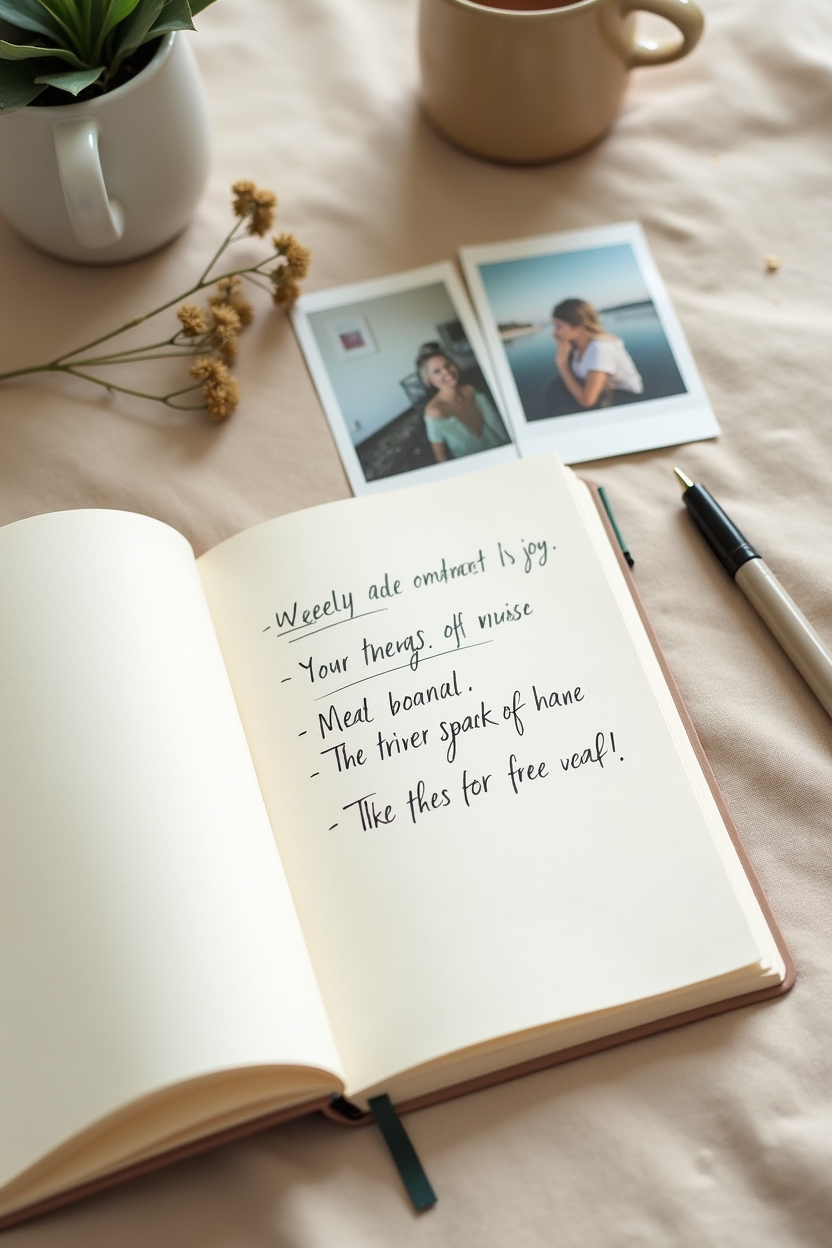
Step 3 — draft a short purpose statement
Why: A short, working purpose statement is an anchor — not a prophecy. It helps you answer small questions quickly: should I say yes to this? Does this support the direction I’m testing? A sentence reduces analysis paralysis.
How: Use simple templates and adapt them. Examples: ‘To help [who] experience [how/outcome]’ or ‘To bring [quality] to [context].’ Keep it short—one line. Try a few drafts and use it as a decision filter for two weeks. If it feels useful, keep it; if it feels off, revise based on your experiments.
A working statement is a living tool. It will morph as you learn more, which is the point: purpose is tested, not declared once and forever.
- Template: To [contribution] so that [people/outcome].
- Template: To bring [quality] into [context].
- Sample: To create gentle learning spaces for people navigating life change.
Practical ways to test purpose in the real world
Testing purpose keeps it grounded. These are low-risk experiments you can try in hours, days, or weeks to see what fits — and to gather real feedback instead of guessing.
Micro-commitments and prototypes
Design experiments that are low-cost and high-learning. The point is to gather data: did this activity feel energizing? Did it connect you with people who matter? Did it produce something useful? Keep the experiment short and measurable so you can learn fast.
Good prototypes are clearly scoped: one 90-minute workshop, a week of evening creative posts, a volunteering shift twice in a month. Treat them like scientific trials — define what success looks like before you begin and what you’ll observe afterward.
These small commitments protect your time and energy while revealing fit. Over a few iterations you’ll know more about how your purpose shows up in everyday life.
- Plan a 1–4 hour activity that reflects a value and test how it feels.
- Run a 1-week public-facing experiment (a blog post, social invite, or class) and gather simple feedback.
- Log responses and your internal experience; decide whether to iterate, stop, or scale.

Saying no with purpose
Why: Saying no clears space for yes. Boundaries aren’t cold refusals — they’re protective gestures for what you intend to build. When starting over, each yes carries weight; a purposeful no keeps your attention aligned.
How: Use short scripts that connect to your purpose. For example: ‘I appreciate the invite; right now I’m focusing on projects that [purpose phrase], so I’ll pass.’ Or: ‘I can’t take that on and still protect the time I need for [priority].’
These scripts are simple, humane, and repeatable. They help you conserve energy and show others what you’re prioritizing without defensiveness.
- “Thank you—right now I’m focusing on [purpose], so I’ll pass.”
- “I can’t take that on and keep my energy for [priority].”
- “I’m simplifying commitments this season to test some new directions.”
Using community and mentorship as accelerants
Community and mentors compress learning. Small groups, short courses, or a monthly check-in with a mentor give you mirrors and social proof — both of which speed up refinement. Look for people who model the values or activities you’re testing, not perfect finished products.
How: Start small: join a single class, attend a meetup, or ask someone for a 30-minute conversation about their path. Be specific in your requests—ask to observe, try, or receive feedback on one micro-experiment. Reciprocity matters: offer help or share what you learn so relationships stay mutual.
Community doesn’t have to be permanent to be useful. Even a few aligned conversations will clarify whether a direction feels like yours.
When doubt or grief show up: staying steady
Doubt and grief are normal companions in transition. Purpose-guided choices can still feel shaky — so include gentle practices that regulate emotion and reframe setbacks as learning.
Simple breath and grounding practices
The body is a quick lever to steady the mind. Two brief somatic practices work well before big decisions or after setbacks: a paced breath and a five-point ground.
Paced breath: inhale for four counts, hold for one, exhale for six counts. Repeat for one to three minutes. This calms the nervous system and clears the fog that doubt creates.
Five-point ground: press your feet into the floor, feel your seat, relax your shoulders, soften your jaw, and take one deliberate exhale. Use this to return to present sensations before you consult your purpose statement. These tools don’t solve everything — they give you composure so you can test, not react.
- Paced breath: Inhale 4 — hold 1 — exhale 6; repeat 1–3 minutes.
- Five-point ground: feet, seat, shoulders, jaw, exhale; hold 30 seconds.
Reframing setbacks as data
Setbacks can feel like failure, but purpose is clarified by iteration. Treat each disappointment as informative. Ask: What did this teach me about fit? What might I change in the experiment? What new questions emerged?
Example 1: A short course didn’t attract students. Rather than concluding ‘this isn’t for me,’ you can test different outreach channels or simplify the offer. Example 2: A volunteer role felt meaningful but drained you; maybe the tasks can shift to a smaller window or a different role.
This mindset — setbacks as data — is central to finding purpose after a major life change. It removes shame and replaces it with curiosity, which is both kinder and more effective.
How to use life purpose when starting over: create a living roadmap
Turn insight into an adaptable plan. This roadmap is not a fixed schedule but a system: routines that honor purpose, review rituals to realign, and heuristics for when to explore more or deepen focus.
Quarterly review and pivot ritual
Why: Regular review prevents drift and honors learning. A short quarterly ritual surfaces what’s working, what’s not, and what to try next.
How: Set a 60–90 minute session with prompts: What experiments did I run? What surprised me? What felt energizing? What will I stop/start/continue next quarter? Close with one concrete micro-commitment for the coming month.
Keep notes. These snapshots become a living record of your evolving purpose — a map of how small tests added up into clearer direction.
- Schedule 60–90 minutes once every three months.
- Answer: wins, surprises, energy sources, stop/start/continue.
- Choose one micro-commitment for the next month and a check-in date.
Daily routines that honor purpose
Small daily practices keep alignment alive. Morning routines might include a brief journaling prompt tied to your purpose statement; evenings can include a five-minute gratitude note about where you felt aligned.
Examples: a two-sentence morning intention, a short walk after lunch to test a new idea, a nightly log of one learning. Routines aren’t rigid—think of them as gentle scaffolding that keeps you curious and connected to what matters.
Over time, these micro-habits create a steady current beneath the visible work of restarting your life.
- Morning: one-line intention tied to your purpose statement.
- Midday: a short walk or check-in to observe energy and focus.
- Evening: jot one small learning from the day.

When to broaden vs. narrow focus
Why: Exploration surfaces options; commitment deepens mastery. Both matter. The key is to choose intentionally based on what your experiments reveal.
How: If many tests feel mildly rewarding but none feel energizing, broaden focus — try different contexts or communities. If one area repeatedly lights you up and attracts responses, narrow focus and run deeper, longer prototypes.
Use heuristics: broaden when curiosity outpaces traction; narrow when you have consistent positive feedback or growing internal conviction. These choices are part of the living roadmap you’ll revise each quarter.
Examples and short case studies
Short, grounded examples show these steps in action. They’re not prescriptive blueprints — they’re sketches of how others tested purpose with small, compassionate experiments.
Career pivot: testing purpose through volunteering
Sara left a long-term role and felt called to social impact but was unsure how to translate skills. She used the values map exercise to identify care, teaching, and steady community as priorities. Then she volunteered for a local after-school program for one month as a micro-prototype.
The volunteer shift clarified two things: she loved working with teens (a recurring energizing moment) but needed clearer structure than the program offered. She adjusted her prototype — co-designing a short curriculum — and tested it with a small group. The feedback and her own energy led her to apply for a program coordinator role that matched her emerging purpose.
This example shows how small tests — volunteering, prototyping curriculum, gathering feedback — move you from uncertainty to a clearer, tested direction.
Relationship reset: values-led boundaries
Marcus was navigating family tensions after a relocation. His values map highlighted steadiness and compassionate presence. He used a short purpose statement—’To bring steady presence to family moments without losing my calm’—and practiced saying no in service of that aim.
He experimented with one boundary: limiting visits to weekends and setting a clear departure time. He explained the purpose behind the boundary and offered a shorter, more intentional presence. The result: calmer interactions and more sustainable visits. When tension arose, he used breath practices to come back to center before responding.
This case shows that purpose can shape how you hold relationships — with care and clarity — rather than dictating distant perfection.
Creative restart: small public-facing experiments
Li wanted to return to painting but feared investing time without an audience. She used the seven-day noticing practice and found energy in informal tutorials she gave friends. Her first prototype was two Instagram posts sharing process shots and a short caption about intention. The posts attracted a small, curious audience and a few commissions.
She treated the response as data: moderate interest suggested she should test a weekend pop-up sale and a short workshop. Each small public-facing experiment taught her more about pricing, time investment, and what she enjoyed creating publicly. Over six months these micro-tests became a modest, sustainable creative practice.
This example illustrates how tiny public experiments reveal both external interest and internal fit in manageable steps.
Download the Purpose Starter Worksheet
A one-page companion with the values map, 7-day noticing log, a purpose-statement template, and a 4-week micro-experiment planner to help you try one small step this week.
Get the Purpose Starter
Final Thoughts
Purpose is less a final destination and more a practice — a gentle compass you test, tune, and carry forward. As you start over, choose one micro-step from this guide, try it this week, and use the worksheet to collect your learning.
Remember: your purpose will grow with you. Be curious, be compassionate, and let small experiments guide the next chapter.