How to Practice Walking Meditation for Sleep: A Practical Guide
If your evenings are crowded with restless thoughts or the body feels on edge, gentle movement can be a quiet bridge into sleep. This guide explains how to practice walking meditation for sleep — a simple, sensory practice that shifts attention from looping thoughts to embodied experience, helping your nervous system prepare for rest.
You’ll find approachable steps, examples for 5–20 minute routines, and practical adjustments for small spaces or insomnia so you can choose what fits your evening. Read with curiosity — start small, experiment gently, and let the practice support your rhythm.
Why walking meditation helps you sleep: how to practice walking meditation for sleep
Walking meditation isn’t exercise in the vigorous sense — it’s deliberate, slow movement with attention. It works by engaging body-awareness, calming the nervous system, and interrupting the thought loops that often keep you awake.
How movement calms the mind
Movement engages pathways that are different from those used by repetitive thinking. When you bring attention to the felt sense of your feet, legs, and breath, you invite the brain to process sensory information rather than run through stories. That shift alone can loosen the habit of rumination.
You may hear the term **vagal tone** — the health and responsiveness of the vagus nerve — used to describe part of this process. Improved vagal tone supports a calmer heart rate and a sense of safety in the body; slow, rhythmic movement and breath can gently stimulate that calming response.
This is also about embodied attention: focusing on sensation is a direct, accessible anchor. For people dealing with chronic sleeplessness, practicing walking meditation for insomnia can be a helpful complement because it offers a tactile, present-moment focus that quiets mental noise without forcing stillness.

Who benefits most (and when not to practice)
Walking meditation suits many people — those who find lying still invites more thinking, or who need a small shift after an evening of screen time or worry. It can be especially useful if you feel restless in bed or have tension in the body that makes stillness uncomfortable.
There are important exceptions: if you have mobility limitations, severe balance issues, or certain medical conditions, adapt the practice to a seated version or consult your healthcare provider first. People with restless legs syndrome may find movement increases alertness; in that case, short seated breath practices or a different somatic night routine might be more soothing.
If you have a diagnosed sleep disorder like sleep apnea, walking meditation is a supportive tool but not a replacement for medical treatment. Use it as part of a broader plan that includes professional guidance when needed.
Prepare: setting intention, space, and time
A few simple preparations signal to your nervous system that this practice is for rest. These checks are practical — footwear, lighting, timing — and also ritual: a short intention sets the tone.
Choose the right length and environment
Decide how much time you can realistically give without creating pressure. Shorter sessions are surprisingly effective — they lower the bar to consistency, which matters more than length. If you have a larger evening window, a slightly longer practice will deepen the effect.
Indoors, clear a small path (a hallway, the edge of a room, or a loop around furniture). Outdoors, choose a flat, quiet stretch free of heavy traffic or uneven surfaces. For small spaces, you can walk back and forth slowly in a single-room loop — it’s the quality of attention, not distance, that matters.
Match timing to your body. If you tend to be wired late at night, practice earlier in your wind-down routine. If you find walking perking you up, shorten the duration or place it closer to bedtime so the pause into stillness is immediate.
- 5 minutes — a single hallway loop or paced walk to the bedroom; ideal on tight evenings.
- 10 minutes — enough to settle breath and anchor sensations without taking much time.
- 20 minutes — a fuller routine that allows deeper integration of movement and stillness.
Simple props and posture cues
Dress comfortably — soft, non-restrictive clothing and socks or thin-soled shoes if you prefer. If balance is a concern, have a chair or wall nearby for support so you can steady yourself without tension.
Keep the spine long but relaxed: imagine a gentle lift through the crown, head balanced over the pelvis, but allow shoulders to soften. Let the breath be natural at first — you are not forcing it — and bring curiosity to how each step feels.
Small posture cues can make the practice accessible and safe: soften the knees slightly, land each foot with awareness from heel to toe, and use your gaze softly forward or slightly downward to help orientation.
- Comfortable clothing and thin-soled shoes or socks
- Chair or wall for optional support
- Dim lighting or a soft lamp to signal wind-down
Core practice: step-by-step walking meditation for sleep
Below is a concise, reproducible sequence you can use tonight. It follows three phases — Begin, Walk, Land — with sensory anchors and brief micro-steps to guide you. Keep the sleep intention in mind as you move.
Step 1 — Begin: arrive and ground
Why: Before you move, settling the nervous system helps the rest of the practice feel restorative rather than activating. A brief arrival moment cues your mind and body that this is a practice for rest.
How: Stand with feet hip-width apart or wherever feels stable. Take 1–2 minutes of mindful breath awareness — inhale slowly to a count that feels comfortable, exhale a little longer if that helps the body relax. Choose a short intention like “rest” or “soften” and repeat it silently once or twice. Bring attention to the contact of your feet with the floor; notice weight and balance.
Step 2 — Walk: slow steps with attention
Why: Slow, attentive walking shifts attention from thinking to sensation. Coordinating breath and steps creates rhythmic cues that calm arousal and cultivate present-moment focus — a gentle alternative to lying still when the mind is racing. Remember how to practice walking meditation for sleep by keeping the sleep intention present during each phase.
How: Begin to step slowly. Match the tempo to what feels calming rather than mechanical. Here are simple pacing options to try — choose one and stay with it for the practice:
– Place attention on heel-to-toe contact: notice the sensation as each part of the foot connects and lifts.
– Coordinate breath with steps: experiment with a 4-step inhale, 4-step exhale; a 6/6 rhythm; or a natural-breath rhythm where you breathe naturally and let the steps fall into that pace.
If counting helps, count each step up to four and then start again; if tactile anchors feel stronger, keep attention on the rolling movement under the foot. If thoughts return, acknowledge them gently and bring attention back to sensation.
- 4-step inhale / 4-step exhale for a steady rhythm
- 6/6 for a slightly slower, more calming pace
- Natural-breath rhythm for an intuitive, gentle flow
Step 3 — Land: close with stillness
Why: Closing with stillness integrates the movement and signals transition into rest. It helps the nervous system take the quietness of the practice into the moments before sleep.
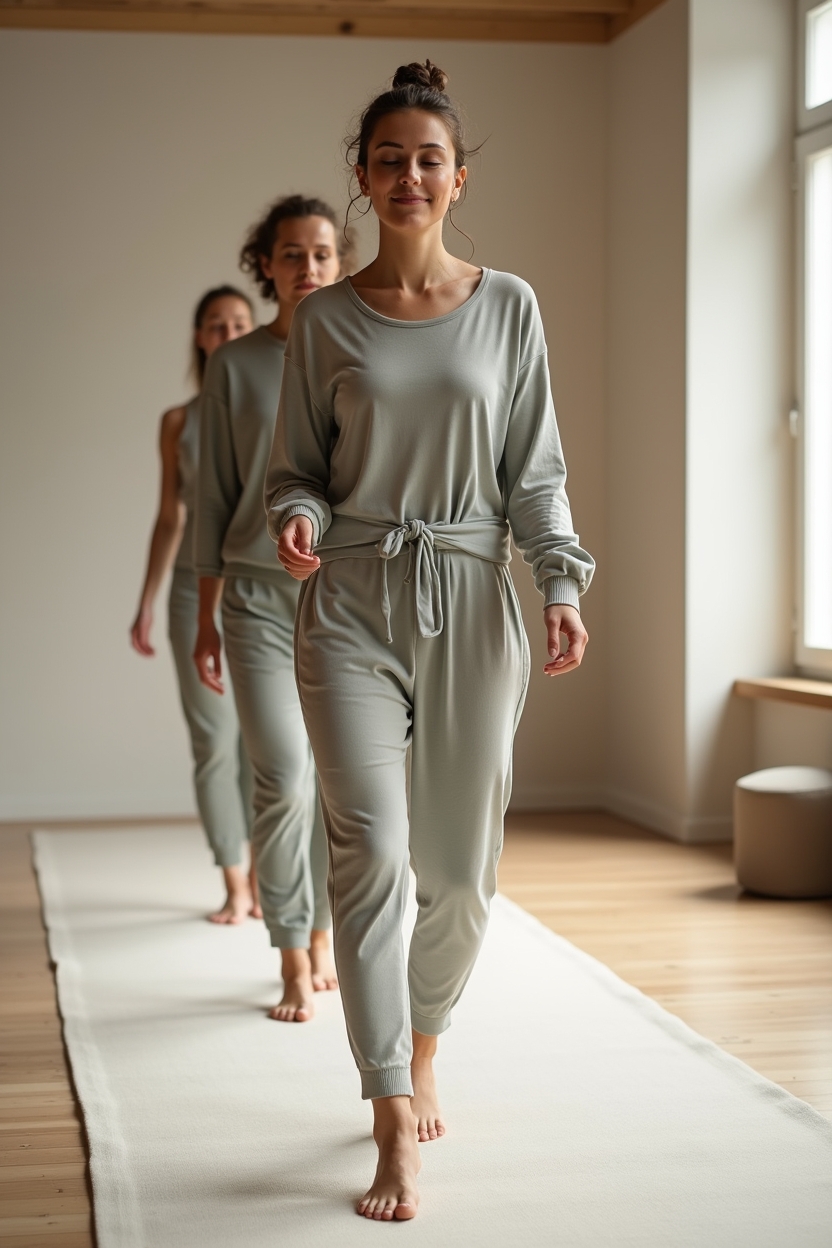
How: After your chosen time, slow to a stop and stand for 30–60 seconds, noticing any shifts. Then choose to sit or lie down mindfully. Perform a short body scan from head to toe, noticing areas of ease or tension without trying to change them. Take three slow, full breaths, exhaling with the intention of letting go, and then move toward your bed or lie down when ready.
Short versions and micro-practices
When you have five minutes, a single slow hallway loop with the same Begin–Walk–Land structure is powerful. Even pacing your steps to breath for the walk from the kitchen to the bedroom can function as a micro-practice that signals rest.
For single-room adaptations, use a paced loop around furniture or a mindful walk around your bed. The key is consistency and intention: small, reliable practices build trust with your nervous system faster than occasional long sessions.
- 5-minute micro-practice: 30–60 seconds arrival, 3–4 minutes slow walk, 30 seconds landing.
- 10-minute compact version: 1–2 minute arrival, 7–8 minutes coordinated walk, 1 minute landing.
- Single-room loop: mark a small path and keep attention on foot sensations rather than distance.
Common obstacles and gentle adjustments
It’s normal for the practice to feel uneven at first. Below are typical struggles and compassionate, concrete adjustments to keep you practicing without frustration.
When the mind races: tools to re-anchor
When thoughts flood in, use tactile anchors like heel-to-toe feeling or the pressure under the ball of your foot. Shifting to a counting method — count to four with each step and then start again — can give your attention a simple task without judgment.
If walking heightens agitation, you can pause and do a minute of slow seated breathing or place your hands on your belly to feel the rise and fall. Another option is to focus on one sensory detail — the sound of your steps, the temperature on your skin — and treat it as the object of the practice until steadiness returns.
Physical discomfort and pacing
Modify step length, frequency, or posture to reduce strain. Shorter, softer steps often feel kinder to hips and knees. Use a chair nearby to intermittently sit and continue a seated version that moves the ankles or rocks the pelvis if full standing is uncomfortable.
If pain persists, pause the practice and consult a healthcare professional rather than pushing through. The goal is nourishing rest, not endurance.
- Shorten steps and soften knee bend
- Use a chair or wall for support
- Convert to seated movement if needed
If walking wakes you up more
Sometimes movement can be stimulating, especially if practiced too early in the evening or at a brisk pace. If you notice increased alertness, try shortening the practice and placing it closer to when you go to bed so the landing leads immediately into lying down.
Alternatively, switch to a slower breath-only practice or a supine body scan on particularly wired nights. You can also lower sensory input — dim lights, softer sounds — so the overall environment supports relaxation rather than activation.
Integrating into an evening routine
Walking meditation works best when it fits gently alongside other bedtime supports. Think of it as one nourishing piece of an overall rhythm that cues the body for sleep.
A sample 20-minute wind-down with walking meditation
Here is a simple sequence to try: dim lights and silence screens, sit for 5 minutes of breath awareness to arrive, practice 10 minutes of walking meditation with slow steps and attention to sensation, then lie down for a 5-minute body scan to land into bed.
This order moves from stillness to movement back to stillness — a gentle wave that can ease the transition into sleep. Adjust durations to your needs; the sequence is a template, not a rule.
- 5 min seated breath arrival
- 10 min walking meditation (Choose one pacing rhythm)
- 5 min supine body scan before sleep
Tracking progress and keeping it sustainable
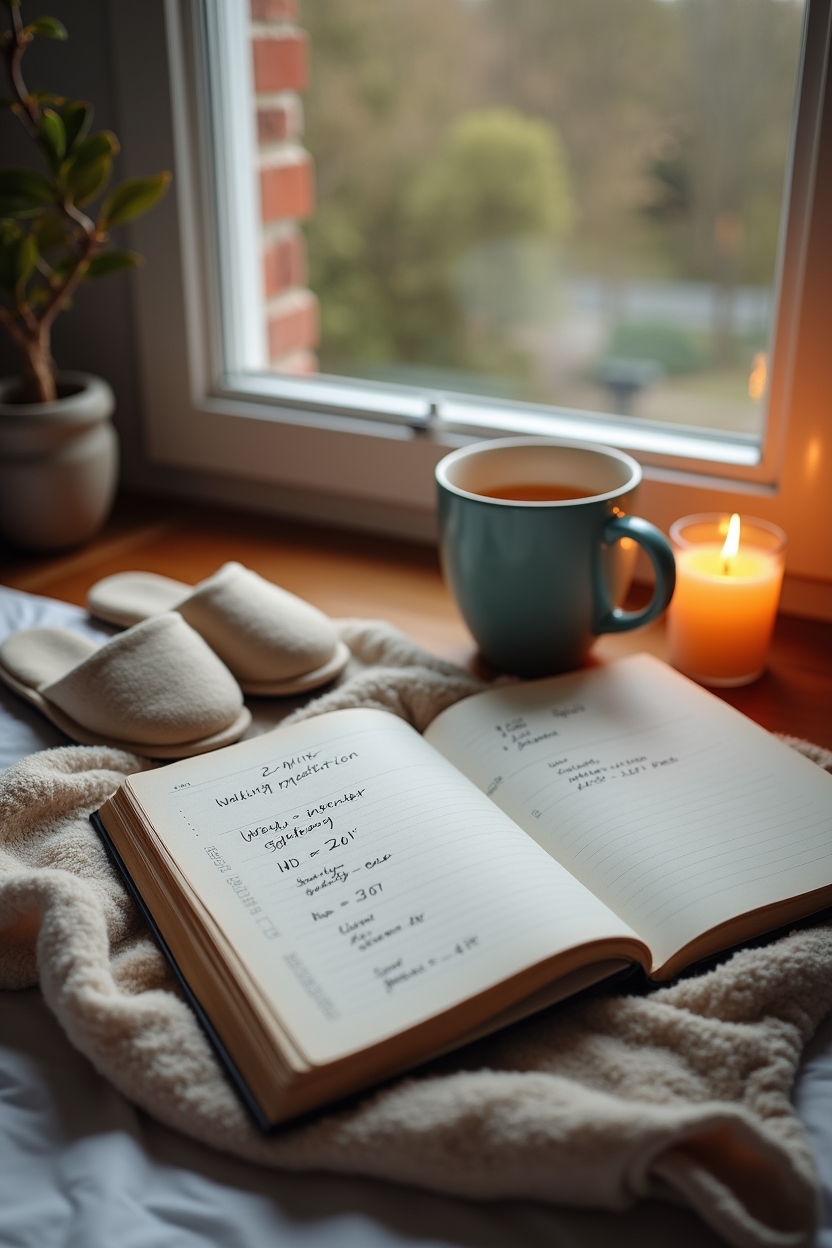
Keep expectations compassionate. Changes in sleep can take time. A simple log helps: record date, duration, perceived ease of falling asleep, and one sentence about what felt different. Look for patterns rather than one-off outcomes.
Aim for frequency over perfection — three short evening practices per week often supports a nervous system shift better than sporadic longer sessions. Celebrate small wins: a quieter mind, a calm moment, or falling asleep more easily on some nights.
- Journaling prompts: How did my body feel afterward? What changed about my thoughts?
- Frequency suggestion: 3–5 short sessions weekly to begin
- Expectation: gentle, incremental improvements rather than instant fixes
When to seek other help
Walking meditation is supportive, but not a substitute for professional care when insomnia is persistent or severe. Know when to widen your approach.
Signs to consult a professional
If you experience chronic difficulty falling or staying asleep, daytime impairment, or symptoms like loud snoring, gasping, or extreme daytime sleepiness, consult a sleep specialist or your primary care provider. These can indicate sleep disorders that need medical assessment.
Therapies such as cognitive behavioral therapy for insomnia (CBT-I) are evidence-based and can work well alongside practices like walking meditation. Treat meditation as a complementary tool — it supports rest but isn’t a standalone treatment for all sleep issues.
Printable: Bedtime Walking Meditation Cue Card
A one-page cue card with a 5- and 10-minute script, quick pacing rhythms, and three troubleshooting tips to keep on your nightstand. Use it to make the practice easy to follow during low-energy evenings.
Download the cue card
Final Thoughts
Walking meditation is a gentle, practical way to reconnect with the body and guide your nervous system toward rest. It isn’t a guaranteed quick fix — it’s a tool you can adapt and return to with patience. Try a short version tonight, notice what shifts, and allow the practice to become a steady, kind presence in your evening.
If you want a simple first step, use the printable cue card to begin a five-minute loop tonight and see how your body responds.