How to Practice Mantra Meditation for Anxiety: A Gentle, Practical Guide
Struggling with persistent worry or a racing mind can be exhausting — and sometimes conventional advice to “just breathe” feels hollow. Mantra meditation offers a gentle, dependable way to anchor attention and soothe the nervous system. This guide explains how to practice mantra meditation for anxiety, with clear preparation tips, mantra choices, a 10-minute routine you can follow, troubleshooting, and ways to make it part of daily life.
You’ll learn practical posture and breath cues, how to choose or personalize a calming mantra, a time-stamped practice you can repeat, and simple fixes when practice feels difficult. This is meant to be steady, not flashy — a tool you can return to whenever you need to re-center.
What mantra meditation is — and why it helps anxiety
Mantra meditation isn’t just repeating words — it’s a focused practice that reshapes how attention and physiology respond to stress. Below we describe the main mechanisms in accessible terms, drawing on both traditional insight and modern science.
Concept: repetition, focus, and nervous system regulation
At its heart, mantra meditation uses repetition to anchor attention. Repeating a word, syllable, or short phrase gives your mind a steady object to return to — and that repeated return is training for steadier attention in daily life.
On a physiological level, repetition and a gentle, steady rhythm often lower sympathetic arousal and support vagal tone — the body’s calming pathways. The result can be a slower breath, softened muscles, and a felt sense of safety that makes anxiety less reactive.
A short example: sit comfortably, close your eyes, and softly repeat a two-syllable phrase like “so-hum” to the rhythm of your breath. Let the sound and timing become the anchor; when thoughts drift, bring your focus back without self-criticism.
How mantra meditation differs from other meditations
Mantra practice focuses on a repeated sound or phrase as the primary anchor. Breath-focused practices center on the physical sensations of breathing; mindfulness practices widen attention to present-moment experience; visualization uses imagery to guide attention. With mantra, the repetition creates a predictable rhythm that can be especially stabilizing when thoughts are hurried.
Because you have a discrete verbal anchor, mantra can be easier to return to in moments of high anxiety — the sound or phrase gives you something specific to latch onto. It also allows both silent and vocal practice, and chanting aloud can add a somatic resonance that deepens the calming effect.
Both tradition and research suggest different practices suit different temperaments. If your mind feels scattered or you repeatedly ruminate on words and worries, a mantra’s steady repetition can be particularly helpful.
Getting ready: simple preparations before you begin
A small, repeatable setup helps practice feel manageable. The following tips cover time, place, posture, and the gentle mindset that supports a short, sustainable practice.
Choose time and space: creating a small, reliable ritual
Small rituals cue the nervous system that it’s time to slow down. Choose a predictable moment — first thing in the morning, after lunch, or before bed — and a modest space where you won’t be disturbed for a few minutes. Predictability makes habit easier.
If you feel restless, lower expectations: a five-minute practice is a real practice. Promise yourself a brief, distraction-tolerant session rather than pressuring for perfection. Over time, consistency matters more than duration.
If your environment is noisy, try using headphones with soft ambient sound or move to a corner of a room where you feel safe. The aim is a reliable ritual, not a dramatic change to your life.
Posture and breath: gentle alignment for comfort
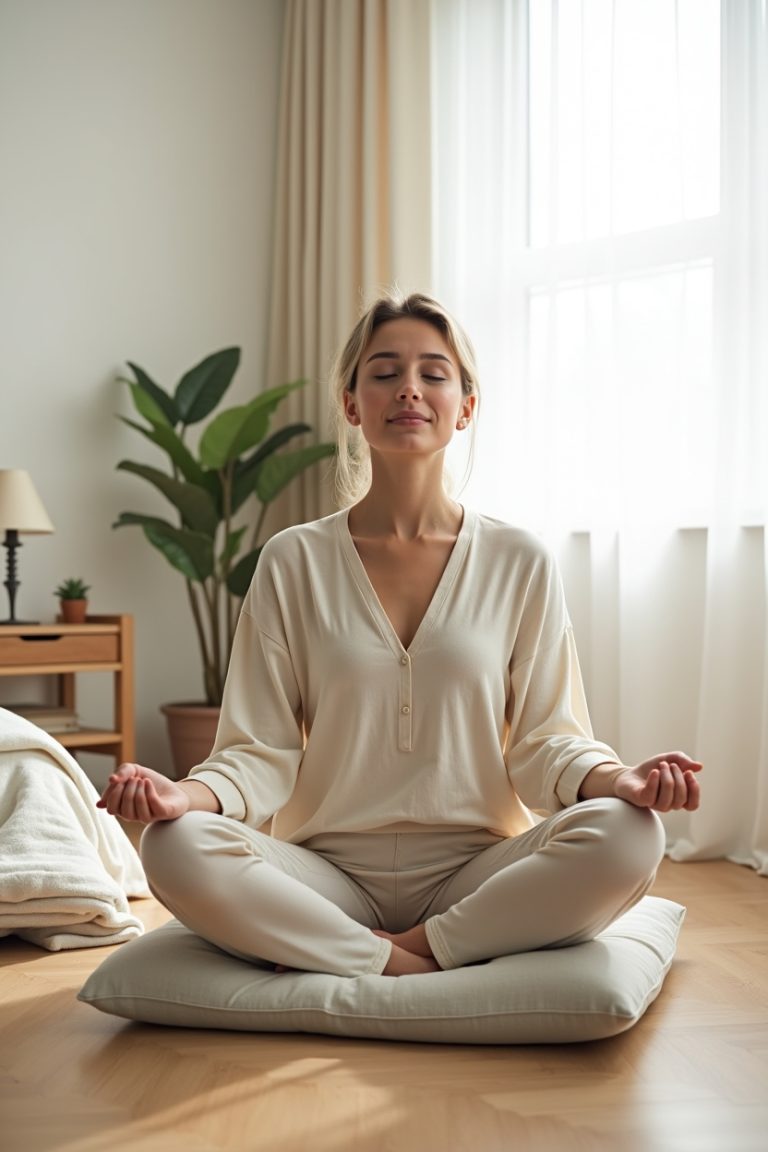
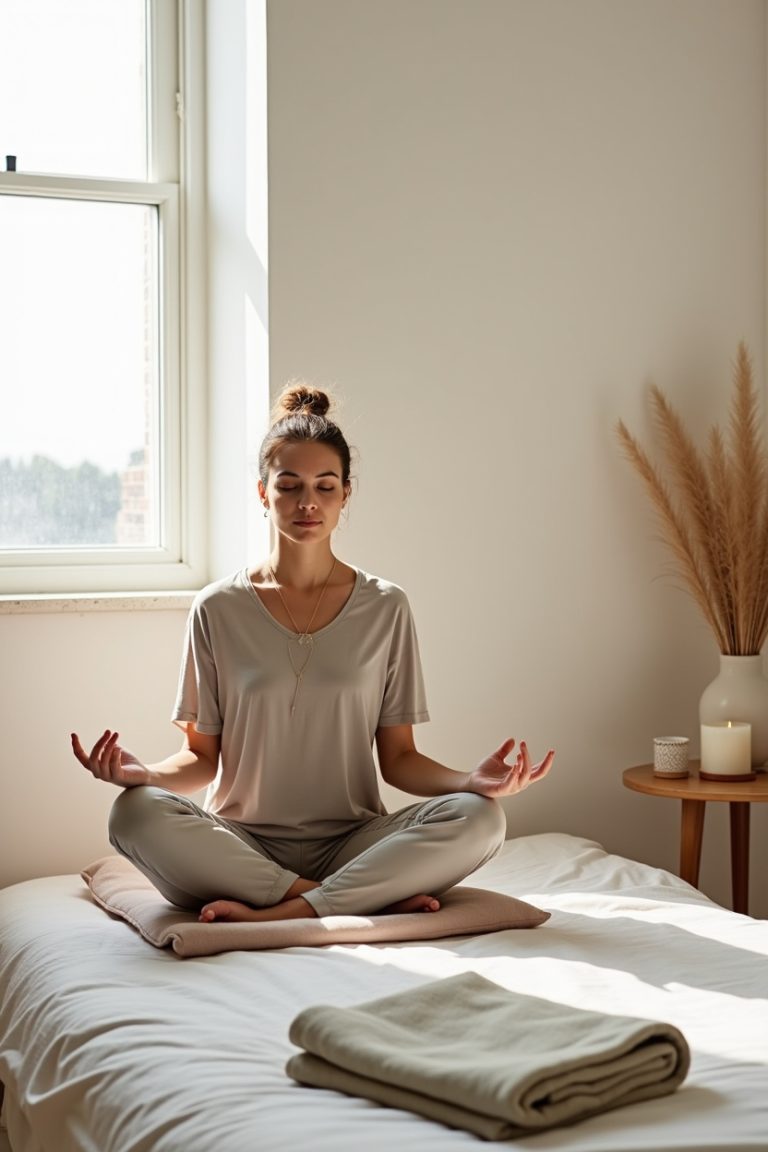
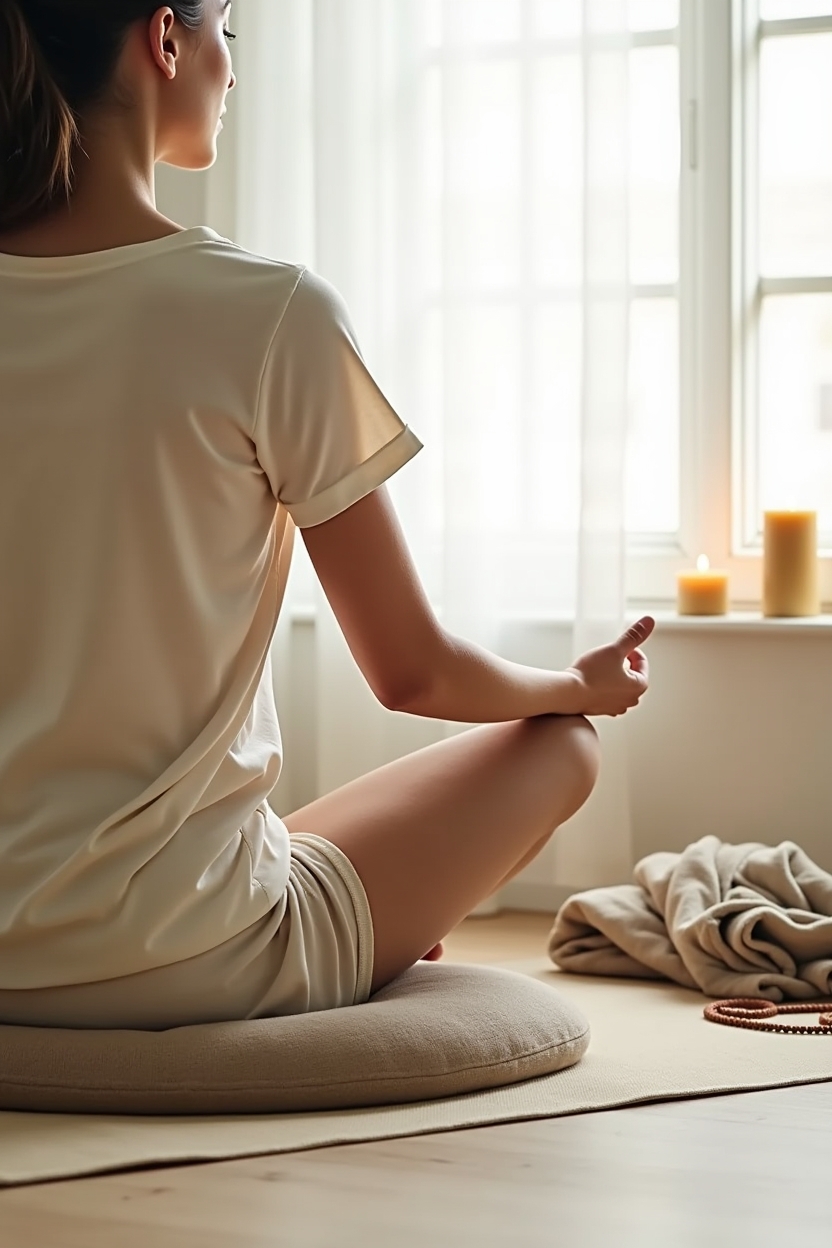
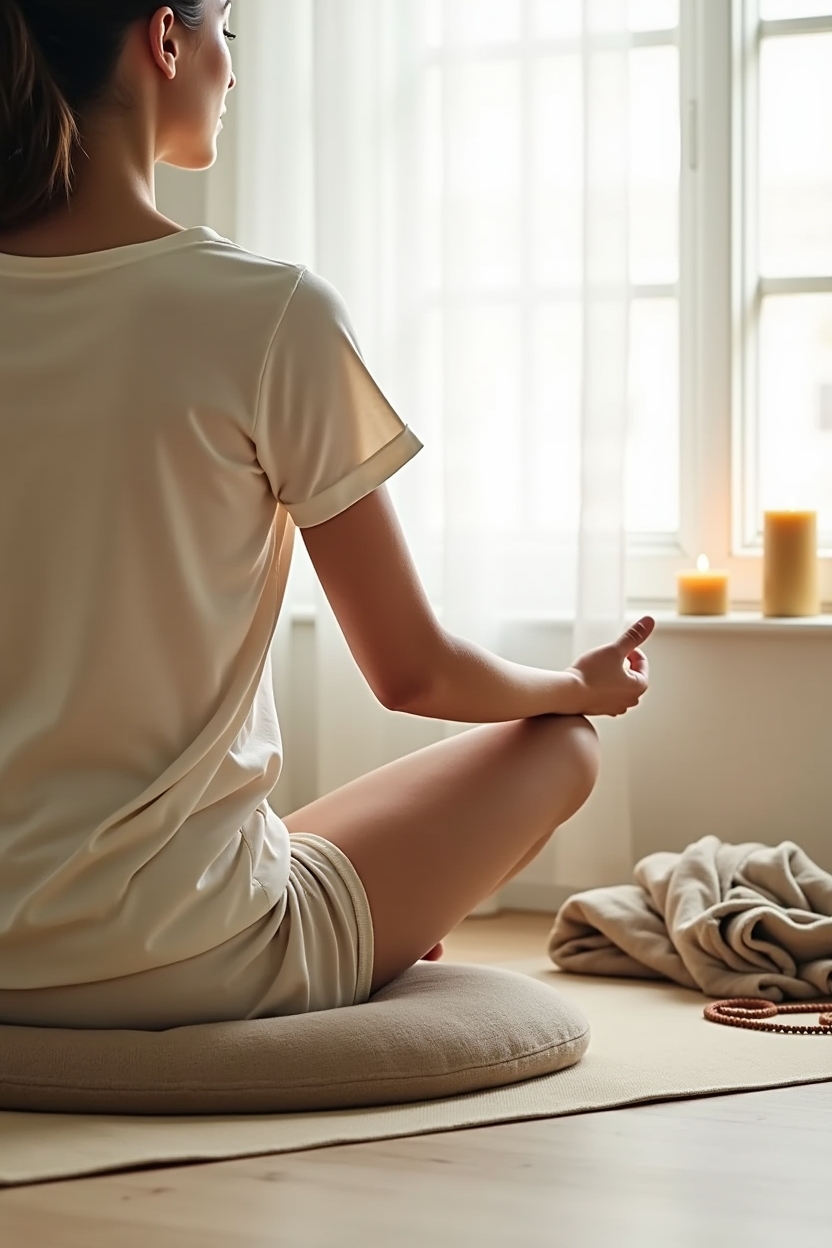
Comfort is primary. You can practice seated in a chair, on a cushion, or lying down — whatever keeps your spine naturally supported and your jaw and shoulders soft. Align the back but avoid rigid upright tension; allow the breath to move easily.
Pair the mantra with a simple breath cue: an inward mental lift on the in-breath and a soft release on the out-breath, or synchronize the syllables to a slow inhale-exhale. The breath subtly regulates arousal, so keep it unforced and smooth.
If drowsiness is an issue, choose a posture that encourages alertness (chair with feet planted) and open the eyes slightly to maintain wakefulness.
- Chair: feet flat, hands in your lap, spine long but relaxed
- Cushion: cross-legged or kneeling with support under hips
- Lying down: arms at sides, knees bent if that feels easier for the low back
Tools that help: voice, mala, timer, and music
Decide whether to repeat your mantra aloud or silently. Soft vocal repetition engages vocal cords and body resonance — it can be grounding when anxiety feels high. Silent repetition is private and portable.
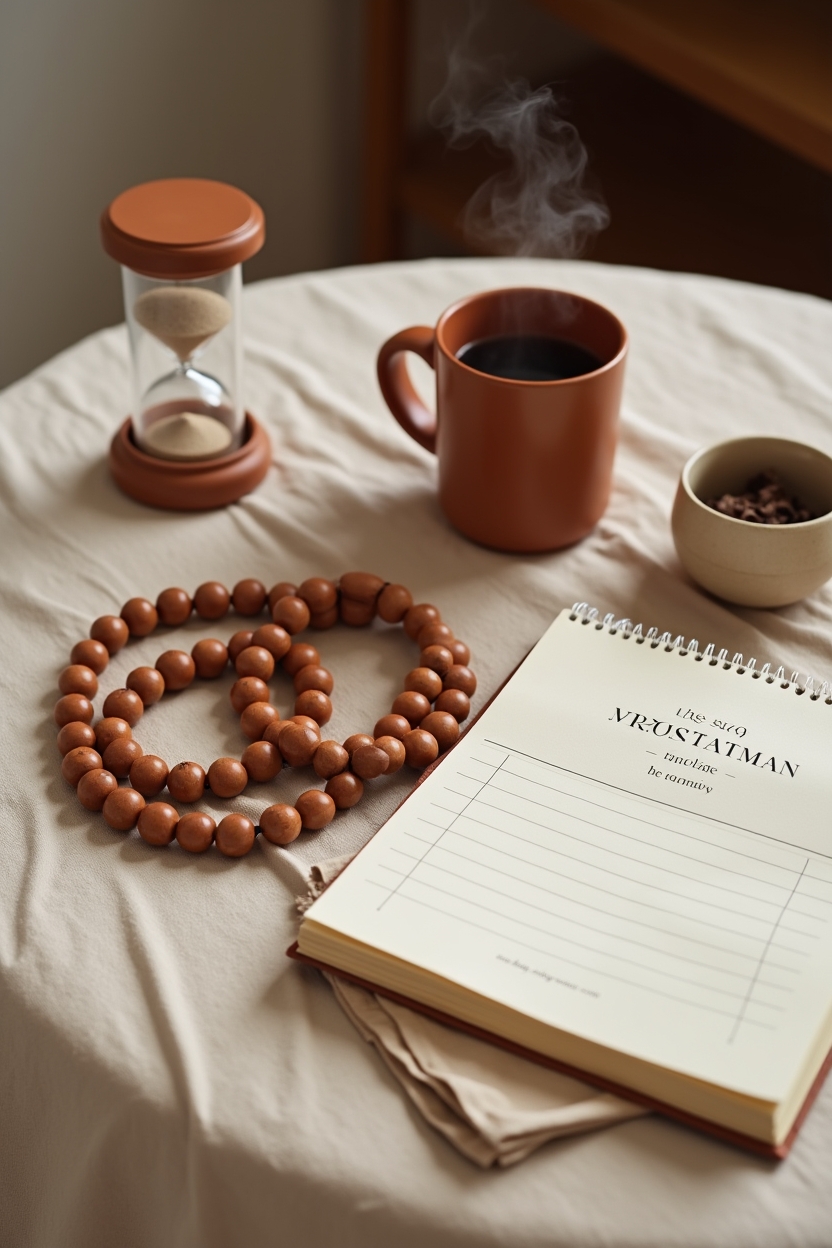
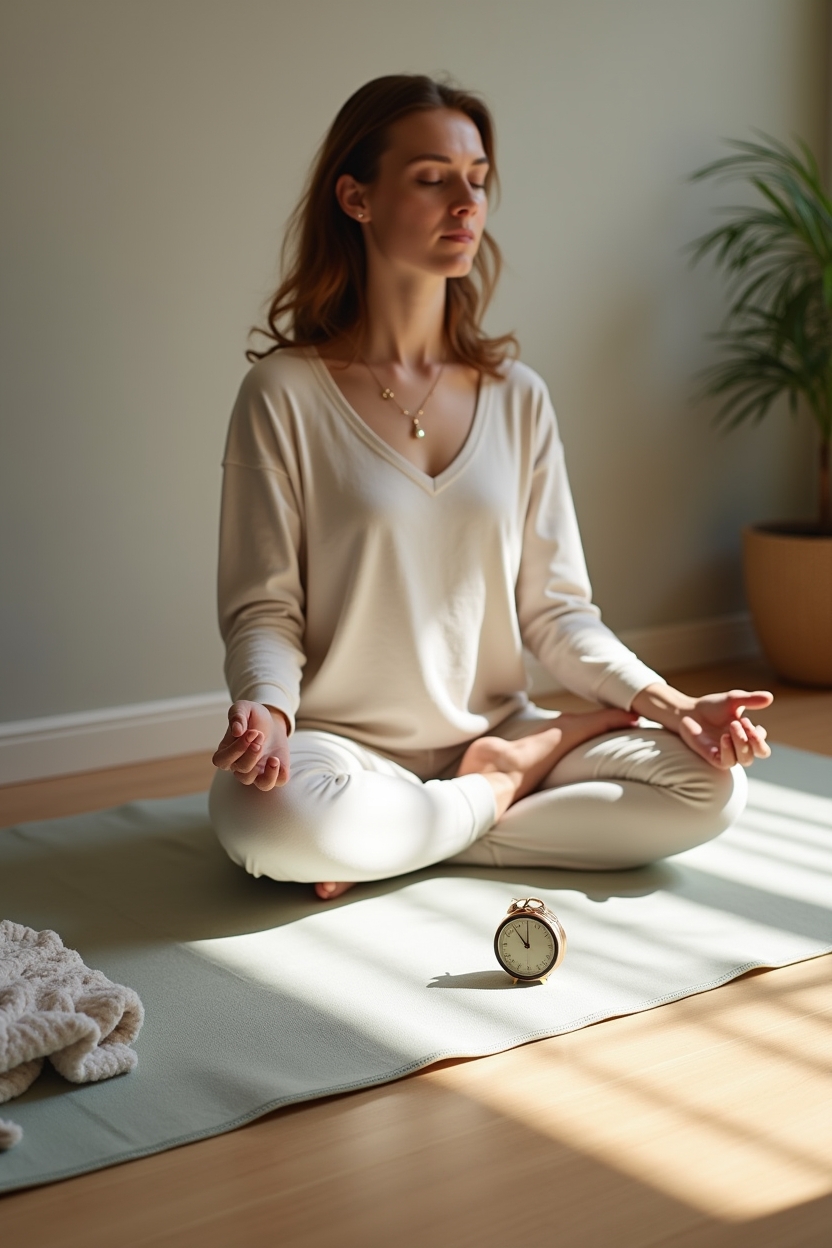
A mala (a string of beads) gives tactile feedback and helps keep count without mental effort. A simple timer with a gentle chime prevents clock-watching and helps you relax into the minutes. Low-volume ambient music or a subtle droning sound can also anchor attention if silence is unsettling.
Use tools thoughtfully — they support practice, but aren’t essential. The core is the steady repetition and your return to it.
- Try soft chanting aloud for 1–2 minutes if you feel unsettled
- Use a mala to count repetitions without cognitive load
- Set a gentle timer (5–10 minutes) to remove timing anxiety
- Low-volume ambient sound as a background anchor if silence is hard
How to choose a mantra that soothes anxiety
Seed syllables and their effects (e.g., OM, SO HUM)
Seed syllables are short, often ancient sounds that carry a concentrated quality. Examples like “OM” or “SO HUM” are simple and can create an immediate somatic resonance. These syllables often feel neutral yet rich — they aren’t sentences you need to unpack, which helps avoid stirring discursive thought.
When repeated softly they produce a vibrational tone that can be felt in the chest or skull; that vibration itself can be calming. Many students report a felt settling when using a seed syllable because the sound simplifies attention and bypasses story-heavy thinking.
Choose a seed that feels pleasant but not loaded with meaning if you want a secular, low-emotion anchor.
Simple calming phrases you can use today
Short, secular phrases often work well: single words like “peace,” “soft,” or short lines like “I am here.” These can be meaningful anchors that remind you of safety or presence. If a phrase carries too much story, shorten it until it becomes an object rather than an argument.
To incorporate a chosen phrase: say it once per breath cycle, or repeat it softly without syncing to breath — both work. Notice whether the phrase soothes or instead sparks debate; if it sparks, choose something more neutral.
You’ll likely find that different mantras suit different times. Keep a small list to rotate through as needed.
- “Peace” — a single-word anchor
- “I am here” — grounding phrase linking to presence
- “So hum” — breath-linked seed syllable
- “Soft, soft” — a gentler sensory cue
Personalizing a mantra: permission and boundaries
Personal words — a compassionate phrase, a loved one’s name, or an intention — can be effective, but use them with care. Names and emotionally charged phrases may pull up feelings; that can be helpful in therapy contexts but may be destabilizing if you’re seeking immediate calm.
Test a personal mantra in short sessions to see how it lands. If it triggers strong emotions, switch to a neutral syllable for safety. Respect cultural origins: some traditional mantras carry religious meaning; if you adopt them, do so with awareness and respect.
The best mantra resonates mildly and regularly — it should support presence, not become another problem to solve.
Step-by-step practice: a 10-minute routine you can follow
How to practice mantra meditation for anxiety is easiest to learn with a clear, time-stamped routine. Below is a 0–10 minute sequence you can try today — brief, repeatable, and designed to lower arousal while training steady attention.
Step 1 — Settle (0–2 minutes): arrival and breath
Why: The opening moments lower nervous-system arousal and prepare attention so the mantra lands more easily. A calm arrival prevents the practice from starting on high alert.
How: Sit comfortably and take 2–3 slow, deliberate breaths. Soften your jaw and shoulders on an exhale. Feel feet or sit-bones contacting the floor or cushion. Notice one or two sensations (weight, breath, or sound) to signal your arrival.
Keep the language gentle — you’re inviting, not forcing. A soft inward note like “I’m here now” can help, then release it and move into the mantra.
Step 2 — Repeat the mantra (2–7 minutes): rhythm and attention — how to practice mantra meditation for anxiety
Why: Repetition stabilizes attention and creates a rhythmic anchor that calms the mind-body loop that feeds anxiety. The repeated sound shifts processing away from spiraling thoughts toward a steady sensory object.
How: Choose silent or soft vocal repetition. If vocal, keep volume low and resonance gentle. Sync the mantra to breath if that feels natural — for example, inward syllable on the in-breath and outward syllable on the out-breath. If you prefer silent repetition, hold the phrase inside with the same rhythmic softness.
When thoughts arise, notice them without judgment and return to the mantra. Counting repetitions can help at first (count to ten and start again) until returning becomes easier.
Step 3 — Close gently (7–10 minutes): returning and reflection
Why: A gradual close prevents abrupt transitions that can re-trigger anxiety. Integration helps the nervous system carry the practice’s calm into the next activity.
How: Let the mantra soften. Return attention to the breath for a few cycles, widening awareness to the body and the room. Take a final, slightly deeper inhale and exhale, then open your eyes or return gaze if they were closed. Notice any shift in tone or sensation — no need to judge.
If you like, end with a short encouraging phrase to yourself that supports continued care: “May I be gentle,” or “This is enough for now.”
Short-session variant: a 1–3 minute version for sudden anxiety
Why: When anxiety spikes, you need a fast, reliable anchor. A micro-practice interrupts the alarm cascade and brings you back to the present quickly.
How: Stop what you’re doing for one to three breaths. Place a hand on your chest or belly to feel contact. Breathe in slowly and repeat a one-line mantra once or twice on each breath (for example, “peace” on the out-breath). Follow with a grounding movement — stamp one foot or press palms together — then return to your activity.
This micro-protocol is portable: use it in a meeting, on a walk, or at your desk.
- Anchor breath for 1–2 cycles
- Repeat a one-line mantra on each breath
- Finish with a small grounding movement
Troubleshooting common challenges
Struggle is part of learning any practice. The suggestions below help you respond kindly and practically to common issues like racing thoughts, temporary increases in anxiety, or emotional surges.
When the mind races: returning with curiosity
Mind racing is the most common experience — and it’s expected. Instead of fighting or criticizing, treat each return to the mantra as the practice’s core. Curiosity softens resistance and reduces shame.
A useful technique is brief labeling: gently note “thinking” or count a syllable and return. Alternatively, let your mantra act as a lighthouse: notice the thought and bring the beam back to the repeated phrase.
Avoid rigid rules about how many times you must return. Each return is a successful step in retraining attention.
If you feel more anxious at first: why that can happen and what to do
Sometimes practice increases awareness of underlying sensations, which can feel like more anxiety. This is often a temporary effect as suppressed feelings surface into awareness. Treat this as a sign you’re accessing material rather than a failure.
Safety steps: slow the practice, switch to a neutral syllable, or shorten the session. Pair the mantra with stronger grounding — press feet into the floor or open eyes briefly. If emotions feel overwhelming, stop and use grounding breath and movement, and consider journaling or seeking support.
If increased anxiety persists across many sessions, consult a teacher or mental-health professional to integrate practice safely.
Practical props: journaling prompts and pairing with movement
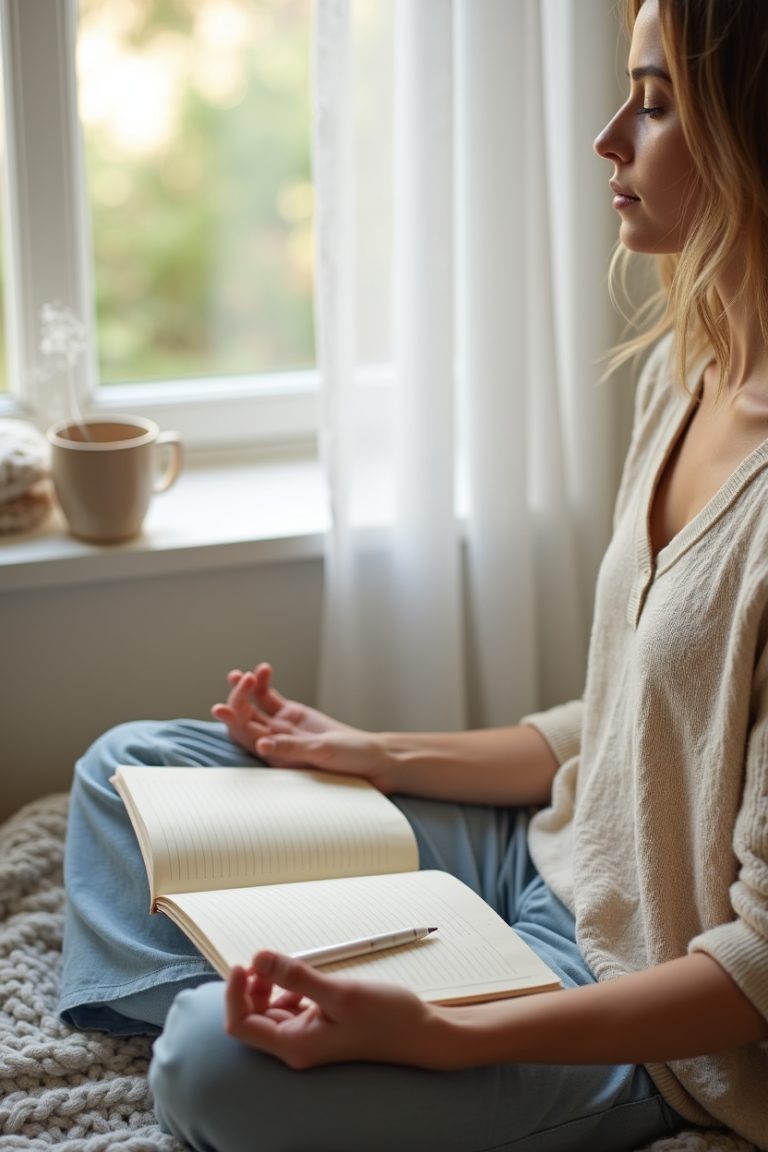
Short journaling after practice helps integrate insights and track patterns. Prompts can be simple: “What shifted in my body?” “What thought kept returning?” These notes create a gentle record of progress.
Pairing mantra with gentle movement — a short walk, mindful stretching, or yoga poses that open the chest — helps process any emotions that arise and brings the calm into the body.
Both journaling and movement are practical, low-pressure ways to deepen the benefits of practice without forcing an emotional outcome.
- Journaling prompts: “Noticed sensations”, “Recurring thoughts”, “One small shift”
- Pair with 3–5 minutes of gentle stretching or a mindful walk
- Use grounding movements (feet press, shoulder rolls) to anchor after practice
Making mantra practice part of daily life
Regular, modest practice yields steady benefits. The final section offers habit-building tips and guidance on when to combine mantra with other forms of support.
Habit tips: micro-practices and anchor moments
Build practice into existing routines so it doesn’t feel like an extra task. Anchor moments are reliable cues: after brushing teeth, before your morning coffee, or right before bed. These micro-practices — even one to three minutes — compound over time and make formal sessions easier.
Track small wins without judgment: mark days practiced in a simple calendar or use a mini-tracker for 21 days to observe momentum. Celebrate consistency rather than depth.
Over time, you may notice mantra meditation benefits for stress relief in daily moments — quieter reactions, shorter worry loops, and more ease returning to the present.
- Link practice to a daily habit (after brushing teeth, before sleep)
- Use a 21-day mini-tracker to notice pattern-building
- Allow short micro-practices when time is limited
When to seek support: therapy and guided practices
Mantra practice is a supportive self-care tool, but it isn’t a replacement for professional care when anxiety is severe or interfering with life. If panic, flashbacks, or persistent overwhelm occur, reach out to a therapist or counselor who respects meditation as part of a broader plan.
Guided groups, recordings, or a trained teacher can help you tailor practice — especially if you find certain mantras trigger strong emotions. Group practice also offers gentle accountability and shared steadiness.
Combine approaches wisely: therapy, medication when indicated, and steady mantra practice can work together to support recovery and resilience.
Printable Mantra Practice Worksheet
A two-page worksheet to support your practice: a clear 7–10 minute mantra routine, three calming mantras to try (seed syllables and secular phrases), a simple 21-day mini-tracker to notice habit-building, and journaling prompts for processing each session.
Download the worksheet
Final Thoughts
Mantra meditation offers a steady, accessible way to calm the nervous system and retrain attention — and how to practice mantra meditation for anxiety becomes clearer with small, consistent steps. Be gentle with yourself as you experiment: the practice is about repetition, not perfection.
If you’d like structure, try the worksheet above and return to this routine for a few weeks. With kindness and consistency, mantra meditation can become a quietly reliable source of support in your life.