Yoga Poses to Balance Your Empty Houses (Astrology + Yoga)
Yoga Poses to Balance Empty Houses: How Astro-Yoga Works
This guide explores yoga poses to balance empty houses by blending astrology and embodied yoga practices for holistic alignment in 2026.
Understanding Empty Houses in Astrology
In astrology, the birth chart is divided into 12 “houses,” each governing a life area. An empty house simply means no planets were born in that segment. This does not imply a problem – many astrologers note an empty house just means that area flows smoothly or isn’t a life focus. For example, an empty 1st House suggests you may feel naturally content with your sense of self. Yet even smooth areas can benefit from conscious support. In our hybrid approach, we use yoga to activate or balance the themes of each empty house, integrating physical practice with astrological insight.
Why Combine Astrology and Yoga?
Yoga and astrology both map the body’s energies. By aligning yoga with one’s astrological chart, you tune into cosmic rhythms and unconscious patterns. This fusion – often called Astro-Yoga – encourages mind-body alignment: for instance, practicing moon salutations on full moons or doing 108 Sun salutations at the solstices syncs your practice with celestial events. Beginners need not master astrology to start; simply pick your Sun sign (or Moon/Rising) and try poses linked to that sign’s qualities. Likewise, consider planetary transits: e.g., Saturn entering Aries in 2026 brings disciplined energy, which yoga can help channel. Overall, combining the two practices deepens self-awareness – you’re using yoga not just for the body, but as a physical complement to your chart’s “messages.”
Yoga for an Empty 1st House: Building Confidence
The First House rules self-image and confidence. An empty 1st House often means you feel generally satisfied with who you are. To build or maintain confidence, yoga can open the heart and strengthen posture. For example, Upward-Facing Dog or chest-opening backbends empower a bold stance, while standing balances like Warrior II (Virabhadrasana II) develop strength and presence. In fact, yoga therapists note that a confidence-focused sequence (with open shoulders and spine) can shift posture from timid to bold, fostering a courageous feeling.
- Pose steps (Warrior II, Virabhadrasana II):
- From a standing lunge, pivot your back foot out 90°. Bend the front knee so it’s over the ankle.
- Extend arms out to the sides at shoulder height. Gaze over your front hand.
- Press into both feet, ground down, and lift through your chest. Hold 5–8 breaths, switching sides.
By practicing these strong, open poses, you literally stand taller. Your chest and hips open, and the firm grounding of Warrior II helps “draw the shoulders back and heart forward,” literally changing how you carry confidence. Over time, this carries off the mat: you may notice a braver, more assured presence in daily life.

Yoga for an Empty 2nd House: Wealth & Stability
The Second House governs values, possessions, and stability. An empty 2nd House often means you naturally have what you need, but you might still seek groundedness and security. Yoga can stabilize your energy and honor abundance. Try mountain-centric poses and root-opening shapes:
- Mountain Pose (Tadasana) – stands firm on the earth, improving balance and posture.
- Goddess or Chair Pose (Utkata Konasana) – legs wide and strong, hips grounded, cultivating steadiness.
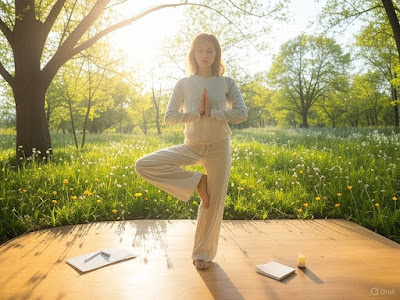
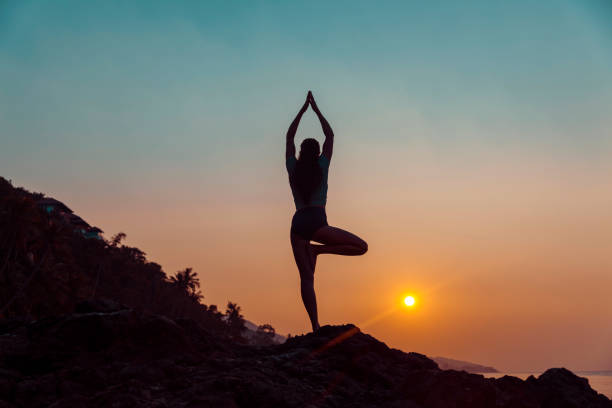
- Tree Pose (Vrksasana) – (see below) to root down and feel centered.
Practicing balance and grounding poses reinforces inner security. As one yogic tradition notes, poses like Tree Pose encourage imagining “roots growing out of your foot and sinking deep into the earth,” literally anchoring you. This can make you feel more stable in your body and, symbolically, in your finances or self-worth. Even if the 2nd House is empty, these postures channel stability and abundance into the body, reinforcing that sense of “always having enough”.
- Pose steps (Tree Pose, Vrksasana):
- Stand tall, shifting weight onto one leg.
- Place sole of opposite foot on inner calf or thigh (never on a knee).
- Hands at heart center or reaching overhead. Root through the standing foot as if growing roots.
- Hold 5–10 breaths, then switch sides.
Empty 3rd House — Communication, Learning, Mental Flow
Themes: Thought patterns, communication, siblings, short-distance movement
An empty 3rd House suggests communication and learning may not feel effortful or defining—but can become scattered or under-stimulated without conscious engagement.
Yoga Focus: Spinal mobility + breath coordination
Recommended Poses:
- Cat–Cow
- Seated Spinal Twist
- Eagle Arms
Why It Works:
The 3rd House governs how information moves through the nervous system. Gentle spinal articulation paired with breath enhances clarity, adaptability, and expression—especially helpful during Mercury-heavy periods in 2026.
Grounding the Empty 4th House: Tree Pose for Home
The Fourth House relates to home, family, and roots. An empty 4th House usually means your home life has been stable. To honor and deepen this grounding, yoga offers literal grounding poses. A perfect example is Tree Pose (Vrksasana), as its very name suggests. In Tree Pose, you “play with grounding your energy,” pressing one foot firmly into the earth to stabilize your trunk. This reflects the 4th House’s energy of a secure home base.
Stabilizing the standing leg and focusing on balance mirrors feeling rooted in family and tradition. Three Trees Yoga describes Tree Pose as an opportunity to “press the foot into the floor to make the trunk of your tree strong and stable,” imagining “roots growing out of the left foot and sinking deep into the earth”. Use this pose whenever you feel unsettled – it’s like a daily reminder of your secure foundation.
- Pose steps (Tree Pose recap):
- Shift weight onto left foot, grounding it.
- Lift right leg, placing its sole on the left ankle or calf (below the knee).
- Hands can be together at chest or reach overhead. Steady your gaze.
- Press down firmly to grow “roots,” then switch sides after several breaths.
In practice, this simple balancing exercise helps bring your mind “firmly rooted in the present moment” – much like having a home base that centers you. Over time, Tree Pose can reinforce feelings of emotional stability (4th House) by literally grounding your body.
Empty 5th House — Creativity, Pleasure, Self-Expression
Themes: Joy, romance, creativity, play
An empty 5th House can indicate creativity flows naturally—but may be deprioritized in adulthood unless intentionally cultivated.
Yoga Focus: Heart opening + expressive movement
Recommended Poses:
- Dancer Pose
- Camel Pose
- Wild Thing
Why It Works:
Backbends stimulate the heart center and nervous system vitality, reconnecting the body to pleasure and authentic self-expression without performance pressure.
Empty 6th House — Health, Routine, Service
Themes: Daily habits, physical health, responsibility
An empty 6th House often means health isn’t a crisis area—but routines may lack consistency.
Yoga Focus: Functional strength + repetition
Recommended Poses:
- Plank
- Low Lunge
- Half Sun Salutation
Why It Works:
The 6th House thrives on regularity. Short, repeatable sequences reinforce discipline and somatic accountability—especially aligned with Saturn’s influence in 2026.
Empty 7th House — Relationships, Balance, Reflection
Themes: Partnerships, boundaries, mirroring
With an empty 7th House, relationships may feel secondary or neutral unless consciously examined.
Yoga Focus: Symmetry + relational awareness
Recommended Poses:
- Warrior II
- Bound Angle Pose
- Partner Yoga (optional)
Why It Works:
Balanced bilateral poses emphasize reciprocity and awareness of “the other,” helping cultivate conscious relational presence rather than reactive dynamics.
Empty 8th House — Transformation, Depth, Emotional Processing
Themes: Intimacy, change, psychological depth
An empty 8th House often operates beneath awareness, activating during transitions or emotional intensity.
Yoga Focus: Release + surrender
Recommended Poses:
- Forward Folds
- Pigeon Pose
- Yin Yoga Holds
Why It Works:
Slow, inward-focused poses calm the nervous system and allow emotional processing without forcing catharsis—ideal for Pluto-in-Aquarius era integration.
Empty 9th House — Meaning, Belief, Expansion
Themes: Philosophy, higher learning, purpose
An empty 9th House can mean belief systems are inherited rather than explored.
Yoga Focus: Expansion + contemplative awareness
Recommended Poses:
- Crescent Lunge
- Extended Side Angle
- Seated Meditation
Why It Works:
Expansive shapes combined with stillness encourage perspective shifts and meaning-making through experience, not ideology.
Empty 10th House — Purpose, Direction, Authority
Themes: Career, visibility, responsibility
An empty 10th House may indicate career unfolds without struggle—but clarity of direction benefits from embodiment.
Yoga Focus: Upright strength + containment
Recommended Poses:
- Chair Pose
- Mountain Pose
- Warrior II
Why It Works:
These poses reinforce posture, endurance, and personal authority—supporting conscious leadership rather than default ambition.
Empty 11th House — Community, Vision, Collective Role
Themes: Groups, social systems, future vision
With an empty 11th House, community involvement may fluctuate unless intentionally cultivated.
Yoga Focus: Group energy + breathwork
Recommended Poses:
- Wide-Leg Forward Fold
- Group Flow
- Rhythmic Pranayama
Why It Works:
Collective movement and shared breath dissolve ego boundaries, aligning with Pluto in Aquarius themes of collective recalibration.
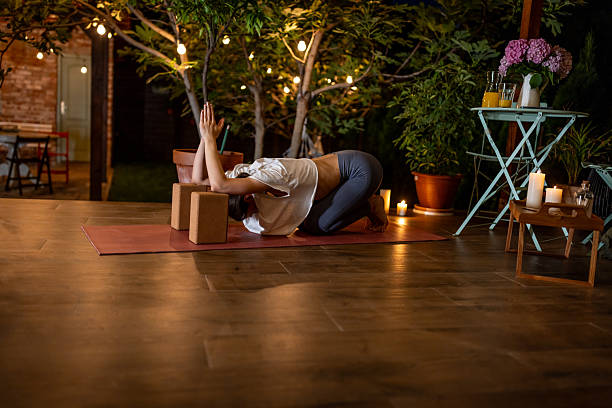
Empty 12th House — Rest, Integration, Subconscious
Themes: Closure, spirituality, the unseen
An empty 12th House often works quietly but can be neglected in productivity-focused cultures.
Yoga Focus: Restoration + nervous system repair
Recommended Poses:
- Legs Up the Wall
- Savasana
- Gentle Pranayama
Why It Works:
Restorative practices support subconscious integration and spiritual processing without dissociation—essential for long-term balance.
Warrior Poses for Aries Transits (2026)
Aries is the first zodiac sign and rules the head and solar plexus (personal power). In 2026, Saturn re-enters Aries (Feb 13) for a long transit, bringing disciplined, structured energy. To harness this fiery, pioneering force, Warrior poses are ideal. Warrior I and II (Virabhadrasana I & II) build leg and core strength and embody the courageous “inner warrior.” They encourage courage and action – perfect for Aries’ bold drive.
Aries energy in astrology is raw, determined, and initiatory. Yoga experts note that poses activating the solar plexus (will power center) and head (Aries’ body zone) sync with Aries dynamics. For example, Headstand (Sirsasana) or even Rabbit Pose are mentioned as ways to “activate the Aries portion of the brain” and sharpen vision. But for many, standing Warriors are more accessible: Warrior II opens the hips and heart, stoking fire in the legs and core.
- Pose steps (Warrior II, Virabhadrasana II):
- From standing, step one foot back wide and turn it out slightly. Bend front knee so it’s above ankle.
- Stretch arms out parallel to ground, gaze over front hand.
- Sink into your hips, press through both feet, and engage the core. Breathe for 5–10 breaths, then switch sides.
These poses strengthen your center and encourage “unshakable confidence” – Aries at its best. Practicing Warriors during Aries season or under intense Aries transits helps you act on goals. As Astrology University notes, Mars and Aries symbolize the spiritual warrior; yoga amplifies that “inner warrior” courage. By combining Warrior poses (for strength) with deep breathing (to keep calm under Saturn’s tests), you balance Aries’ fiery drive with inner poise. Over time, you’ll feel ready to take decisive action in life – exactly the kind of momentum Aries seeks.
Astrology-Inspired Yoga Flows: Sun & Moon Cycles
Astrology offers natural cues for timing and shaping practice. Consider the solar and lunar cycles: Sunrise Salutations (Surya Namaskar) at dawn honor the Sun’s energy, while Moon Salutations (Chandra Namaskar) on full/new moons honor lunar energy. These flows inherently align practice with the cosmos. For balance and grounding, schedule your routine around celestial events: e.g. practice heart-openers near equinox (expansive energy), or gentle Yin/Yoga Nidra during Mercury retrograde.
Group Sun Salutations at sunrise. Tuning poses to celestial timing – like moon salutations on full moons – connects yoga to astrology.
Yoga Journal confirms that simply timing your practice to the stars is Astro-Yoga: “Any time you practice a Moon Salutation on a new or full moon…or 108 Sun Salutations on solstice days, you’re practicing Astro Yoga”. In practice:
- On a full moon or new moon evening, do a gentle Moon Salute sequence to meditate and restore.
- On summer or winter solstice, consider a longer Sun Salute or standing flow to celebrate change.
- During eclipse seasons or major transits, incorporate stabilizing poses (Tree, Mountain) or restorative yin holds to process intense energy.
By flowing with the sun, moon, and planets, each practice becomes not just exercise but a ritual. You might light a candle when Saturn retrogrades or wear a color linked to a planet (Jupiter=yellow) during its day. Over time, these habits create a daily bridge between the mat and the stars, making yoga a conscious tool for living in sync with your chart.
2026 Yoga Routines by Zodiac Sign
Tailoring yoga by sun sign is a fun way to personalize practice. For 2026, consider these zodiac-specific flows based on Yoga Journal’s AstroYoga guide:
- Aries (Mar 21–Apr 19) – Associated with the head, Mars, and solar plexus. Try Sirsasana (Headstand) to boost confidence and focus. Warrior I or II also channel Aries’ warrior energy.
- Taurus (Apr 20–May 20) – Ruled by Venus and the heart. Practice Matsyasana (Fish Pose) to open the chest and strengthen the neck (the Taurus body zones). Tree Pose is also fitting (grounded earth sign).
- Gemini (May 21–Jun 20) – Mercury rules Gemini (throat, arms). Bakasana (Crow Pose) opens shoulders and tests balance. Gentle twists (e.g., Ardha Matsyendrasana) can stimulate communication centers.
- Cancer (Jun 21–Jul 22) – Moon-ruled, focuses on chest/abdomen. Heart-opening backbends or Navasana (Boat Pose) for core stability (and third eye) are beneficial.
- Leo (Jul 23–Aug 22) – Sun-ruled, heart and back. Urdhva Dhanurasana (Wheel Pose) opens the heart and energizes upper back. Core-engaging postures (boat, high plank) also boost Leo confidence.
- Virgo (Aug 23–Sep 22) – Mercury-ruled, digestive tract. Ardha Matsyendrasana (Half Lord of the Fishes) for gut flow and spinal twist. Forward folds and deep abdominal stretches help digestion.
- Libra (Sep 23–Oct 22) – Venus-ruled, lower back and balance. Virabhadrasana III (Warrior III) creates balance and strengthens lower back. Hip openers and side stretches can also soothe tension.
- Scorpio (Oct 23–Nov 21) – Mars/Pluto, pelvis. Malasana (Garland Pose) to tone the pelvic floor and settle reproductive energy. Backbends support deeper emotional release.
- Sagittarius (Nov 22–Dec 21) – Jupiter, hips/thighs. Virabhadrasana I (High Lunge) to engage thighs and root into sacral chakra. Deep hip openers (Pigeon Pose) encourage a feeling of expansion.
- Capricorn (Dec 22–Jan 19) – Saturn, knees/bones. Utkatasana (Chair Pose) to strengthen legs and bring awareness to the root (muladhara). Shoulder openers counteract Saturn’s rigidity.
- Aquarius (Jan 20–Feb 18) – Saturn/Uranus, ankles. Vrksasana (Tree Pose), ironically, is perfect for Aquarius too: it supports ankles and grounds the root. Focus on ankle stability exercises and balance.
- Pisces (Feb 19–Mar 20) – Jupiter/Neptune, feet. Baddha Konasana (Bound Angle Pose) opens the feet and sacrum. Gentle, restorative flows like Yin or supported supine poses help Piscean sensitivity.
These routines can be used daily or weekly. For 2026, align them with planet transits: for instance, when Jupiter enters Cancer (mid-year) strengthening home (4th House), Cancers might lean into heart-opening backbends. Meanwhile, Saturn in Aries invites all to emphasize Warrior and balance poses. The idea is to flow with your sign and the year’s cosmic energy, as Yoga Journal suggests, by focusing on poses that resonate with your zodiac’s body areas.
Restorative Yoga for Planetary Energies
Just as planets have strengths and challenges (dignities or debilities), yoga offers restorative poses to balance them. In 2026, for example, the stern, disciplined energy of Saturn (now in Aries) may feel heavy. Counter this with Yin or restorative postures: Supported Child’s Pose, reclining bound angle (Supta Baddha Konasana), or legs-up-the-wall. These long-held, gentle postures allow the nervous system to settle, embodying the quiet acceptance Saturn eventually teaches (discipline through rest).
Similarly, fiery Mars energy can be soothed with forward folds (Paschimottanasana) or mild inversions (Legs Up). If a planet like Jupiter is exalted (strong), you might focus on heart and chest openers (Camel or Bridge) to expand. If a planet is weakened (like Sun in Libra), grounding forward folds and core-strengthening poses can help “pick up the slack.” While ancient texts tie specific mantras or colors to planets, the simple act of slowing down with deep breaths is universal: science shows yoga reduces stress and boosts well-being. In short, when transits feel intense, a restorative sequence can harmonize the body’s response – much like a calm focus supports the planets’ lessons.
Hybrid Daily Astro-Yoga Practices
To make this fusion daily, use astrological timing and intent:
- Planets by Day: Many yogis honor the classical planetary days. For example, practice energizing Surya (Sun) Yoga on Sundays, focus on moon salutations or gentle flows on Mondays (Moon’s day), and maybe dedicate Tuesdays (Mars) to dynamic, martial-themed sequences. As one yoga-astrology blend notes, classes are designed to “invoke the different qualities of the planets according to Jyotish”. Try matching your routine to the planet of the day (e.g., feel grounded and stable on Earth-ruled weekdays, stretching upward on Jupiter’s Thursday for expansion).
- Celestial Cues: Use lunar phases and planetary cycles. On a full moon evening, end with slow, meditative breathing or moon salutations; during Mercury retrograde, avoid overly challenging sequences and opt for introspective breathing and gentle yoga. During equinoxes/solstices, mark the season change with an extended ritual (108 salutations or extended savasana) to ground the new phase.
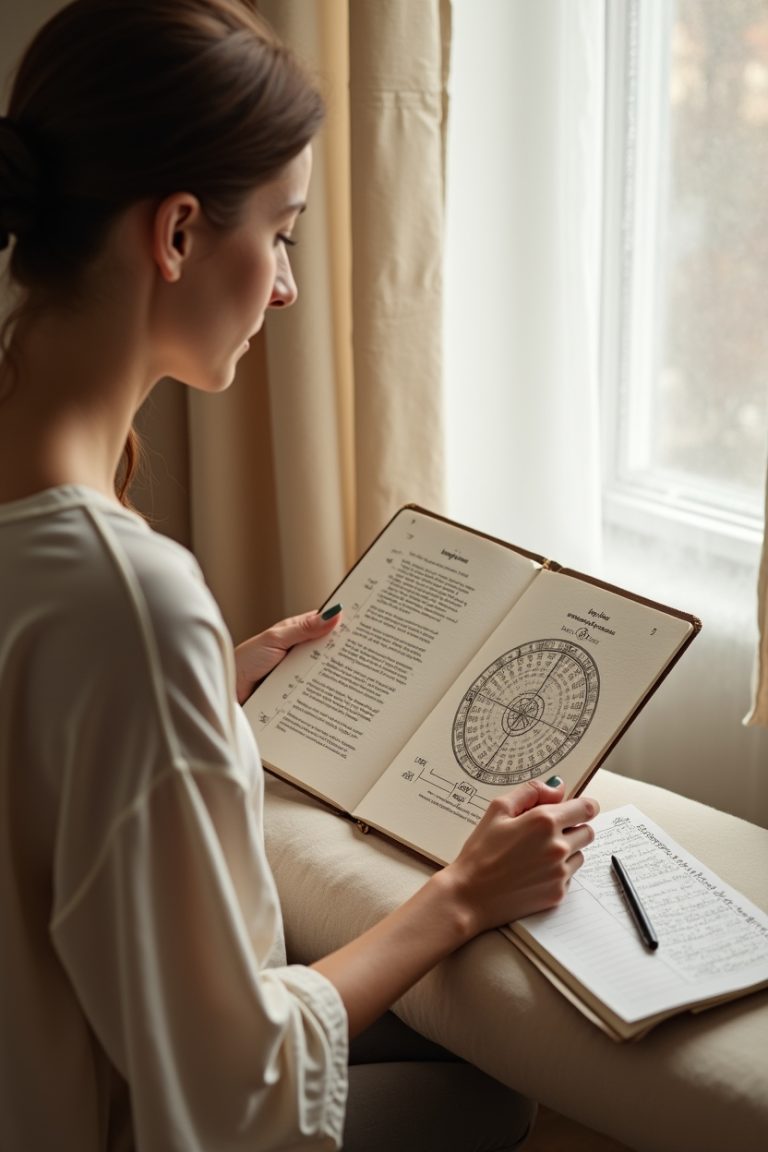
- Chart Check-ins: Once a week or month, check major transits and incorporate their themes. If Mercury is going retrograde (communication issues), do throat-opening poses (Fish Pose, Shoulder Stand) and practice mindfully slow movements. If Venus (relationships) is active, include heart openers (Camel, Cobra) to cultivate self-love. This daily/calendar awareness makes your yoga a living practice of your chart’s unfolding story.
By weaving simple astrological concepts into routines, you honor both disciplines. As one teacher advises, even small daily astrological practices (like mantras or colors) “align our bodies and minds with the universe”. Over time, you’ll notice your yoga mat becomes a microcosm of the cosmos – each breath and posture a step toward holistic balance in body and spirit.