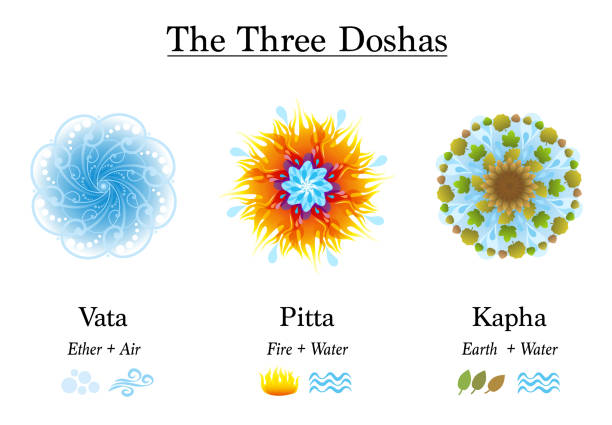
Balancing the Doshas with Yoga: Personalized Practices for Vata, Pitta, and Kapha
In Ayurveda, the three doshas—Vata, Pitta, and Kapha—are energetic forces that shape your physical, mental, and emotional tendencies. When a dosha becomes imbalanced through stress, lifestyle, diet, or seasonal changes, we feel it: anxiety, irritability, sluggishness, digestive changes, burnout, insomnia, and more.
Yoga offers one of the most effective tools for restoring harmony because it works on body, breath, and mind together.
Below is a comprehensive guide to understanding the doshas and choosing the right yoga practices—asana, pranayama, and meditation—to support balance.
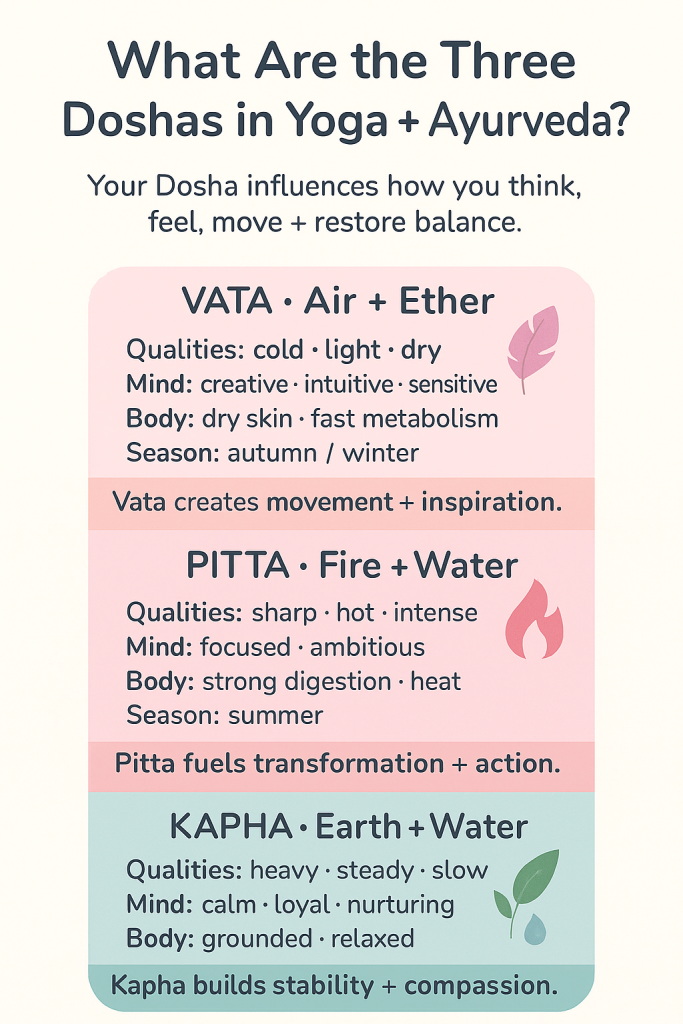
Understanding the Three Doshas
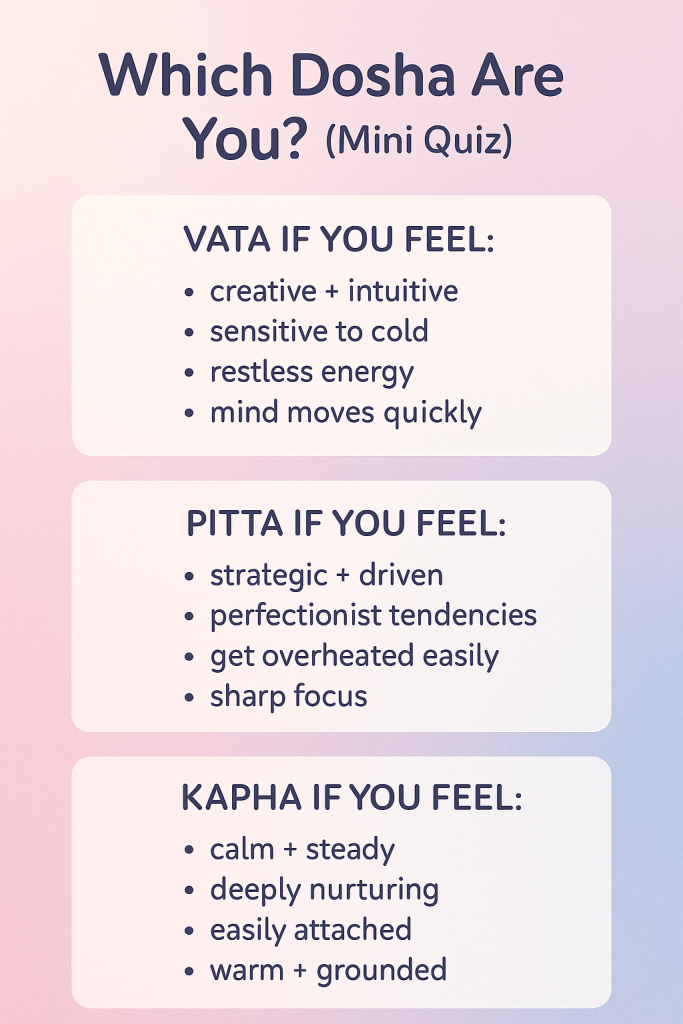
Vata (Air + Ether)
- Qualities: Light, dry, cold, quick, mobile, creative.
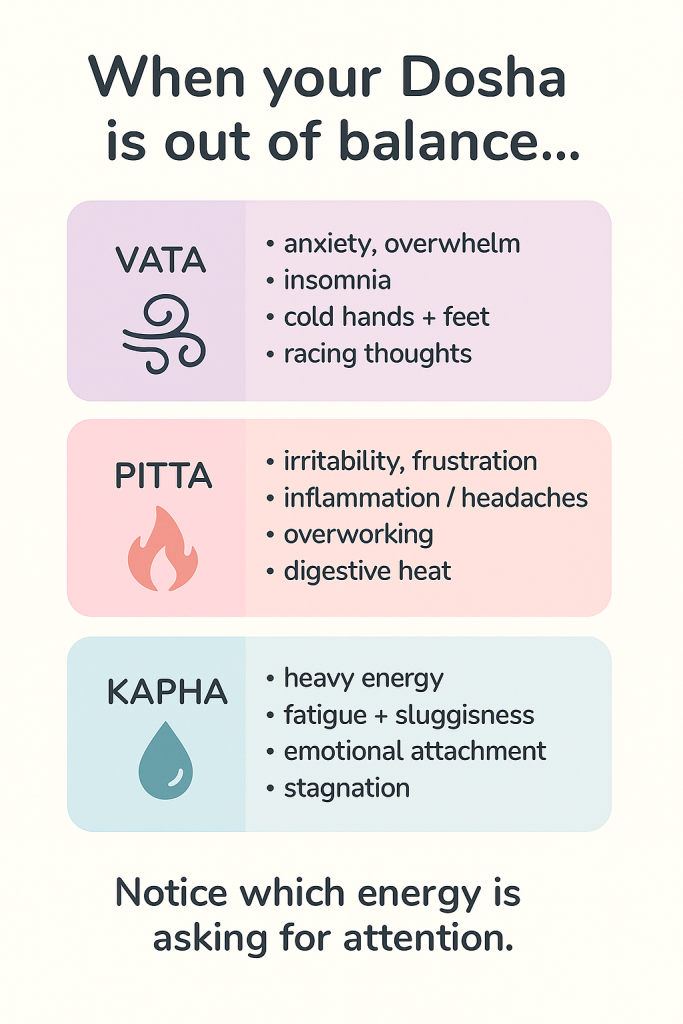
- When imbalanced: Anxiety, overwhelm, insomnia, joint pain, constipation, irregular routines.
- Needs from yoga: Grounding, warmth, slowness, routine, stability.
Pitta (Fire + Water)
- Qualities: Hot, sharp, intense, focused, driven.
- When imbalanced: Irritability, inflammation, competitiveness, burnout, overheating.
- Needs from yoga: Cooling, surrender, gentleness, non-competition, relaxation.
Kapha (Earth + Water)
- Qualities: Heavy, slow, steady, nurturing, calm.
- When imbalanced: Lethargy, depression, weight gain, sluggish digestion, resistance to change.
- Needs from yoga: Energizing movement, stimulation, heat, variety.
Yoga for Each Dosha
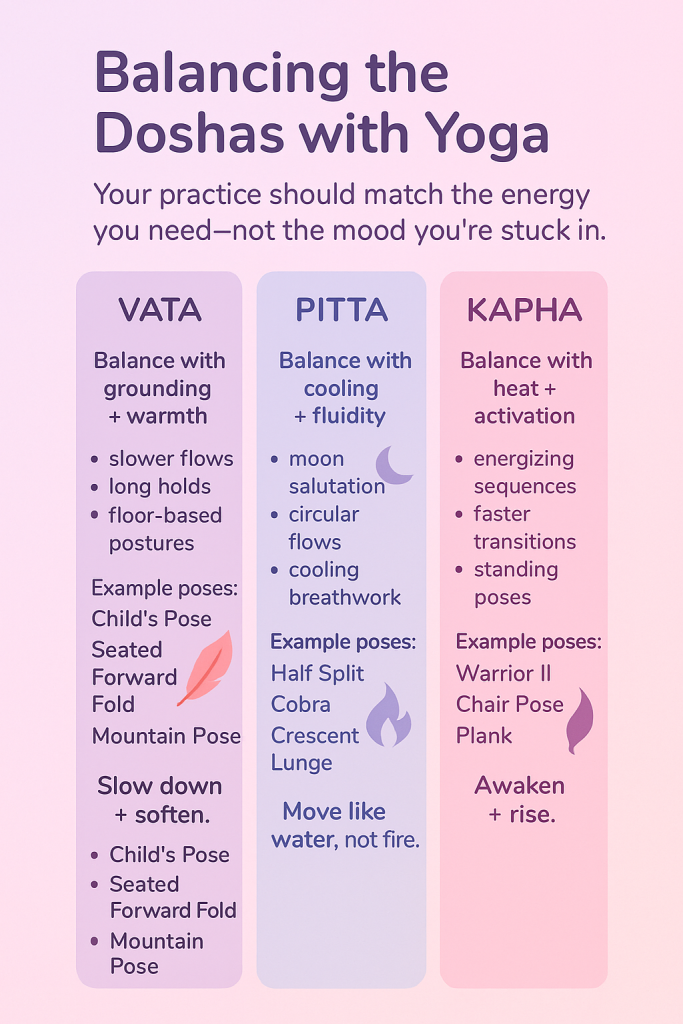
VATA-BALANCING YOGA
Overall Aim: Ground, calm the nervous system, create warmth and stability.
Asana Sequence for Vata
Warm-Up (Slow + Fluid):
- Cat–Cow (5–10 rounds)
- Gentle hip circles
- Forward fold with bent knees
Main Practice (Slow, Held Poses):
- Mountain Pose (feel the feet grounded)
- Warrior I & II (hold 5–10 breaths each, slow transitions)
- Tree Pose (improve stability)
- Half Splits (soft hamstring release)
- Seated Forward Fold
- Supported Bridge Pose
Cool-Down:
- Legs-Up-the-Wall
- Supine Spinal Twist
Environment:
Warm room, dim lighting, calming music.
Pranayama for Vata
- Nadi Shodhana (Alternate Nostril Breathing) – the #1 Vata pacifier.
- Deep Belly Breathing – slow, rhythmic, grounding.
- Bhramari (Humming Bee Breath) – calms anxiety + insomnia.
Avoid: fast or stimulating breathwork (Kapalabhati, rapid breathing).
Meditations for Vata
- Body Scan (excellent for grounding)
- Mantra: “I am steady. I am safe.”
- Visualization: Sitting under a heavy, ancient tree rooted deep into the earth.
PITTA-BALANCING YOGA
Overall Aim: Cool the body, soften the mind, release intensity, reduce heat.
Asana Sequence for Pitta
Warm-Up:
- Child’s Pose
- Gentle side stretches
- Kneeling lunges (slow)
Main Practice (Cooling + Non-Competitive):
- Moon Salutations instead of Sun Salutations
- Triangle Pose (open the side body)
- Pigeon Pose (hip release without force)
- Cobra Pose (gentle heart opening)
- Wide-Leg Forward Fold (cooling)
Cool-Down:
- Supine Twist
- Savasana with a cool cloth on the forehead
Environment:
Cool room, soft diffused lighting, no heat.
Pranayama for Pitta
- Sheetali Breathing (Cooling Breath)
- Sheetkari Breath
- Slow Nadi Shodhana
Avoid: Breath retention, forceful pranayama, hot yoga, competitive environments.
Meditations for Pitta
- Loving-Kindness Meditation (Metta)
- Visualization: Floating on a cool lake
- Mantra: “I release control. I soften.”
KAPHA-BALANCING YOGA
Overall Aim: Stimulate, energize, motivate, increase circulation and heat.
Asana Sequence for Kapha
Warm-Up (Activation):
- Sun Salutations A & B (2–4 rounds)
- Dynamic side bends
- Standing twists
Main Practice (Energizing + Steady):
- Chair Pose
- Warrior I & II
- Reverse Warrior
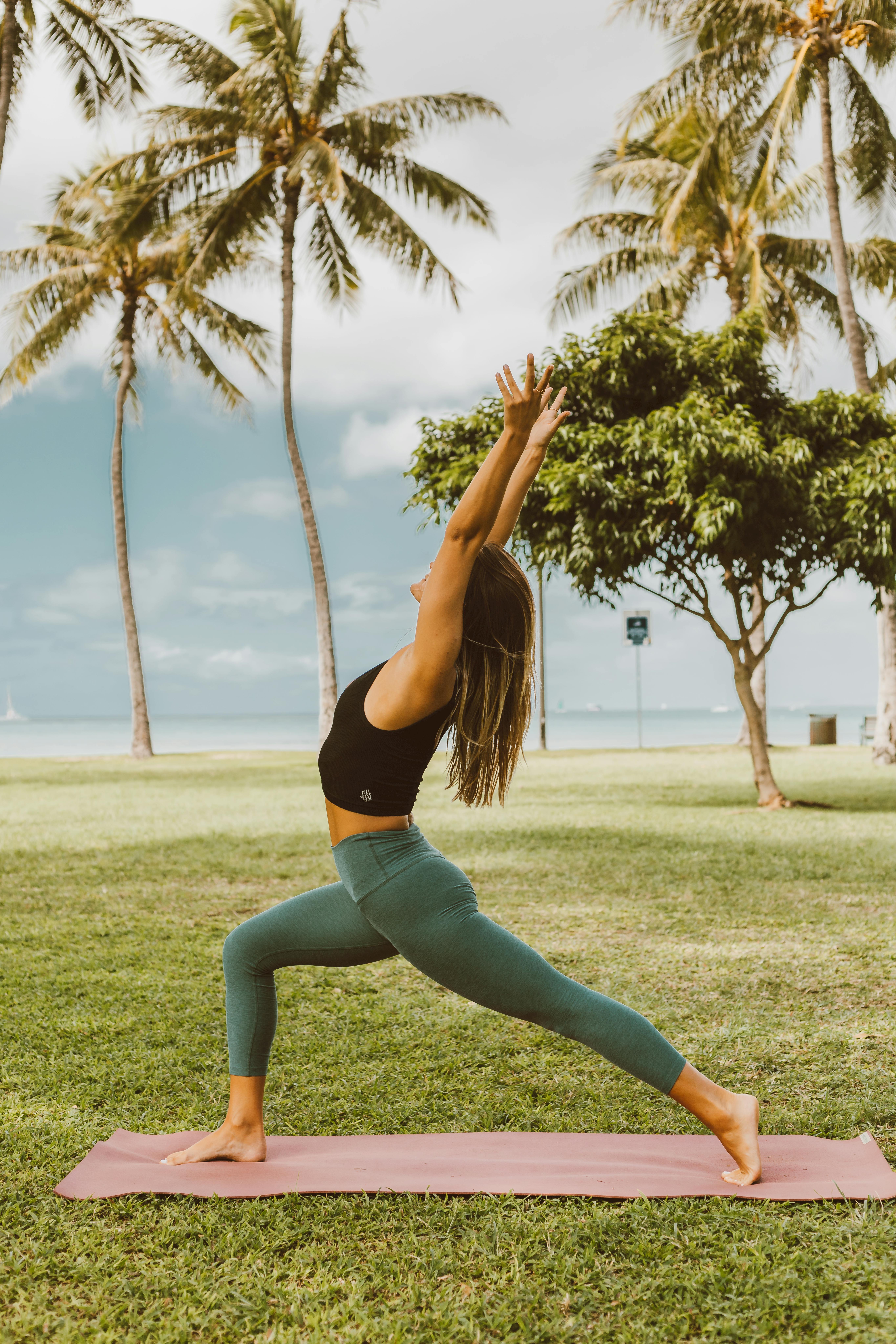
- High Lunge with heart opener
- Boat Pose
- Plank to Chaturanga transitions
Cool-Down (Brief):
- Light seated forward fold
- Short Savasana (not too long or sedating)
Environment:
Bright, warm room with uplifting music.
Pranayama for Kapha
- Kapalabhati (Skull-Shining Breath) – #1 technique for Kapha
- Bhastrika (Bellows Breath) – strong stimulation
- Faster rounds of Breath of Fire
Avoid: Slow, overly calming breathwork.
Meditations for Kapha
- Walking meditation
- Trataka (Candle Gazing) – boosts mental clarity
- Mantra: “I move forward with energy.”
Seasonal & Time-of-Day Adjustments
Vata Season (Fall–Early Winter)
- Stick to warm, grounding sequences
- Practice at the same time daily
Pitta Season (Summer)
- Practice cooling yoga in the morning or evening
- Avoid midday heat
Kapha Season (Late Winter–Spring)
- Choose morning energizing practices
- Keep practices dynamic to counter sluggishness
How to Choose Your Practice
You can use yoga to balance:
- Your primary dosha (your natural constitution)
- Your current imbalance (what you’re feeling today—anxiety, irritability, heaviness, etc.)
- The season
- Your emotional state
Example:
You’re a Pitta dominant person, but you feel anxious today → choose Vata-balancing yoga.
You’re Kapha dominant but it’s summer → follow some Pitta-cooling practices.