The Symbolism of the Lotus: Rising from the Mud in Yoga and Meditation
The Symbolism of the Lotus: Rising from the Mud in Yoga and Meditation
In yogic philosophy, few symbols carry as much depth and universality as the lotus. Delicate yet resilient, rooted in darkness yet blooming in light, the lotus expresses one of the central themes of yoga and meditation: transformation through awareness.
The Lotus as a Metaphor for Human Growth
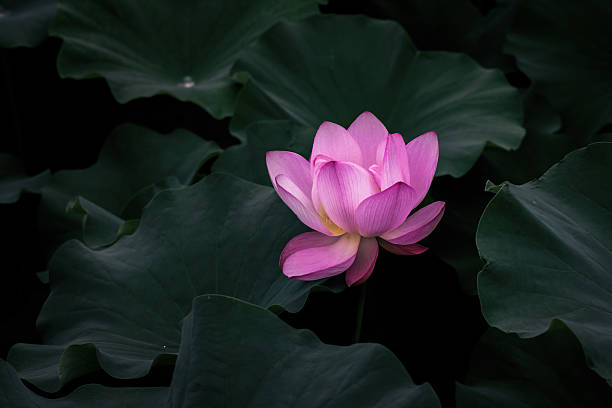
The lotus grows in murky, muddy water. Its roots are anchored in sediment, yet its blossom rises pristine above the surface. This paradox is precisely why the lotus appears throughout yogic, Buddhist, and meditative traditions.
It represents:
- Purity amid difficulty
- Awakening from unconsciousness
- Expansion toward higher awareness
- Resilience and rebirth
Just as the lotus does not reject the mud, yogic practice does not reject life’s challenges. Instead, it recognizes them as the very conditions that stimulate growth.
Springtime and the Lotus: A Seasonal Parallel
Each year, spring offers a living reflection of the lotus principle.
After months of contraction, dormancy, and reduced light:
- Days lengthen
- Light returns
- Energy rises
- Nature reawakens
Spring is not merely a change in weather—it is a psychological and energetic shift. The increasing light mirrors the lotus emerging from darkness into illumination.
Where winter symbolizes introspection, stillness, and latent potential, spring embodies:
- Renewal
- Activation
- Clarity
- Re-expansion
In this sense, the longer days act as a direct metaphor: awareness increasing, consciousness brightening, inner stagnation dissolving.
The Mud: Understanding the Role of Difficulty
In meditation and yoga, “the mud” symbolizes:
- Emotional turbulence
- Mental clutter
- Habits and conditioning (samskaras)
- Fear, doubt, resistance
Importantly, the mud is not a mistake. It is the substrate from which awakening arises.
Without mud, there is no lotus.
Without friction, there is no refinement.
Without unconsciousness, there is no awakening.
Meditation as the Process of Rising
Meditation is the mechanism through which we “rise.” Different styles offer distinct pathways, each cultivating awareness in its own way.
1. Breath-Centered Meditation (Pranayama Awareness)
Focus: Stabilizing attention through respiration
Method:
- Sit comfortably with an upright spine
- Observe the natural breath
- Notice inhalation, exhalation, pauses
- Gently return when the mind wanders
Symbolic Parallel:
Like the lotus stem steadily rising through water, breath awareness lifts attention above mental turbulence.
Self-Guiding Prompts:
- What changes when I simply observe rather than control my breath?
- Where do I feel expansion? Where do I feel resistance?
- Can I allow thoughts to pass like ripples on water?
2. Mantra Meditation
Focus: Refining mental activity through repetition
Method:
- Silently repeat a chosen mantra (e.g., “So Hum”)
- Let the sound anchor awareness
- Allow rhythm to soften mental chatter
Symbolic Parallel:
The mantra functions like sunlight guiding the lotus upward—steady, consistent, clarifying.
Self-Guiding Prompts:
- How does repetition affect my mental state?
- Does the mantra feel like effort or support?
- What remains when the sound becomes subtle?
3. Loving-Kindness Meditation (Metta)
Focus: Emotional purification and expansion
Method:
- Bring awareness to the heart center
- Silently offer phrases:
- “May I be safe”
- “May I be peaceful”
- “May others be at ease”
Symbolic Parallel:
The lotus bloom represents compassion unfolding beyond self-protection.
Self-Guiding Prompts:
- Is it easier to offer kindness to others or myself?
- What emotions arise when I soften the heart?
- Where do I notice resistance?
If you are just getting into Metta mediation check out this post digging deep into what Metta Mediation means and be prepared to join HarmonyCentered in this years Meta May!
4. Visualization Meditation (Lotus Imagery)
Focus: Harnessing imagery for psychological integration
Method:
- Visualize a lotus at the heart or crown
- Imagine it slowly opening with each inhale
- With each exhale, release tension or heaviness
Symbolic Parallel:
You become the lotus—opening, clarifying, rising.
Self-Guiding Prompts:
- What color or quality does my lotus have today?
- What does “opening” feel like internally?
- What is ready to be released?
The Light: Cultivating Inner Illumination
In yogic symbolism, light represents:
- Awareness
- Insight
- Conscious presence
- Discernment (viveka)
As spring brings longer days externally, meditation cultivates longer moments of clarity internally.
Gradually:
- Reactivity softens
- Perception sharpens
- Identity loosens
- Presence stabilizes
Living the Lotus Principle
The lotus is not just a symbol for the meditation cushion—it is a model for daily life.
To live the lotus principle is to:
- Accept difficulty without identification
- Recognize growth within discomfort
- Seek clarity rather than escape
- Rise without rejecting one’s roots
Deepening the Spring Transformation
The symbolism of the lotus reminds us that growth is rarely linear. Just as nature moves through cycles of dormancy, renewal, expansion, and balance, our inner lives follow similar rhythms. Spring, in particular, invites a gentle but powerful reorientation — a turning toward light, clarity, and forward movement.
This seasonal shift is not simply about increased energy. It is about integration: carrying the insights of winter into the vitality of spring. The practices that support this transition often include grounding, reflection, mindful movement, and reconnection with the natural world.
If you’d like to explore these themes more deeply, you may enjoy revisiting some reflections from last spring:
Exploring Yogic Philosophy: Yoga in Daily Life
A perspective on how yogic principles extend beyond physical postures into awareness, behavior, and everyday decision-making.
The Transition from Winter to Spring: Yoga for Renewal and Growth
An exploration of the energetic and psychological shift from introspection toward renewal and activation.
Spring Into Balance: Yoga for Grounding and Growth During Seasonal Transitions
A look at stabilizing practices that help regulate the nervous system during times of change.
Energizing Yoga Flows to Uplift Spring Moods
Movement-based approaches designed to harmonize with spring’s rising, expansive energy.
Meditation in Nature: Reconnecting with Earth as Spring Awakens
Reflections on how practicing outdoors can deepen presence, sensory awareness, and emotional balance.
Together, these themes echo the lotus’s journey: rooted in stillness, rising through challenge, and unfolding into clarity.
Reflection: A Seasonal Contemplation
As light increases this season, consider:
- Where am I emerging from contraction?
- What “mud” has nourished unexpected growth?
- What aspects of myself are ready to bloom?
- How can I align with renewal rather than resist it?
Closing Thought
The lotus teaches a subtle but powerful truth:
Transformation is not the avoidance of darkness,
but the conscious rising through it into light.
Spring reminds us:
light always returns — internally and externally —
for those willing to remain present through the winter