Joint Health and Mobility: A Yoga Practice for Longevity
Healthy joints are the quiet workhorses of a long, active life. They let you bend, lift, climb, dance, and carry the people and experiences that matter. This post gives you a clear, practical yoga-centered plan to protect—and progressively improve—joint health and mobility so you can keep living fully for the long haul.
Why joint mobility matters for longevity
- Function > flexibility: Mobility is usable range of motion under control. It’s what lets you stand up safely, squat down to pick a child up, and walk without pain.
- Movement preserves tissue: Cartilage, synovial fluid circulation, and periarticular tissues (ligaments, tendons, muscle) thrive on gentle, varied movement—not on static rest.
- Strength + mobility = resilience: Strength around a joint reduces compressive and shear forces. Mobility without strength is fragile; strength without mobility is limited.
A few joint-science essentials (short & practical)
- Cartilage is avascular. It gets nutrients by movement-driven circulation of synovial fluid—so controlled motion matters.
- Load matters, but dose matters more. Gentle, progressively increased loading stimulates repair; sudden heavy loads or repetitive misuse injure.
- Inflammation ≠ destruction. Acute pain and swelling are warning signs. Low-grade movement with pain management and professional guidance is often appropriate; high pain or instability needs evaluation.
Principles for a joint-friendly yoga practice
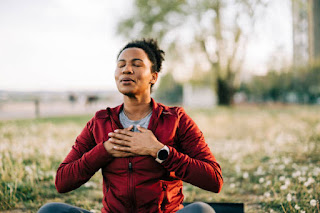
- Start with breath and intention. Slow diaphragmatic breaths for measurement of effort and nervous-system regulation.
- Prioritize alignment over depth. Joint safety beats aesthetic form.
- Use controlled, repeated ranges of motion (not ballistic). 6–12 controlled repetitions in the available pain-free arc.
- Mix mobility and strength. Mobility opens range; strength makes it useful.
- Balance bilateral work and single-leg/single-arm stability. This corrects asymmetry and builds resilience.
- Progress slowly and consistently. Small, frequent doses win (daily soft mobility + 2–3 stronger sessions/week).
- Modify, use props, and respect pain signals. Sharp pain, locking, or giving way ≠ okay.
When to pause and seek professional care
- New or severe joint pain after trauma
- Visible swelling and warmth with high pain
- Repeated instability, catching, or locking
- Pain that prevents function (walking, sleeping, daily tasks)
Short cue primer: breathing and tempo
- Inhale: create space/lengthen (e.g., lengthen the spine, lift chest).
- Exhale: soften or deepen into the action (e.g., fold, engage core).
- Tempo: 3–4 second inhale, 3–4 second exhale for mobility; slower for strengthening holds (e.g., 5–10 seconds).
Recommended equipment / props
- Yoga mat (non-slip)
- Two blocks
- Strap or towel
- Bolster or folded blanket
- Chair or wall for support
Two practice templates (pick one)
20-minute daily mobility (ideal on most days)
Warm-up (3 min)
- Seated diaphragmatic breathing — 1–2 minutes
- Gentle neck circles and scapular rolls — 30–60 sec
Mobility loop (12 min) — repeat loop 2×
- Cat–Cow (Marjaryasana–Bitilasana) — 8–10 slow cycles. Cue: move the thoracic spine first; breathe with each change.
- Thread-the-Needle (half supine or kneeling) — 6 each side. Targets thoracic and shoulder rotation.
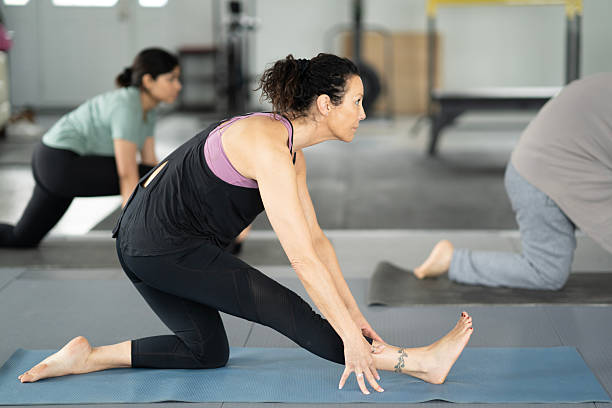
- Low lunge with pelvic rocking + gentle rotation — 6 reps each side. Use blocks under hands if needed.
- Downward-Facing Dog → Heel Rock to Toe Lift — 6 breaths in Down Dog; 10 alternating heel rocks. (Calf & ankle mobility.)
- Supine Figure-4 (ankle to knee) with gentle rocking — 8–10 breaths each side. (Hip external rotation, glute release.)
Cooldown (5 min)
- Supine hamstring lengthening with strap — 2× each leg, 6–8 breaths.
- Legs up the wall or supported bridge (2–3 min) — restorative.
40-minute mobility + strength (2–3× weekly)
Warm-up (5 min)
- Breath + joint circles for ankles, knees, hips, shoulders.
Strength-mobility sequence (30 min)
- Standing hip hinge + reach (single-leg progression) — 6 each side. Cue: soft knee, long spine, work single-leg stability as tolerated.
- Chair pose (Utkatasana) with 4–6 second holds — 6–8 reps. Foot position shoulder width; sit toward hips; keep knees tracking toes.
- Warrior II (Virabhadrasana II) — 4 breaths each side; include small micro-bends and lengthening to load hip abductors.
- Supported bridge → single-leg bridge progression — 10 bridges, then 4–6 single-leg attempts (as strength allows). Builds glute/knee support.
- Clamshells off the mat or with band (glute medius) — 12–15 each side.
- Half-knee quad stretch with core support — 6–8 breaths each side; use block under front foot for balance.
- Pigeon (modified on back if tight) — 6–8 breaths each side. If front hip intolerant, substitute supine Figure-4 with active dorsiflexion.
Mobility finish (5 min)
- Seated spinal twist (gentle) — 3–4 breaths each side.
- Ankle mobility on toes/heels — 20 alternating.
- Savasana or supported relaxation — 2–4 minutes.
Specific modifications for common joint concerns
Knee osteoarthritis or sensitivity
- Avoid deep loaded knee flexion under load (e.g., deep long holds in low squat).
- Emphasize glute bridges, hip hinge, step-backs instead of deep lunges.
- Use chair support to reduce compression while building quad and glute strength.
Hip impingement or labral sensitivity
- Favor controlled ranges (pain-free arc) with active support from glutes and core.
- Substitute pigeon with supine figure-4 or long-lunge with posterior pelvic tilt.
Shoulder instability or rotator cuff tendonopathy
- Limit load above shoulder height initially.
- Use wall slides, scapular rows, and gentle external rotation-isometrics.
- Avoid weight-bearing in full extension; try tabletop or incline plank with hands on chair.
Ankles with limited dorsiflexion
- Regular loaded ankle mobility: half-kneeling ankle rocks with toes on a folded towel.
- Calf eccentric lowering (from a step) if tolerated.
Strength mini-protocol for joint protection (2× weekly)
- Glute bridges — 3 sets × 10–15 reps
- Single-leg RDL (bodyweight) — 3 × 6–8 per side
- Clamshells or banded walks — 3 × 12–20 steps each way
- Eccentric calf raises — 3 × 8–12
- Wall sits or slow chair-holds — 3 × 20–40 seconds
All movements with slow, controlled tempo and attention to joint tracking.
Measuring progress (practical markers)
- Function first: easier to tie shoes, stand from a chair, climb stairs.
- Objective: increases in comfortable range of motion (e.g., deeper hip flexion with no pain), fewer stiffness episodes, better single-leg balance time.
- Consistency metric: minutes practiced per week (target 120–180 min, mixing mobility and strength).
Programming example (3-month progression)
- Month 1: daily 10–20 min mobility; strength protocol 1× week.
- Month 2: daily mobility + strength 2× week; add balance single-leg work.
- Month 3: maintain daily mobility; increase strength intensity (single-leg progressions, heavier resistance if available).
Quick troubleshooting
- Stiff first thing in the morning? Try 5–10 minutes of breath-led mobility before getting up.
- Pain after practice? Reduce range/volume, add more support (blocks/blanket), and reduce load for 3–5 days. If sharp or worsening, consult a clinician.
- Plateau in mobility? Add targeted strength in the new range and increase frequency of short mobility sessions.
Takeaway
Longevity in movement is built from a steady diet of controlled mobility, progressive strength, and practical consistency. Yoga is uniquely suited for this work because it blends breath, joint-safe ranges, and accessible strength. Use the short daily session to cue nervous-system regulation and joint lubrication, and the longer practice to build the stability that keeps joints healthy decade after decade.