
How to Build Optimism for Beginners: A Gentle, Practical Guide
Struggling to believe that a sunnier outlook is possible can feel discouraging—especially if you’ve tried positivity that felt hollow or forced. Learning how to build optimism for beginners is less about instant cheer and more about practical, repeatable ways to widen your view of what’s possible.
This guide gives you a beginner-friendly toolkit you can read straight through or return to when you need a specific practice: mindset preparation, daily micro-habits, cognitive tools, relationship tips, and ways to sustain progress. Each section offers small experiments you can try today.
What optimism is (and what it isn’t)
Optimism often gets boxed as either naive positivity or a personality trait you’re born with. In reality, optimism is a practical stance you can cultivate — a set of habits for noticing possibilities and acting from that space. Below we clarify what realistic optimism looks like and why it differs from denial.
Why optimism matters for mental and physical wellness
Optimism isn’t just pleasant thinking — it’s linked to how you manage stress, the choices you make for your health, and how you relate to others. People who habitually expect positive outcomes tend to persevere longer on difficult tasks, recover more readily from setbacks, and engage in healthier behaviors like regular sleep and exercise.
On a physiological level, an expectant but realistic outlook can reduce the frequency of rumination and the intensity of stress responses, which helps the nervous system return to balance more quickly. Socially, optimism acts like a signal: it invites collaboration and support, which then reinforce better outcomes. In short, tending to optimism is tending to multiple threads of wellbeing—mental, physical, and relational.

Common myths about optimism
Truth: Optimism does not mean denying pain or pretending everything is fine. A grounded optimistic approach acknowledges difficulty while keeping attention open to what could improve and what actions are possible.
People often assume optimism is fixed—something you either have or you don’t—but it’s a set of skills and habits you can practice. Another frequent myth is that optimism equals instant happiness; instead, optimism supports resilience. It doesn’t eliminate hard feelings; it helps you meet them without losing sight of possibilities.
This guide favors realistic optimism: flexible, curious, and action-oriented. That means you’ll learn to hold facts and hopes together rather than choosing one over the other.
A beginner’s mindset: preparing to practice optimism
Before you begin practicing, set an intention to experiment rather than to demand results. Lowering perfectionism and creating a sense of safety for small trials helps you stay with the work even when it’s uncomfortable.
Tip — start small and notice
Why: Big goals and sweeping promises often lead to burnout. Small, repeatable actions make change sustainable because they require less willpower and allow you to gather evidence that the practice works.
How: Choose micro-goals that feel almost too easy—things you can do even on a hard day. Use brief journaling prompts or a simple tracker to notice tiny wins. Over time, these recorded moments become a personal library of evidence that your outlook can shift.
The attitude here is experimental: try something for a week, notice what changed, then adjust. Smallness keeps curiosity alive and reduces the pressure to perform.
- Pick one micro-goal for the week (e.g., notice one small positive event each day).
- Set a two-minute journaling habit to record that event.
- Review the week quickly on day seven to notice patterns and next steps.
Tip — naming doubts without feeding them
Why: When negative thoughts feel true, they can steamroll curiosities and possibilities. Naming the thought creates distance and shows it’s not the whole story.
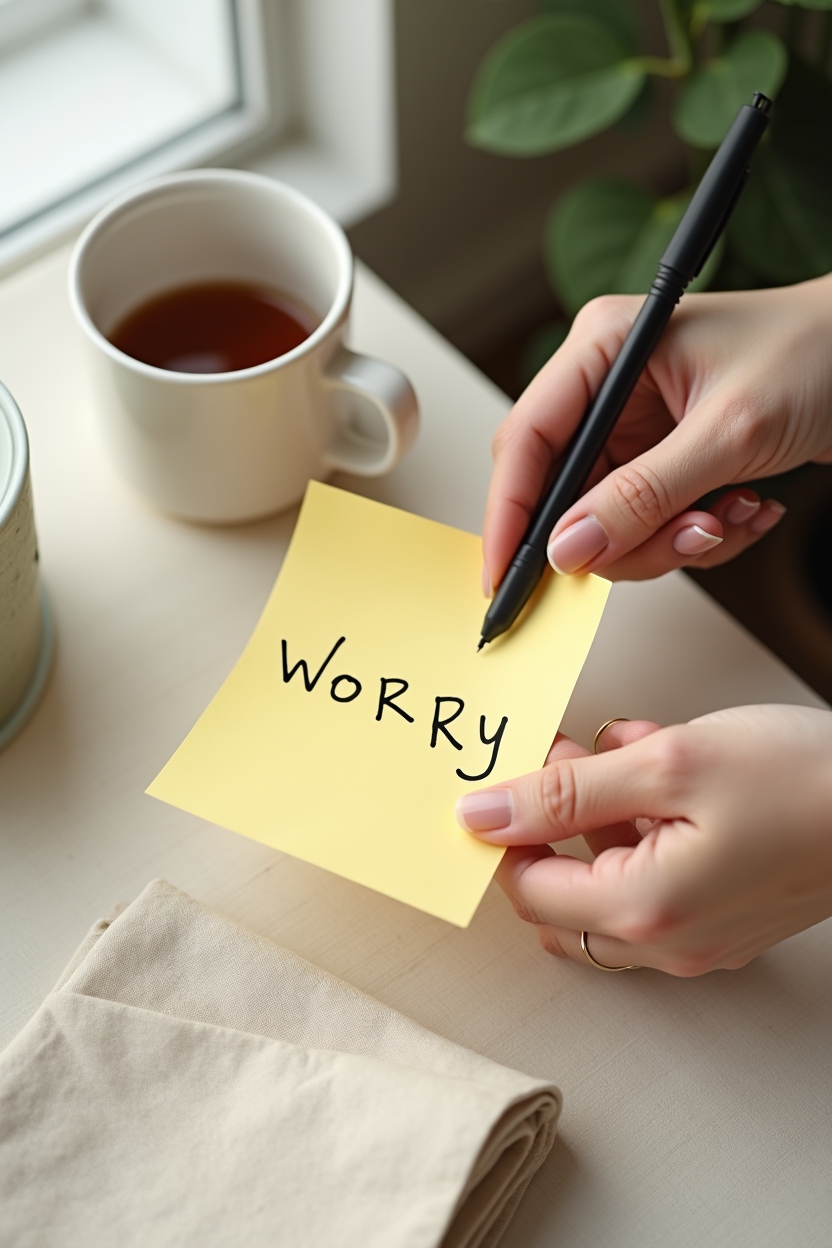
How: Use a simple noticing practice: when a worry appears, label it (e.g., “There’s a worry about failure”) and then ask, “Is this fact or story?” Pause and breathe for a count of four. If it’s a story—an interpretation rather than an observable fact—note that you can hold it lightly and look for balancing information.
This technique doesn’t dismiss your experience. It creates a gentle separation so you can examine thoughts with more clarity and choose responses that build rather than erode optimism.
Daily habits: practical steps for how to build optimism for beginners
Optimism is best built through repeated, manageable habits. These daily habits are short practices—one to three minutes each—that you can fold into a day without needing extra time or motivation.
Step — morning micro-rituals
Why: The first moments of your day shape how you interpret new information. Starting with a brief, grounded ritual helps your nervous system and mind settle into a stance of curiosity and possibility rather than reactivity.
How: Keep the ritual simple: a realistic gratitude check, a one-sentence intention, and a short breath practice. The gratitude check isn’t about “everything is perfect”—it’s about noticing what is working, however small, which creates a foothold for optimism. Your intention can be practical (“notice one resource today”) rather than lofty.
Over time, this micro-ritual shifts the default: instead of beginning with problems, you begin with orientation—what you value and what resources are available.
- Gratitude check (30 seconds): name one small, real thing that felt supportive.
- Set an intention (15–30 seconds): one practical focus for the day.
- Breath practice (1 minute): slow inhales and longer exhales to center.

Step — afternoon reality-checks
Why: Afternoons often hold slumps or spirals. A quick reality-check interrupts automatic negative thinking before it compounds.
How: Pause for a short evidence-gathering moment. List two facts that support your worry and two facts that contradict it. Then ask: what is one small, practical action I can take right now? This reframes the experience from helplessness to curiosity and choice.
These checks are not about forcing optimism; they’re about balancing the information so decisions and feelings are grounded in a fuller picture.
Step — evening reflection for learning not blame
Why: How you end the day influences tomorrow’s expectations. Reflection that emphasizes learning preserves dignity and highlights progress rather than reinforcing negative self-narratives.
How: Use a short journaling template: What happened? What did I do that helped? What didn’t go as hoped—and what small next step could I try? Keep entries factual and kind. Aim to collect moments of effort and curiosity, not only outcomes.
This habit turns daily experience into a feedback loop for growth, helping optimism evolve from wishful thinking into informed expectation.
- What went well today? (1–2 lines)
- What was challenging? (1 line, fact-based)
- One small next step for tomorrow.
Cognitive tools: simple techniques to shift perspective
Cognitive tools help you examine the architecture of your thoughts and create fairer, more helpful narratives. These are practical, step-by-step methods you can use during moments of doubt.
How — evidence-listing (gathering counter-evidence)
Why: Catastrophic thinking often cherry-picks the negative and ignores neutral or positive facts. Gathering evidence restores balance and reduces the emotional charge.
How: Create two columns—’Evidence for concern’ and ‘Evidence against or neutral.’ Spend two minutes filling each column. Aim for specificity: dates, actions, outcomes. When you see both columns, you can make a more measured conclusion about likelihood and next steps.
This is not about forcing optimism; it’s about enlarging the data set so your appraisal of a situation is fairer and more actionable.
- Write the worry or prediction at the top of the page.
- List 3 concrete facts that support it.
- List 3 concrete facts that contradict it or are neutral.
- Decide one small action based on the balanced view.
How — balanced forecasting (realistic best/likely/worst scenarios)
Why: When future-thinking narrows, you end up either catastrophizing or fantasizing. Balanced forecasting widens possibilities and surfaces practical actions tied to likely outcomes.
How: Map three brief scenarios: Best (what could go very well), Likely (what is most realistic), Worst (what you can tolerate and prepare for). For each, note one step you can take to move toward the best, one step that improves the likely outcome, and one precaution for the worst. This keeps hope tethered to practical measures and reduces anxiety about unknowns.
This tool supports building a positive outlook by showing that hopeful scenarios are not wishful—they are accompanied by clear, manageable actions.
- Write a short best-case sentence and one action to support it.
- Write a short likely-case sentence and one realistic action.
- Write a short worst-case sentence and one mitigating step.
Tip — language shifts that support optimism
Words shape perception. Shifting from absolute language to growth-oriented phrasing opens cognitive space for possibility. Replace “I always fail” with “I’m learning how this works,” or swap “This will ruin everything” for “This is hard; I can try one small step.” These shifts are subtle but cumulative.
Practice noticing absolutes—always, never, everyone—and gently reframe them into provisional, actionable statements. Over time, the language you use becomes the language that guides your expectations and choices.
Relationship and environment: supporting optimism externally
Outlook is contagious. Your relationships and the media and spaces you inhabit can either reinforce pessimism or nourish a hopeful, realistic stance. Small environmental changes make the inner work easier.
Tip — curating your input
Why: Constant exposure to negativity drains bandwidth and reinforces a scarcity mindset. Curating what you consume protects your capacity for balanced thinking.
How: Make small edits: set a limit on doomscrolling, choose one uplifting podcast or newsletter that feels honest rather than saccharine, and place physical reminders of progress—photos, notes, or objects that signal competence and care. Think in terms of ’tilt the odds’—not full censorship, but reasonable boundaries to support steadier moods.
These adjustments create a safer scaffold for practices that build optimism.
How — asking for optimism-friendly interactions
Why: Conversations that reiterate problems without inviting solutions can amplify helplessness. Asking for particular types of support helps you get the responses you need.
How: Use brief, clear scripts that name the request. For example, say: “I’m feeling stuck—could you help me brainstorm one next step?” or “I need to be heard for two minutes, then I’d like your perspective.” Offer quick guidance about what helps you: solution-focused suggestions, compassionate listening, or brainstorming next steps.
These requests make relational spaces more useful and reduce the chance you’ll leave interactions feeling worse than before.
- I’m overwhelmed—can we name one small step I could try?
- I’d like you to listen for two minutes, then offer feedback.
- Can you help me brainstorm options without judging them?
Troubleshooting and sustaining progress: how to build optimism for beginners
Progress is uneven. Setbacks, plateaus, and moments of inauthentic optimism are normal. This section helps you recognize those patterns and choose gentle corrective steps without shame.
Tip — when optimism feels inauthentic
Why: Forced cheer can feel like a mask and usually backfires by invalidating real feelings. Authentic optimism grows from curiosity and action, not from a command to ‘be positive.’
How: If optimism feels fake, slow down. Acknowledge the discomfort out loud or in your journal—‘I’m trying to be hopeful and it feels strained’—then return to small, factual practices: evidence-listing, naming resources, or asking a friend for a specific kind of help. Recalibration is about aligning inner state with realistic, compassionate actions.
This approach allows optimism to grow organically rather than as a rehearsed performance.
Tip — maintaining gains over months
Why: Sustainable change relies on gentle review and adaptation, not heroic effort. Regular check-ins keep practices relevant and prevent drift.
How: Establish a monthly or quarterly ritual: review habit trackers, notice patterns, and set one small experiment for the next period. Rotate practices so they remain engaging—one month focus on morning rituals, the next on relationship scripts. This cadence prevents stagnation and deepens skills over time.
Maintenance is not a finale; it’s an ongoing practice that honors incremental growth.

How — next steps if you need guided help
Why: Sometimes progress stalls because there are deeper patterns—trauma, chronic anxiety, or depression—that benefit from skilled guidance. Seeking help is a practical step toward broader possibilities, not a sign of failure.
How: Consider therapy, coaching, or community support if practices consistently feel impossible or if your daily functioning is affected. Look for professionals who emphasize collaborative, solution-focused approaches and ask about how they work with optimism, resilience, and skill-building. Group programs and peer-led communities can also provide shared experiments and accountability.
Asking for help expands your toolbox and honors the reality that building optimism often involves both inner practice and external support.
Beginner’s Optimism Toolkit — printable worksheet
A two-page printable worksheet with morning micro-ritual prompts, an evidence-list template, a 7-day habit tracker, and evening reflection prompts to help you practice these steps in a gentle, structured way.
Download the Worksheet
Final Thoughts
Optimism is a practiced skill, not an exclusive personality trait. By choosing one small step from this guide—whether a two-minute morning ritual, a quick evidence-list, or a conversation script—you begin a series of tiny experiments that compound over time. Remember: how to build optimism for beginners is not about pretending problems aren’t real, but about training your attention to notice both obstacles and resources.
If one step feels doable today, try it. Give yourself permission to be curious, patient, and steady.