New Year Reset Guide: Refresh Your Mind, Space, and Energy
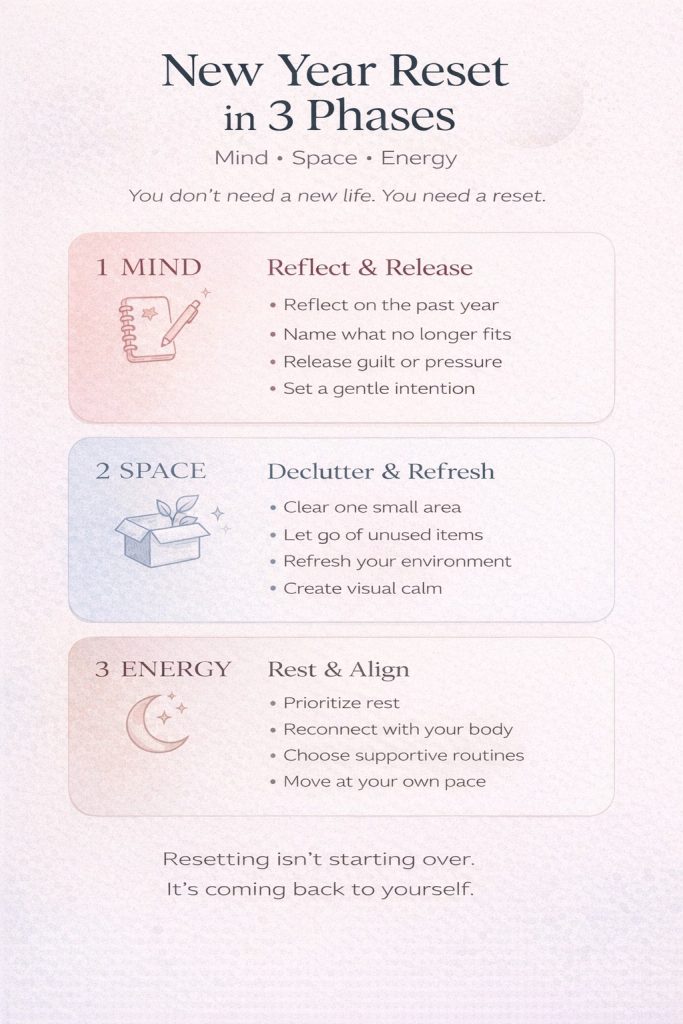
The end of the year is a powerful time to hit the reset button on life. Before you rush into New Year’s resolutions, it’s wise to clear out the old mental and physical clutter holding you back. Think of it like pruning a garden: you remove the overgrowth so new flowers and dreams have room to bloom. By taking time to mentally reset, declutter your space, and realign your energy, you set the stage for clarity and momentum. In fact, when you release the physical, digital, and emotional weight you’ve been carrying, you gain mental clarity, motivation, and bandwidth for the goals that truly matter. The following guide walks you through a New Year Reset in three phases – focusing on your Mind, Space, and Energy – before you set any intentions or goals. Each phase includes actionable steps to help you enter the new year feeling clear, light, and inspired.
Phase 1: Mental Reset – Gaining Clarity and Letting Go (Pre-Reset)
A fresh year feels best when your mind is clear and focused. This phase is about reflecting on where you are, letting go of mental baggage, and resetting your mindset for the year ahead. Diving into a new year without reflection is like starting a road trip with no map – you might get somewhere, but it likely won’t be where you intended. Take this time to slow down and reconnect with what truly matters to you.
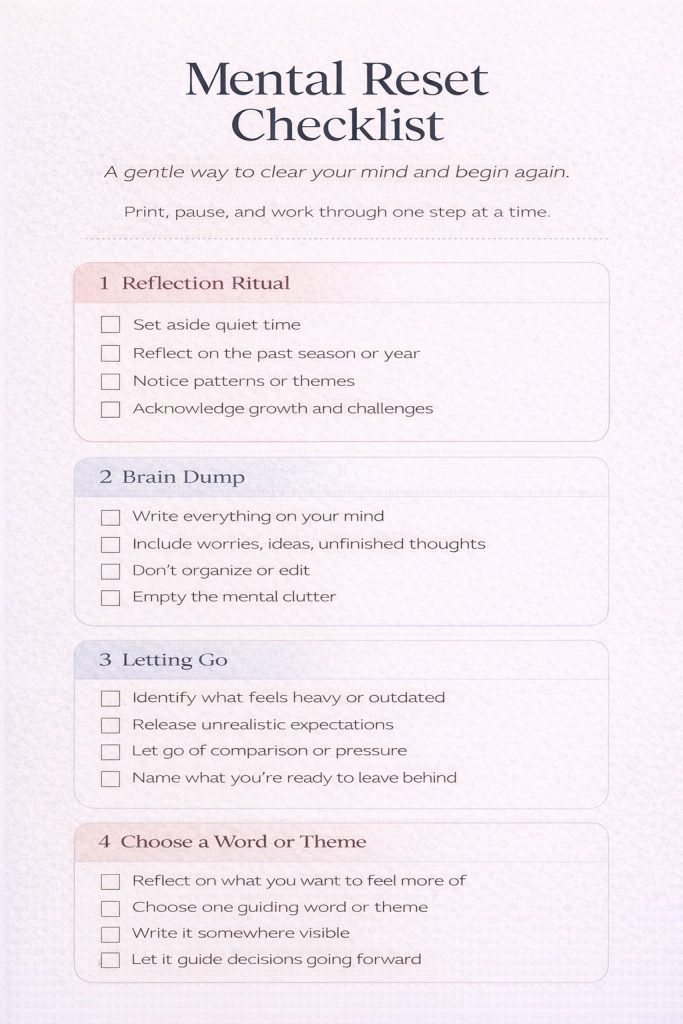
- Create a Reflection Ritual: Carve out a quiet, comfortable space to reflect. Consider brewing a warm drink or lighting a candle to set a calm mood. Allow yourself to pause and honor the moment of transition instead of feeling pressured to “finish strong” – you’re a human being, not a year-end project. Embracing a slower pace and quiet moments will reduce burnout and create space for emotional clarity.
- Review the Past Year: Grab a journal and honestly assess the year that’s ending. What wins are you proud of? What challenges did you overcome, and what lessons did they teach you? Recognize what supported you this year and what drained you. This thoughtful review highlights the habits, people, and activities that positively contributed to your life, as well as those that no longer serve you.
- Mental Declutter (Brain Dump): Clear your mind by doing a “thought download” of everything weighing on you. Set a timer for 10 minutes and write down all your to-dos, worries, and ideas – get it all out on paper with no filtering. Then go through your list and mark the items that truly need attention before the new year. Practice letting go of the rest (postpone or release the worries you can’t control). This exercise frees up mental space; by uncluttering your mind, you signal your nervous system to relax and make room for creativity.
- Release and Let Go: Mentally let go of the “old” thoughts or grudges that you don’t want to carry into next year. You might write a letter to yourself forgiving any mistakes or setbacks from the past year (you don’t have to send it – the act of writing is for you). Acknowledge any disappointments or regrets, then consciously decide to release them. Some people find it helpful to symbolically destroy the paper (safely) as a sign of closing that chapter. Before we can invite in the new, we must release the old, so give yourself permission to move forward without that mental weight.
- Find Your Focus: Now that you’ve reflected and cleared some mental noise, ask yourself: “What do I truly want my life to feel like in the coming year?” Consider what values or feelings you want to prioritize (e.g. creativity, health, connection, peace). It can help to choose one word or theme as a guiding star for the year. Whether it’s “growth,” “balance,” or “joy,” a clear theme gives you a north star for decision-making. Every time you feel uncertain or overwhelmed in the new year, you can return to this word for clarity and direction.
By the end of the mental reset, you should feel a sense of clarity and relief. You’ve honored the past and cleared your mind to make room for what truly matters. In short, you are preparing the soil of your mind so new ideas and goals can take root and flourish.
Phase 2: Space Reset – Clearing and Refreshing Your Physical Space (Reset)
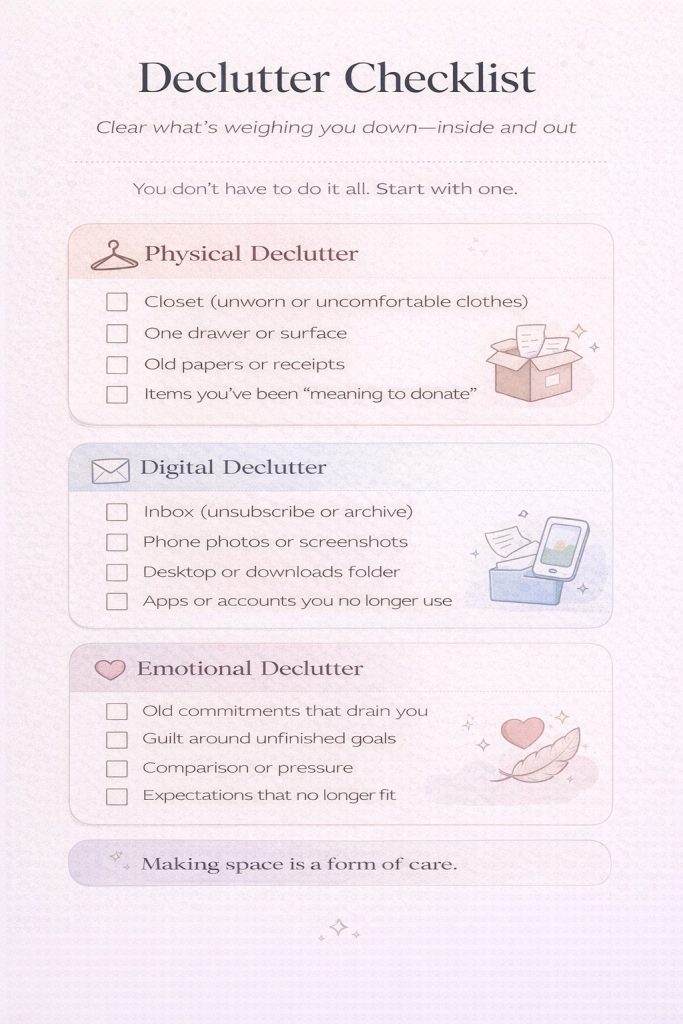
- Tidy Key Areas: Start with a quick declutter of high-impact zones that collect chaos. For example, clear off “drop zones” like your entryway table or kitchen counter where mail and miscellaneous items pile up. Go through your work desk and remove papers or objects that don’t belong – a cluttered desk often leads to scattered thoughts and procrastination. Tidying one small area at a time (set a 10-minute timer) can create instant breathing room and momentum.
- Declutter in Stages: Rather than trying to overhaul your whole house in one go, break it into mini-projects:
- Closet Clean-Out: Review your wardrobe and pull out clothes you haven’t worn in a year. Donate or recycle items that don’t fit or that you don’t love. A quick trick: turn all your hangers backward; after a few months, any hanger still reversed signifies an item you never touched – consider letting it go.
- Junk Drawer or Cabinet: Choose one drawer or cupboard that’s become a black hole for random items. Empty it, only put back what’s useful, and toss or relocate the rest.
- Pantry and Fridge: Discard expired foods and organize what remains. Clearing old junk food or expired ingredients will not only tidy your kitchen but also set you up for healthier eating.
- Linens and Towels: Retire old, threadbare linens. Keep only the comfortable sets in rotation and donate or repurpose the rest (old towels can become rags or pet bedding).
- Digital Declutter: Don’t forget your digital “space,” which can become just as cluttered as your physical space and equally stress-inducing. Take some time to:
- Inbox Cleanup: Unsubscribe from newsletters and spam that no longer interest you, and delete or archive old emails. An overflowing inbox is a mental energy drain, constantly signaling unfinished business. Aim for a simpler system – for instance, create just a few folders (like “Archive” and “Urgent”) and clear out everything else for a fresh start.
- Phone & Apps: Delete apps you don’t use. Turn off non-essential notifications so your phone stops constantly interrupting you. A phone free of endless pings and red badges will help you feel more in control.
- Files and Photos: Organize your computer files into a logical folder structure and back up important documents. Go through your photos and remove duplicates or blurry shots. Maybe create a “Favorites of 2025” album for memories you cherish, and let the rest go.
- Freshen Up Your Environment: Once you’ve decluttered, do a simple cleanup to reset the energy of your space. Open the windows to let in fresh air (even if it’s cold – a few minutes of airflow makes a big difference). Wipe surfaces free of dust. You might add a small uplifting touch to mark the new beginning – like a vase of fresh flowers or a pleasant scent diffuser. Such details can make your home feel “new” and cozy, reinforcing your sense of a fresh start.
- Remember Why It Matters: Clearing your space isn’t just about tidiness; it’s a signal to your brain and heart. Studies have found that clutter in the home can quietly raise your cortisol (stress hormone) levels and even lead to fatigue and depressed mood. Conversely, an organized, refreshed space makes you feel calmer and more in control, reducing decision fatigue and stress. As one guide put it, letting go of physical clutter creates a visual and emotional relief, showing you’re making space for something new in your life. By clearing your environment now, you’re literally creating room for the opportunities and goals of the new year to enter.
At the end of your Space Reset, take a moment to appreciate the lighter, cleaner environment around you. Notice how a decluttered space makes you feel – often it’s a mix of calm, relief, and even inspiration. This physical reset is a tangible reminder that you are capable of making positive change. With your home and workplace refreshed, you’ve removed a major layer of stress and distraction, setting yourself up for success.
Phase 3: Energy Reset – Recharging Emotionally and Preparing for Intentions (Goal Alignment)
In this final phase, you turn inward to reset your personal energy – the emotional, mental, and even physical vitality you carry into the new year. After clearing your mind and space, it’s time to refill yourself with positive, focused energy and ensure you’re emotionally aligned with the goals you will set. Think of this as tuning your inner compass: you want to enter the new year rested, recharged, and ready for the right opportunities.
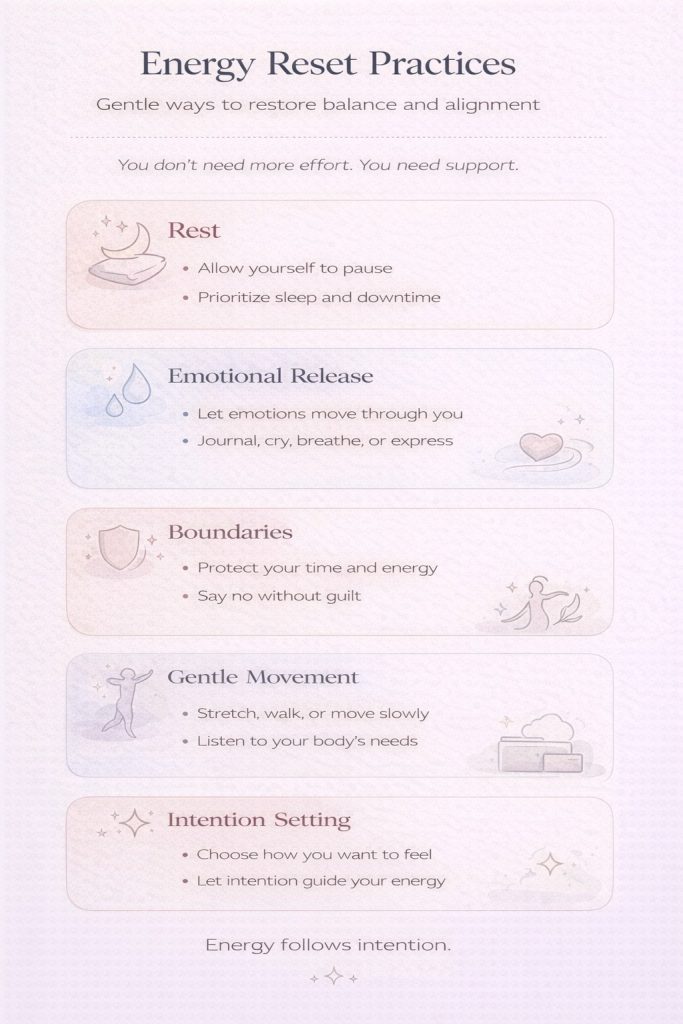
- Prioritize Rest and Renewal: First and foremost, give yourself permission to slow down and recharge. The holiday rush can leave us depleted. Remember that winter is naturally a season of rest – shorter days and longer nights signal our bodies to slow down. Honor this by getting good sleep and perhaps enjoying a bit of downtime before you charge into new projects. Schedule one unbusy day or evening per week during this season for pure rest and reflection (treat it like a meeting with yourself). When you allow yourself to pause, you refill your energy reserves and bolster your emotional resilience. Deep rest is regenerative and will make you far more effective when it’s time to act.
- Emotional Clearing: Just as you decluttered your home, take time to declutter your heart. Identify any lingering negative emotions – such as anger, resentment, or disappointments – that you’re still carrying. Use a journal to confront these feelings: write about what you can release before the year ends. You might write down fears or grudges on a piece of paper and physically destroy it as a ritual of letting go. Also, consider forgiveness (of yourself and others) as a way to lighten your emotional load. By entering the new year with old resentments cleared, you create space for more positive emotions. Clarity conserves energy – an uncluttered heart and mind will relax your nervous system and make you feel lighter.
- Protect Your Energy: Think about the people, activities, and information that occupy your life. Are they giving you energy or draining it? As you reset, it might be time to set gentle boundaries. It’s okay to say no to social obligations that don’t align with your values or that overwhelm you. Curate your inputs: for instance, reduce doom-scrolling on social media, and instead engage in activities that uplift you (reading, time in nature, hobbies). By intentionally choosing where to direct your attention and time, you safeguard your energy for what truly matters. As one source suggests, ask of each commitment: “Is this something I truly want to do, or am I saying yes out of obligation?”. Removing or reducing energy-drains in your schedule will create breathing room for the pursuits that fulfill you.
- Recharge Physically: Your body and mind are deeply connected. To keep your energy high, take care of your physical well-being. This doesn’t mean launching an extreme workout regimen on January 1st – rather, integrate gentle, nourishing habits now. For example, go for a brisk walk outside to clear your head, stretch or do yoga to release tension, and stay hydrated. Even nutritional tweaks can help: in winter, favor warm, nourishing foods (soups, herbal teas, hearty veggies) to support your body’s needs. Taking a relaxing bath with Epsom or magnesium salts can also relieve stress and improve sleep quality. These small acts of self-care rebuild your vitality so you have the energy to pursue your goals.
- Envision What You Truly Want: Now turn your refreshed mind toward the future. What do you truly desire in life, and why? Use your clear energy to imagine your ideal life in the coming year and beyond. Instead of rushing into traditional “resolutions,” think in terms of intentions and vision. Journaling prompts can help draw this out: “How do I want to feel in 2026?”, “What experiences do I want more of?”, “What values do I want to honor?”. Allow yourself to dream big and outline the core things you want – whether it’s more family time, a career change, creative projects, health improvements, or personal growth. This is about defining success on your own terms, aligned with your heart’s true desires.
- Set Aligned Intentions: With a clear vision of what you want, you can now set intentions or goals that align with that vision. Make sure any goal you set resonates with the life you genuinely want – not what others expect, and not some arbitrary benchmark. For example, if you realized you value health and calm, an aligned goal might be establishing a weekly hiking routine or a daily meditation practice, rather than, say, striving for a pressure-filled achievement that doesn’t fit your vision. It can be helpful to frame goals as positive intentions: “I will nurture my creativity by writing for 20 minutes each day,” or “I intend to deepen my relationships by having one screen-free evening with family each week.” These align with your desired feelings and values. Remember, intention directs your energy – when your goals stem from true intention, you’re far more likely to pursue them with passion and to find them meaningful.
- One Step at a Time: Finally, as you align with your goals, plan for gentle, consistent progress rather than overwhelming yourself. You might identify just a couple of key priorities for January, with the understanding that you’ll plan more in detail once the year starts rolling. As one expert noted, we often overestimate what we can do in a week but underestimate what we can accomplish in a year. Real progress comes from steady steps. So map out the first small action for each of your intentions. With your mind clear, space uncluttered, and energy recharged, you’ll find it easier to take these steps and maintain momentum.
By completing this three-part reset – mind, space, and energy – you’ve built a strong foundation for the new year. You have mentally reflected and let go of what’s not needed, physically cleared room for new opportunities, and emotionally and energetically aligned with what you truly want. This process isn’t about making a perfect plan or a long list of resolutions on January 1st. It’s about nourishment and alignment: entering the new year with clarity, steadiness, and a heart that feels rested. You’ve essentially cleaned your slate and calibrated your compass. Now, any goals or intentions you set will come from a place of authenticity and purpose.
As you move forward, remember to be kind to yourself. Change doesn’t happen overnight, but with the reset steps you’ve taken, you’ve created a supportive environment for change to happen over time. You’re starting the year on your terms – calm, organized, and motivated. With this momentum, you can now confidently outline your goals and pursue them, knowing they align with your deepest intentions. Here’s to a bright new chapter that truly reflects the life you want to create!